
With the rapid growth of the semiconductor industry, VLSI training institutes have multiplied across India. While this creates more learning options, it also makes choosing the right VLSI institute challenging. Selecting the wrong institute can result in wasted time, money, and missed career opportunities.
Why Choosing the Right VLSI Training Institute Matters
VLSI is a highly specialized domain requiring deep technical knowledge and practical exposure. Unlike generic software courses, VLSI demands:
- Strong fundamentals
- Real-time project experience
- Exposure to industry-standard tools
- Continuous mentorship
A quality VLSI institute bridges the gap between academic knowledge and industry expectations.
1. Industry-Relevant Course Curriculum
The first and most critical checkpoint is the course syllabus.
What to Look For
- Digital electronics and CMOS fundamentals
- Verilog and SystemVerilog
- ASIC design flow
- Functional verification (UVM basics)
- Physical design and timing analysis
- Low-power design concepts
The curriculum should be updated regularly to match industry trends.
2. Trainer’s Industry Experience
Learning from trainers with real semiconductor industry experience makes a huge difference.
Ideal Trainer Profile
- Worked in ASIC/SoC design or verification roles
- Experience with live projects and tape-outs
- Ability to explain concepts with real examples
Avoid institutes where trainers only have teaching backgrounds.
3. Hands-On Projects and Practical Exposure
VLSI cannot be mastered through theory alone.
Must-Have Practical Components
- RTL coding assignments
- FPGA-based projects
- Verification testbench development
- Timing analysis and debugging
- End-to-end mini projects
Institutes that emphasize hands-on learning prepare students for real jobs.
4. Exposure to Industry-Standard EDA Tools
EDA tools are the backbone of VLSI design and verification.
What Tool Exposure Should Include
- RTL simulation tools
- Synthesis tools
- Physical design tools
- Timing and debug tools
Even if proprietary tools are limited, workflow understanding is essential.
5. Training Mode: Online, Offline, or Hybrid
The learning mode should align with your lifestyle and availability.
Options Available
- Online live classes
- Offline classroom training
- Hybrid learning models
Each mode has its advantages, but trainer interaction and lab access should not be compromised.
6. Placement Assistance and Career Support
A strong VLSI institute goes beyond teaching.
Career Support Features
- Resume preparation
- Mock interviews
- Technical assessments
- Referrals and hiring connections
Avoid institutes that promise “100% placement” without transparency.
7. Institute Track Record and Alumni Success
An institute’s past results indicate future outcomes.
How to Evaluate
- Alumni working in reputed semiconductor companies
- Student testimonials
- Years of operation in VLSI training
Speak to former students if possible.
8. Batch Size and Individual Attention
Smaller batch sizes enable better learning.
Ideal Learning Environment
- Limited students per batch
- Personalized feedback
- Doubt-clearing sessions
Large batches often reduce trainer-student interaction.
9. Course Duration and Learning Depth
VLSI is not a short-term skill.
Red Flags
- Courses claiming expertise in a few weeks
- Overloaded content without practice
Quality VLSI training typically takes 4–6 months or more, depending on depth.
10. Certification Value and Recognition
While certification alone does not guarantee a job, it adds credibility.
What Matters More Than Certificates
- Project quality
- Skill demonstration
- Interview performance
Certificates should be skill-backed, not marketing-driven.
11. Course Fees and Return on Investment (ROI)
Higher fees do not always mean better quality.
Evaluate ROI Based On
- Course content
- Trainer quality
- Placement support
- Career outcomes
Choose institutes offering transparent pricing and value.
12. Flexibility and Support System
Life circumstances vary for learners.
Important Support Factors
- Access to recorded sessions
- Doubt resolution outside class hours
- Revision and backup sessions
Support systems improve completion and success rates.
13. Industry-Oriented Teaching Approach
Teaching should focus on problem-solving, not memorization.
Good Training Includes
- Design reviews
- Debugging sessions
- Real-world case studies
This approach builds industry-ready confidence.
14. Exposure to Emerging VLSI Trends
The best institutes prepare students for the future.
Emerging Topics to Look For
- Low-power design techniques
- Advanced process nodes
- Verification automation
- AI in semiconductor design
Future-ready institutes stand out.
15. Transparency and Ethical Practices
Trustworthy institutes are transparent.
Signs of a Reliable Institute
- Clear course details
- Honest placement data
- No unrealistic promises
Transparency reflects professionalism.
Common Mistakes Students Make While Choosing a VLSI Institute
- Choosing based on marketing alone
- Ignoring fundamentals
- Overlooking trainer background
- Not verifying placement claims
Awareness prevents costly mistakes.
How Freshers Should Use This Checklist
Freshers should:
- Shortlist institutes
- Compare them using this checklist
- Attend demo sessions
- Talk to alumni
- Evaluate long-term benefits
Conclusion
Choosing the best VLSI training institute is a critical career decision that should be made carefully. A good institute offers strong fundamentals, hands-on experience, expert mentorship, and genuine career support.
Use this checklist to make an informed choice and invest in training that truly prepares you for a successful career in the semiconductor industry.

How to Test Your RTL Before Simulation: A Practical Pre-Simulation Checklist for Beginners
Learn how to test your RTL before simulation with a practical pre-simulation checklist. Improve Verilog quality, reduce debugging time, and build industry-ready RTL skills.
From Logic Diagram to Verilog Code – Complete Workflow
Learn the complete workflow from logic diagram to Verilog code, including specifications, RTL architec ture, coding, simulation, debugging, verification, and documentation.
Common Mistakes While Writing Verilog Code
Learn the most common Verilog coding mistakes beginners make and how to avoid them. Improve RTL coding, simulation, debugging, verification, and interview readiness.
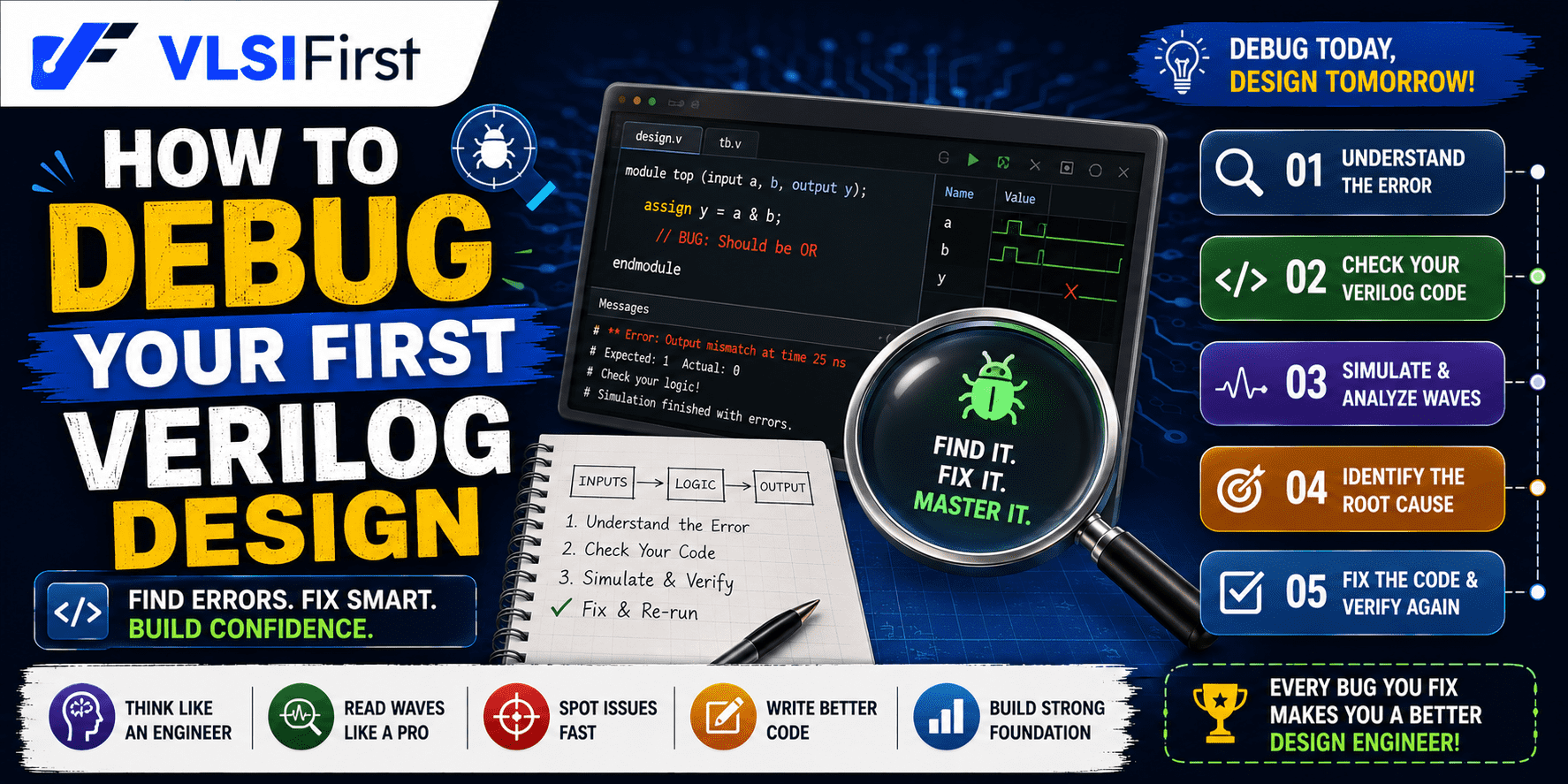
How to Debug Your First Verilog Design
Debugging your first Verilog design with practical RTL debug techniques, waveform analysis, testbench tips, FSM debugging, and common beginner mistakes. Read now!
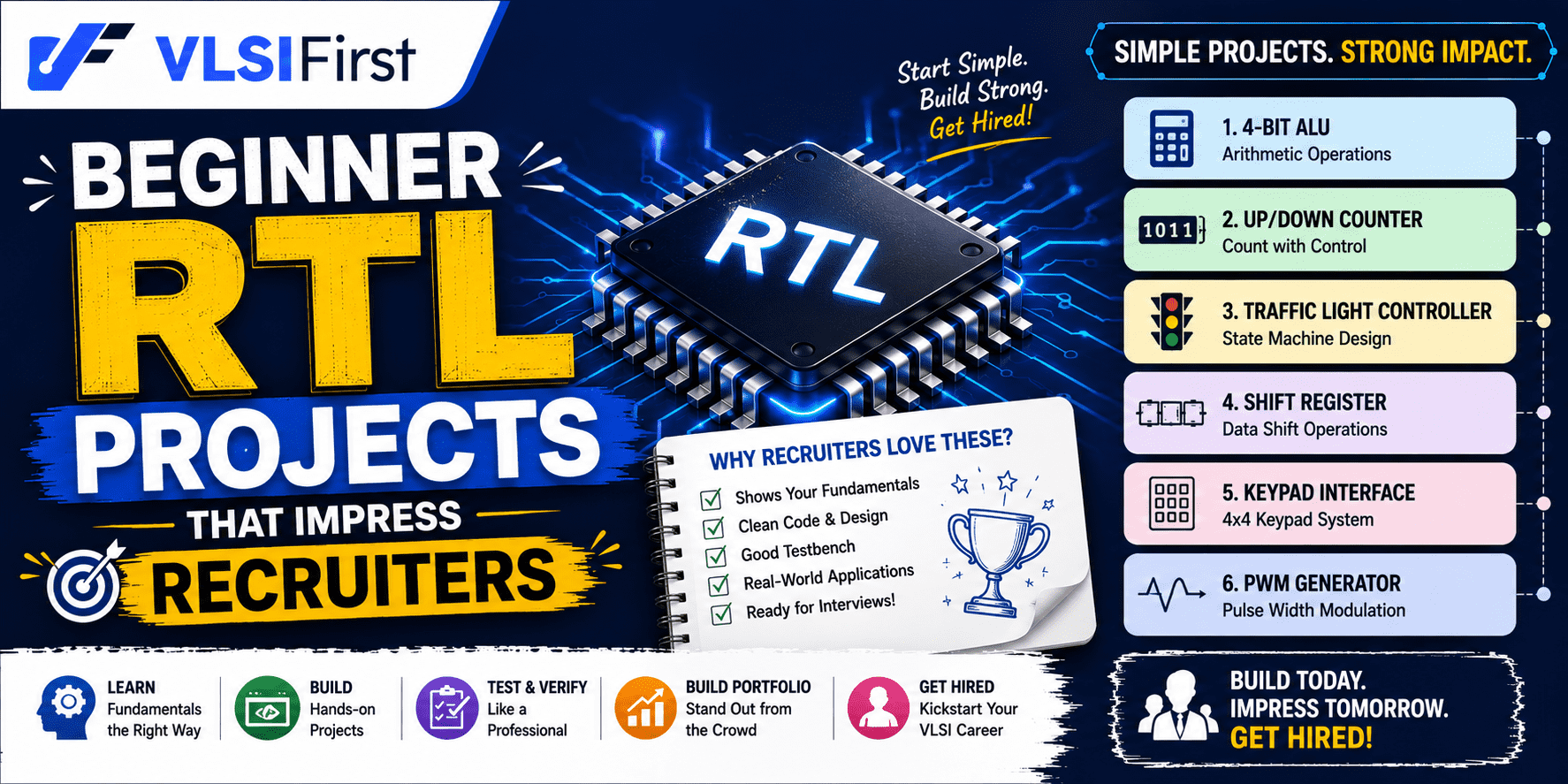
Beginner RTL Projects That Impress Recruiters
Discover beginner RTL projects that impress VLSI recruiters. Learn which Verilog projects build practical skills, strengthen your portfolio, and improve interview success.
.


Hours
2-98/1, Gurram Guda Road, Gurram Guda, Hyderabad, Rangareddy, Telangana, 501510
Copyright 2025 © VLSI Technologies Private Limited
Designed and developed by KandraDigitalCopyright 2025 © VLSI Technologies Private Limited
Designed, Developed & Marketing by KandraDigital