
In every engineering classroom, there comes a moment when students start discussing their future careers.
One friend is preparing for software jobs.
Another is planning for higher studies.
Someone else is talking about government exams.
And then there is always a group discussing VLSI.
They talk about semiconductor growth, chip design careers, high-paying jobs, and opportunities in the industry.
Soon, many students begin asking themselves:
"Should I also join a VLSI course?"
Sometimes, this question comes from genuine curiosity.
But often, it comes from something else:
Peer pressure.
When everyone around you seems to be moving in a particular direction, it becomes easy to assume that you should do the same.
The problem is that career decisions influenced primarily by peer pressure often lead to confusion, frustration, and disappointment later.
On the other hand, choosing VLSI because it genuinely aligns with your interests, strengths, and long-term goals can create a rewarding and sustainable career.
This article explores the difference between choosing VLSI due to peer pressure versus choosing it because of passion and purpose, helping students make better career decisions.
Why Students Feel Peer Pressure When Choosing Careers
Peer pressure is not always obvious.
It rarely sounds like:
"You must choose VLSI."
Instead, it appears in subtle ways.
Students hear things such as:
- "Everyone is joining VLSI training."
- "The semiconductor industry is booming."
- "VLSI has better salaries."
- "My senior got placed after doing a VLSI course."
- "Software jobs are becoming saturated."
- "You should not miss this opportunity."
While these statements may contain some truth, they often create fear of missing out (FOMO).
Students start worrying that if they don't choose VLSI, they may miss a valuable opportunity.
As a result, they make decisions without fully understanding the field.
The Problem with Career Decisions Based Only on Trends
Every few years, a different industry becomes popular.
At one point, it was networking.
Then, software development.
Then data science.
Then artificial intelligence.
Today, semiconductor engineering and VLSI are receiving significant attention due to global demand and industry growth.
However, choosing a career solely because it is trending can be risky.
A trend may attract your attention, but it should not become the only reason for your decision.
Long-term success usually comes from a combination of:
- Interest
- Skill development
- Consistency
- Problem-solving ability
- Continuous learning
Not from following the crowd.
What Passion Actually Means
Many students misunderstand passion.
They assume passion means:
"I must already be an expert in VLSI."
That is not true.
Passion often begins as curiosity.
You may find yourself interested in:
- How processors work
- How chips are designed
- How smartphones function internally
- How semiconductor technology powers AI systems
- How hardware and software interact
These interests often develop into deeper engagement over time.
Passion is not about knowing everything.
It is about being willing to learn.
Signs You Are Choosing VLSI Because of Peer Pressure
Let's be honest.
Some students join VLSI courses without knowing what VLSI actually involves.
Here are some warning signs.
You Cannot Explain Why You Want to Learn VLSI
If your answer is:
"Because everyone else is doing it."
You may be following the crowd rather than making an informed decision.
You Have Never Explored the Actual Work
Many students know the term VLSI but have never researched:
- RTL Design
- Functional Verification
- Physical Design
- STA
- DFT
Understanding these domains is essential before committing to a career path.
You Focus Only on Salary
Salary matters.
But salary alone rarely sustains motivation over the long term.
Every successful VLSI engineer eventually develops genuine interest in solving engineering problems.
You Feel Forced to Choose
Career decisions should involve thoughtful evaluation, not pressure.
If you feel anxious because everyone else has already made a choice, slow down and evaluate your options carefully.
Signs You May Genuinely Enjoy VLSI
Now let's look at positive indicators.
You Enjoy Digital Electronics
Students who enjoy:
- Logic Gates
- Flip-Flops
- Sequential Circuits
- Digital Design
often find VLSI intellectually rewarding.
You Like Understanding How Things Work
Many successful semiconductor engineers naturally enjoy exploring systems and understanding internal functionality.
You Enjoy Problem Solving
A large part of VLSI engineering involves:
- Debugging
- Analysis
- Optimization
- Root cause investigation
Students who enjoy solving puzzles and technical challenges often thrive in VLSI.
You Prefer Deep Technical Learning
VLSI rewards individuals who enjoy building expertise over time.
Unlike some fields that change rapidly every few months, semiconductor careers often involve developing deep technical specialization.
The Cost of Choosing the Wrong Reason
Choosing VLSI for the wrong reasons can create challenges later.
Students may:
- Lose motivation midway through training
- Avoid practicing regularly
- Struggle during projects
- Feel disconnected from the work
- Abandon learning after setbacks
This is not because VLSI is unsuitable as a career.
It is because the initial decision was not based on genuine interest.
Why Passion Alone Is Not Enough
At the same time, passion alone is not sufficient.
A student may love semiconductor technology but still need:
- Discipline
- Consistent practice
- Technical training
- Project experience
- Industry exposure
Successful careers require both interest and effort.
How to Evaluate Whether VLSI Fits You
Before joining a course, ask yourself these questions.
Do I Enjoy Electronics Concepts?
If digital electronics feels interesting rather than frustrating, that's a positive sign.
Am I Willing to Learn Continuously?
Semiconductor technology evolves constantly.
Growth requires ongoing learning.
Do I Like Solving Technical Problems?
Many VLSI roles revolve around identifying and fixing issues.
Can I Stay Consistent for Several Months?
Building industry-level skills requires commitment.
Am I Interested in Hardware Innovation?
If you are fascinated by processors, AI chips, automotive electronics, or semiconductor technology, VLSI may be a strong fit.
What Successful VLSI Professionals Have in Common
Many students assume successful engineers are simply smarter than everyone else.
In reality, most successful VLSI professionals share different qualities:
- Curiosity
- Persistence
- Patience
- Analytical thinking
- Continuous improvement
These qualities matter more than following trends.
It's Okay If Your Friends Choose a Different Path
One important lesson students must learn is that different career paths can lead to success.
Your friends may choose:
- Software Development
- Embedded Systems
- Data Science
- Higher Studies
- Government Jobs
You do not need identical goals to succeed.
The best career choice is the one that aligns with your strengths and interests.
Make an Informed Decision, Not an Emotional One
Before joining any VLSI course:
- Research the industry.
- Understand job roles.
- Explore learning paths.
- Talk to professionals.
- Review course curriculums.
- Understand placement expectations.
The more informed your decision, the more confident you will feel.
Final Thoughts
The semiconductor industry offers exciting opportunities, strong long-term growth, and meaningful engineering careers.
But VLSI should not be chosen simply because:
- Friends are joining
- Seniors recommended it
- Social media says it is trending
- Everyone else seems interested
Instead, choose VLSI because:
- You enjoy technology
- You are curious about hardware design
- You like problem-solving
- You are willing to learn continuously
- You see yourself building expertise in semiconductor engineering
Peer pressure may influence your first thought.
But passion, self-awareness, and informed decision-making should guide your final choice.
Because at the end of the day, the most successful VLSI careers are built not by students who followed the crowd, but by those who understood why they chose the path in the first place.

How to Test Your RTL Before Simulation: A Practical Pre-Simulation Checklist for Beginners
Learn how to test your RTL before simulation with a practical pre-simulation checklist. Improve Verilog quality, reduce debugging time, and build industry-ready RTL skills.
From Logic Diagram to Verilog Code – Complete Workflow
Learn the complete workflow from logic diagram to Verilog code, including specifications, RTL architec ture, coding, simulation, debugging, verification, and documentation.
Common Mistakes While Writing Verilog Code
Learn the most common Verilog coding mistakes beginners make and how to avoid them. Improve RTL coding, simulation, debugging, verification, and interview readiness.
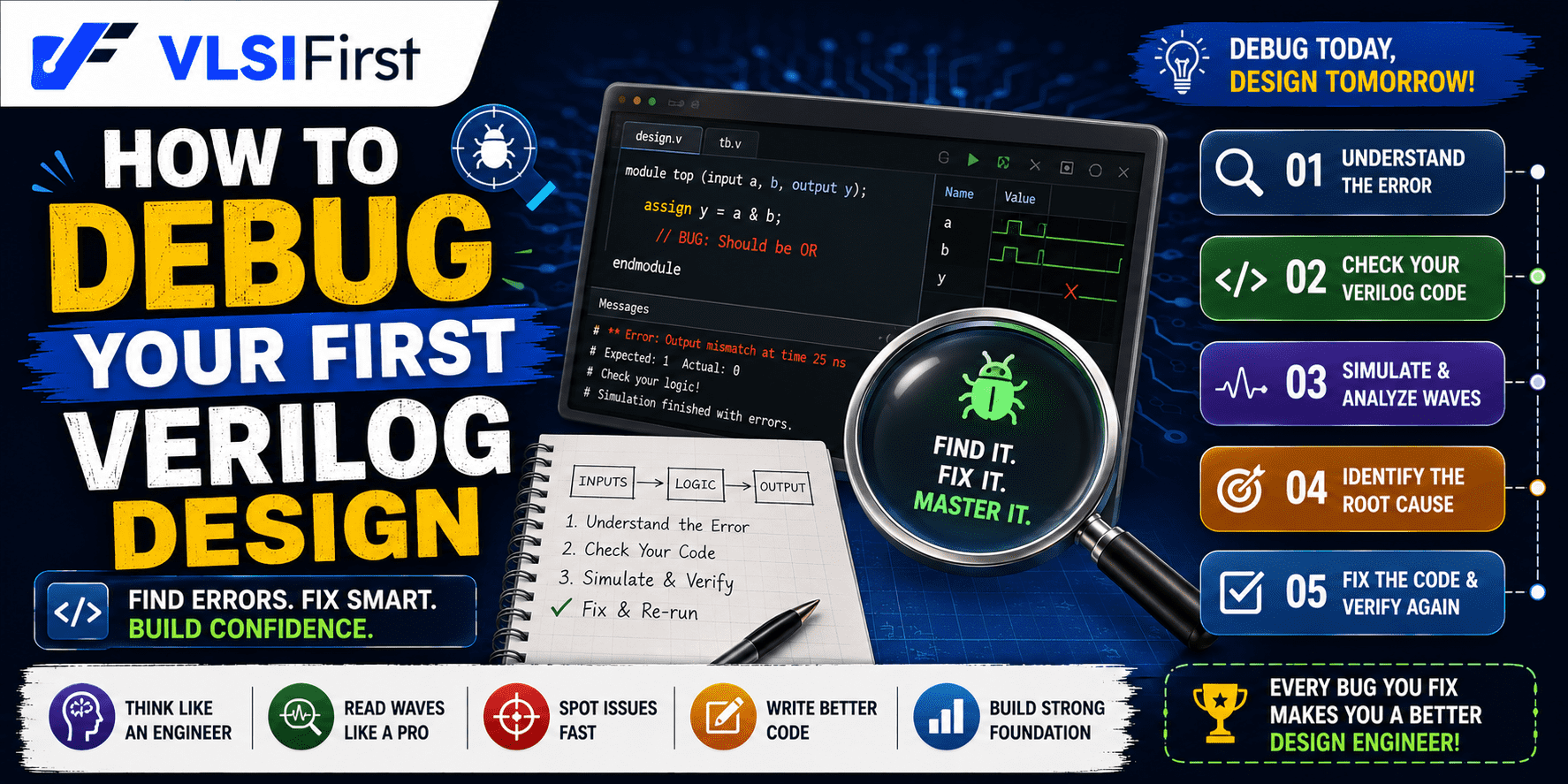
How to Debug Your First Verilog Design
Debugging your first Verilog design with practical RTL debug techniques, waveform analysis, testbench tips, FSM debugging, and common beginner mistakes. Read now!
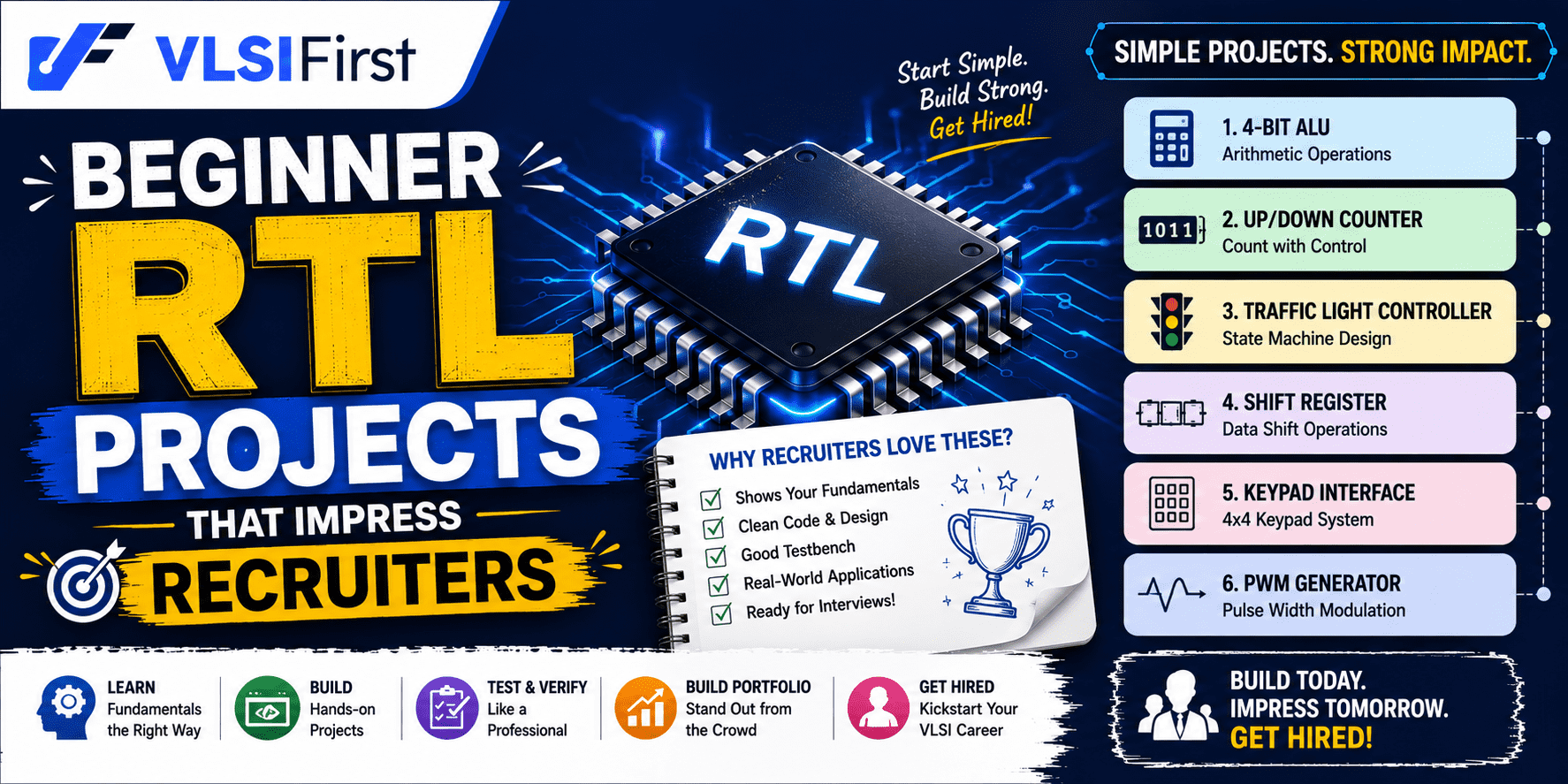
Beginner RTL Projects That Impress Recruiters
Discover beginner RTL projects that impress VLSI recruiters. Learn which Verilog projects build practical skills, strengthen your portfolio, and improve interview success.


Hours
2-98/1, Gurram Guda Road, Gurram Guda, Hyderabad, Rangareddy, Telangana, 501510
Copyright 2025 © VLSI Technologies Private Limited
Designed and developed by KandraDigitalCopyright 2025 © VLSI Technologies Private Limited
Designed, Developed & Marketing by KandraDigital