
The semiconductor industry is expanding rapidly across the world, especially in India. With the increasing demand for chip design engineers, many students are now considering careers in VLSI (Very Large Scale Integration). As a result, numerous training institutes have started offering VLSI courses promising high-paying jobs and industry-ready skills.
However, not every institute delivers the same quality of training. Some focus heavily on theory, while others may not provide real project exposure or industry-relevant tools. Choosing the wrong training institute can delay your career progress and reduce your chances of landing a job in the semiconductor industry.
Before enrolling in any VLSI training program, it is important to evaluate whether the institute truly prepares students for real-world engineering roles. Asking the right questions can help you make a smarter decision.
This article provides 15 essential questions every student should ask before joining a VLSI institute to ensure they receive valuable training and career support.
Why Choosing the Right VLSI Institute Matters
VLSI is a highly specialized field that requires both theoretical knowledge and practical experience. Unlike many other engineering domains, semiconductor companies expect candidates to understand real design workflows, debugging techniques, and EDA tools.
Many students assume that simply completing a course will guarantee a job. In reality, recruiters evaluate candidates based on their hands-on skills, projects, and problem-solving abilities.
Therefore, choosing the right institute can significantly impact your learning experience, technical confidence, and career opportunities.
1. Does the Institute Provide Hands-On Tool Training?
Modern chip design relies heavily on EDA (Electronic Design Automation) tools. These tools are used for design, simulation, synthesis, timing analysis, and verification.
Before joining any course, ask:
- Will I get access to industry tools?
- Will I perform simulations and debugging myself?
- Are tools used regularly during the course?
Tool exposure is critical because real VLSI engineering work is highly tool-driven.
2. Who Are the Trainers?
A strong training program should be taught by industry professionals with real semiconductor experience.
Ask the institute:
- Are the trainers currently working in semiconductor companies?
- How many years of industry experience do they have?
- Have they worked on real chip projects?
Experienced mentors can provide insights that textbooks cannot teach.
3. Does the Course Cover Industry-Relevant Domains?
VLSI is not a single job role. It includes multiple domains such as:
- RTL Design
- Functional Verification
- Physical Design
- Analog Design
A good institute should clearly explain which domain the course focuses on and whether the curriculum matches current industry demands.
4. Are Real Projects Included in the Training?
Projects are essential because they demonstrate your practical skills to recruiters.
Before enrolling, ask:
- Will I work on real VLSI projects?
- Will projects involve debugging and verification tasks?
- Can I showcase these projects during interviews?
Hands-on projects help students develop the problem-solving mindset required for semiconductor roles.
5. Does the Institute Provide a Structured Learning Roadmap?
Learning VLSI without a structured plan can be overwhelming for beginners.
A good institute should provide a step-by-step roadmap that gradually builds your skills.
6. What Is the Duration of the Training Program?
Many institutes promise “fast-track” VLSI training in a few weeks. However, mastering chip design concepts and tools requires time and practice.
A realistic training program typically includes:
- concept learning
- tool practice
- projects
- interview preparation
If a course claims to make you job-ready in a very short time, it may not provide sufficient depth.
7. Is There Interview Preparation Support?
Technical knowledge alone is not enough to secure a job. Students must also be prepared for semiconductor company interviews.
Ask whether the institute provides:
- mock technical interviews
- resume building guidance
- interview question practice
- HR interview preparation
Interview preparation significantly improves a student’s chances of getting hired.
8. Are Alumni Working in Semiconductor Companies?
One of the best ways to evaluate a training institute is by looking at the success of its alumni.
Ask questions such as:
- Where are previous students currently working?
- Are alumni placed in leading semiconductor companies?
- Can you connect with former students for feedback?
Alumni success often reflects the quality of training.
9. Does the Institute Offer Portfolio Development Support?
Today, recruiters appreciate candidates who showcase their work through portfolios.
For example, students can publish their VLSI projects on GitHub or create technical documentation.
Institutes that guide students in building portfolios help them stand out in interviews.
10. Does the Curriculum Match Current Industry Trends?
The semiconductor industry evolves rapidly. New design methodologies and verification techniques continue to emerge.
Before joining any course, ensure that the curriculum includes:
- modern verification methodologies
- advanced debugging techniques
- industry-relevant design flows
Training based on outdated content may not help students succeed in current job markets.
11. How Much Coding Is Required?
Many students worry about programming requirements in VLSI.
While coding is important in areas such as verification and automation, students do not need to be expert programmers.
Understanding the coding expectations helps students prepare better before starting the course.
12. Does the Institute Provide Flexible Learning Options?
Some students prefer classroom training, while others prefer online learning due to location or work commitments.
Ask whether the institute offers:
- live online sessions
- recorded classes
- flexible schedules
Flexible learning options help students balance training with other responsibilities.
13. Are Doubt-Clearing Sessions Available?
VLSI concepts can sometimes be challenging, especially when students encounter debugging problems.
Institutes that provide regular doubt-clearing sessions and mentorship support help students overcome learning difficulties more effectively.
Continuous guidance ensures students stay motivated throughout the training.
14. Does the Institute Explain Real Career Expectations?
Some training institutes create unrealistic expectations about salary and job availability.
A good institute should provide honest insights into the semiconductor job market, including:
- entry-level salary expectations
- required skill levels
- career growth opportunities
Understanding the reality of VLSI careers helps students stay motivated and prepared.
15. What Makes This Institute Different From Others?
Finally, always ask one simple but important question:
What makes this institute different from other VLSI training providers?
The answer should clearly explain:
- training methodology
- hands-on learning approach
- mentor support
- industry connections
Institutes that genuinely focus on student success will have strong and transparent answers.
Final Thoughts
Choosing the right VLSI institute is one of the most important decisions for aspiring semiconductor engineers. While many institutes offer VLSI courses, only a few provide the practical training, mentorship, and career guidance required to succeed in the industry.
By asking the right questions before enrolling, students can avoid common mistakes and ensure they invest their time and effort in a program that truly prepares them for real-world engineering roles.
Remember, a good VLSI institute will not just teach theory, it will help you develop hands-on skills, build projects, understand industry workflows, and prepare confidently for semiconductor job interviews.
Taking the time to evaluate training institutes carefully can make a significant difference in your VLSI career journey.
If you want to learn more about semiconductor careers, industry skills, and VLSI training insights, contact VLSIFirst.com today.

How to Test Your RTL Before Simulation: A Practical Pre-Simulation Checklist for Beginners
Learn how to test your RTL before simulation with a practical pre-simulation checklist. Improve Verilog quality, reduce debugging time, and build industry-ready RTL skills.
From Logic Diagram to Verilog Code – Complete Workflow
Learn the complete workflow from logic diagram to Verilog code, including specifications, RTL architec ture, coding, simulation, debugging, verification, and documentation.
Common Mistakes While Writing Verilog Code
Learn the most common Verilog coding mistakes beginners make and how to avoid them. Improve RTL coding, simulation, debugging, verification, and interview readiness.
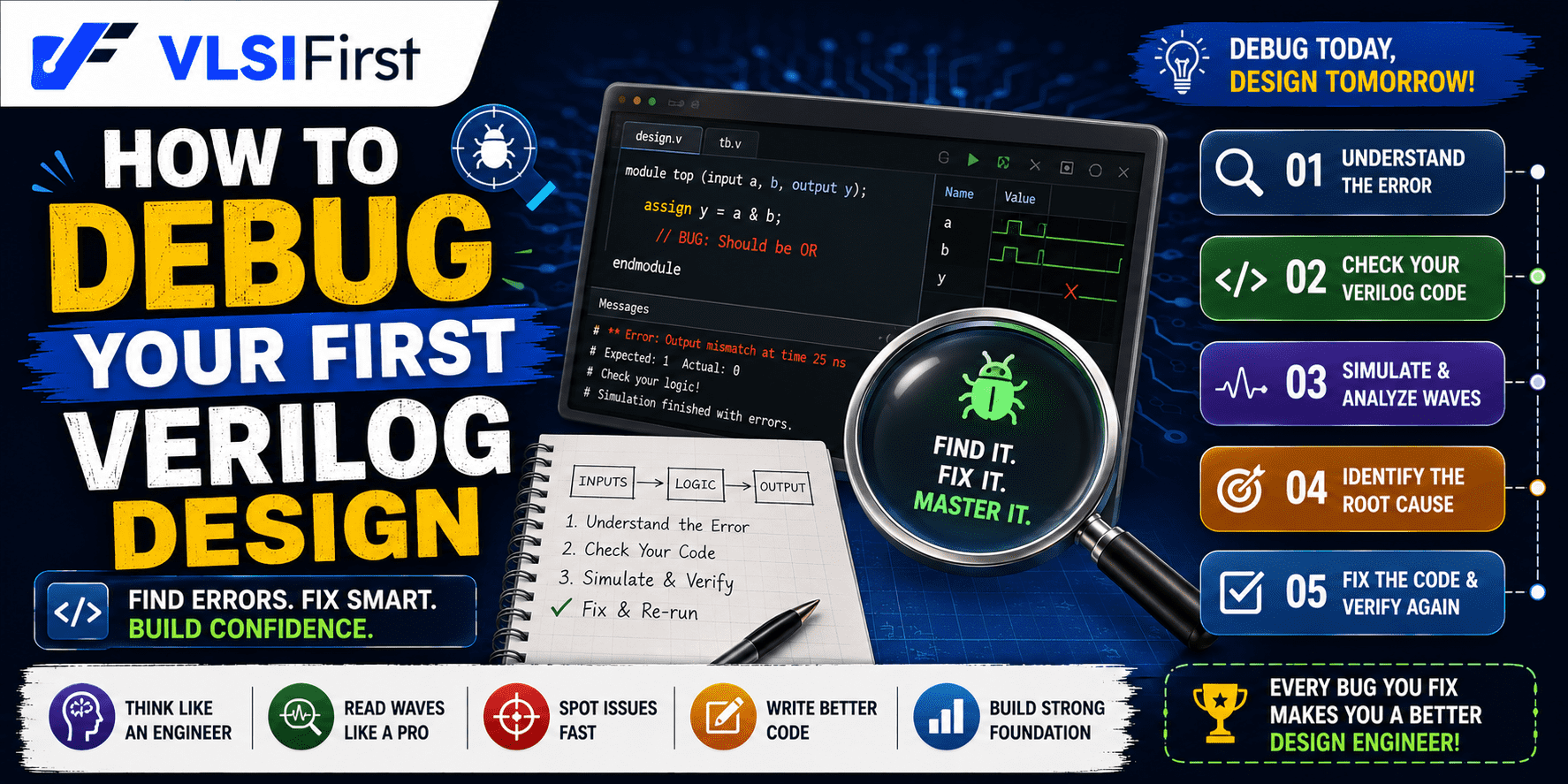
How to Debug Your First Verilog Design
Debugging your first Verilog design with practical RTL debug techniques, waveform analysis, testbench tips, FSM debugging, and common beginner mistakes. Read now!
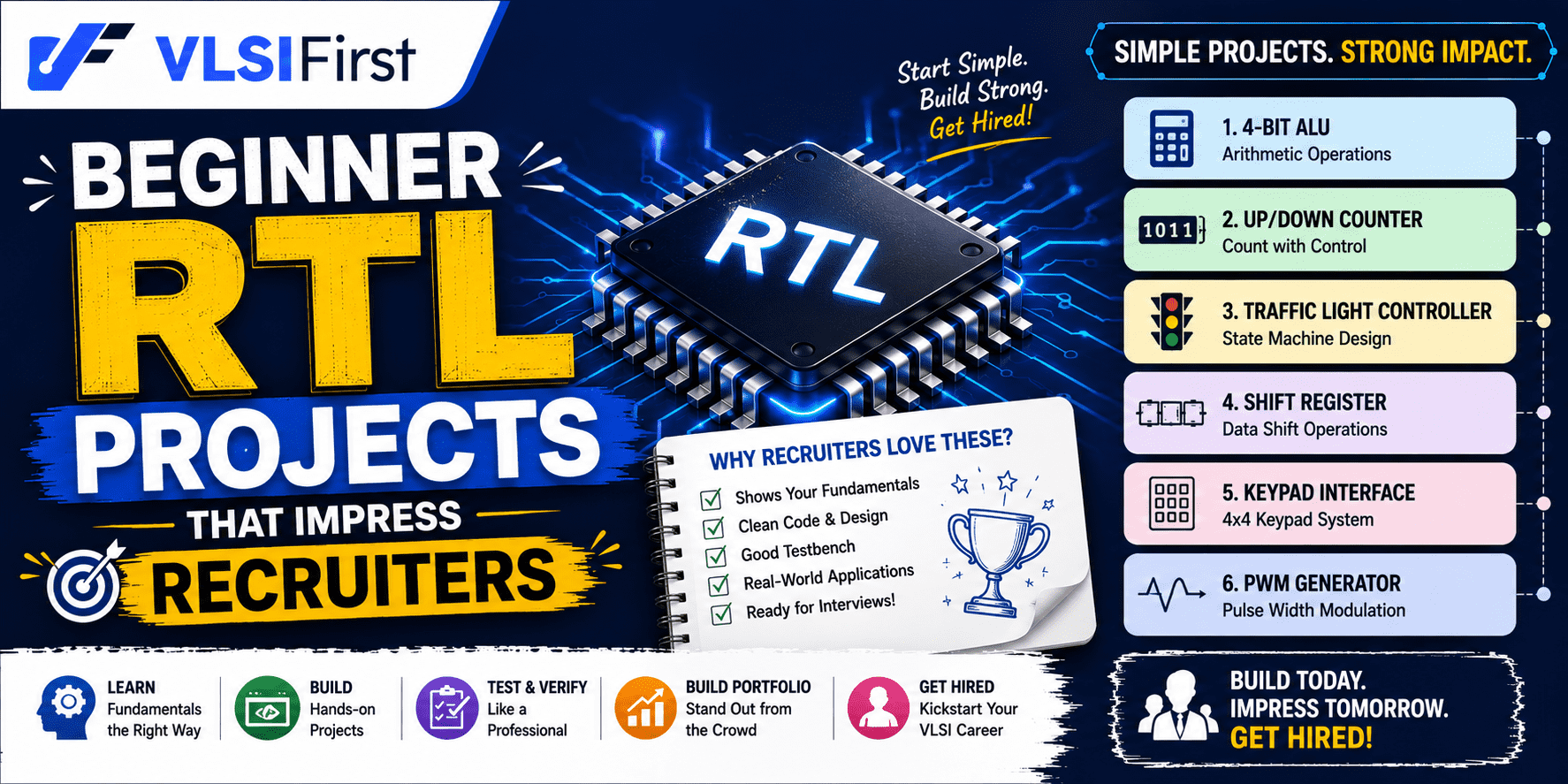
Beginner RTL Projects That Impress Recruiters
Discover beginner RTL projects that impress VLSI recruiters. Learn which Verilog projects build practical skills, strengthen your portfolio, and improve interview success.


Hours
2-98/1, Gurram Guda Road, Gurram Guda, Hyderabad, Rangareddy, Telangana, 501510
Copyright 2025 © VLSI Technologies Private Limited
Designed and developed by KandraDigitalCopyright 2025 © VLSI Technologies Private Limited
Designed, Developed & Marketing by KandraDigital