
One of the biggest concerns among engineering students today is long-term career stability.
Freshers entering the technology industry often ask:
- “Will my skills still be valuable after 10 years?”
- “Can I sustain long-term growth in tech?”
- “Will AI and automation reduce opportunities later?”
These questions have become even more important as:
- software frameworks change rapidly
- automation is increasing
- layoffs affect parts of the IT industry
- technology stacks evolve continuously
In this environment, many students are beginning to notice something interesting:
Experienced VLSI engineers often remain highly valuable even after 10–20 years in the industry.
In fact, senior semiconductor engineers are usually respected for:
- deep technical expertise
- architectural understanding
- debugging ability
- domain specialization
- long-term engineering maturity
This does NOT mean all IT careers are unstable.
The IT industry remains massive and full of opportunities.
However, VLSI careers often age differently because semiconductor engineering depends heavily on:
- core engineering fundamentals
- specialized expertise
- system-level thinking
- practical problem-solving
This blog explains:
- why VLSI careers often age well
- how semiconductor roles differ from many IT roles
- what makes experienced VLSI engineers valuable
- why long-term learning matters in semiconductor careers
Understanding What “Aging Better” Really Means
Before comparing careers, it is important to clarify something.
“Aging better” does NOT mean:
- VLSI is easy
- VLSI guarantees permanent job security
- IT careers are weak
Instead, it means:
Experienced VLSI engineers often continue gaining value with experience because semiconductor expertise compounds over time.
In many semiconductor domains:
- deeper understanding increases importance
- debugging experience becomes extremely valuable
- architectural knowledge becomes harder to replace
This creates long-term technical stability for skilled engineers.
Why Semiconductor Engineering Is Different
Semiconductor engineering is fundamentally different from many fast-changing technology domains.
VLSI development involves:
- hardware constraints
- physical implementation
- timing behavior
- manufacturing realities
- verification complexity
- power optimization
Unlike some software technologies that change every few years, semiconductor fundamentals remain highly relevant for decades.
Digital design principles like:
- timing analysis
- synchronization
- RTL architecture
- logic optimization
continue to remain essential regardless of changing tools.
1. VLSI Careers Depend Heavily on Strong Fundamentals
One major reason VLSI engineers age well is that the industry values deep fundamentals over short-term trends.
Experienced engineers develop a strong understanding of:
- digital electronics
- timing closure
- verification methodology
- architecture optimization
- physical implementation
These concepts do not become obsolete quickly.
In contrast, some IT domains experience rapid shifts in:
- frameworks
- libraries
- development stacks
- tools
This forces constant short-term adaptation.
Meanwhile, semiconductor fundamentals remain highly stable across generations of technology.
Industry hiring trends consistently show that strong engineering depth remains highly valuable in semiconductor careers.
2. Experience Has High Value in VLSI
In many semiconductor companies, experience directly improves engineering capability.
Why?
Because senior engineers have:
- seen more silicon failures
- solved difficult timing problems
- debugged complex designs
- optimized large-scale systems
This experience cannot easily be replaced through automation or short-term learning.
For example:
- debugging expertise improves over years
- timing closure judgment improves with projects
- architecture decisions improve with exposure
This creates strong long-term value for experienced engineers.
3. VLSI Has Higher Technical Entry Barriers
Semiconductor engineering usually requires:
- strong digital fundamentals
- hardware understanding
- debugging ability
- timing analysis knowledge
This naturally creates a higher technical specialization level.
Because the learning curve is difficult, experienced semiconductor engineers become highly valuable assets.
Advanced-node chip development is already facing global demand for skilled semiconductor talent.
4. AI and Automation Cannot Easily Replace Engineering Judgment
AI-assisted automation is definitely changing semiconductor workflows.
But VLSI still depends heavily on:
- engineering trade-offs
- debugging decisions
- architecture reasoning
- optimization strategies
Automation helps with productivity, but experienced engineers still guide:
- constraints
- validation
- signoff decisions
- complex optimization
EDA companies themselves describe AI as a tool that assists engineers rather than fully replacing them.
5. Semiconductor Demand Continues to Grow
Another reason VLSI careers age well is because semiconductor demand keeps expanding.
Modern chips are required in:
- AI hardware
- cloud infrastructure
- automotive electronics
- robotics
- IoT devices
- medical equipment
- defense systems
The world increasingly depends on semiconductor technology.
Global semiconductor demand is projected to continue strong long-term growth.
This creates sustained opportunities for experienced engineers.
6. Debugging Expertise Becomes Extremely Valuable Over Time
Debugging is one of the hardest semiconductor skills to master.
Senior engineers become highly respected because they can:
- identify root causes quickly
- analyze failures efficiently
- solve timing problems
- optimize complex systems
Debugging maturity cannot be developed overnight.
As chip complexity increases, experienced debugging engineers become even more valuable.
7. VLSI Careers Reward Depth More Than Hype
One challenge in some technology sectors is chasing trends constantly.
But semiconductor careers usually reward:
- technical depth
- consistency
- domain expertise
- engineering maturity
This creates more stable long-term technical growth.
Students who build strong expertise in:
- verification
- STA
- physical design
- architecture
- DFT
often continue growing steadily over many years.
8. Semiconductor Engineering Is Hard to Outsource Completely
Many semiconductor projects involve:
- highly specialized knowledge
- hardware dependencies
- sensitive IP
- complex collaboration
This creates stronger long-term value for experienced in-house engineering teams.
9. Senior Engineers Move Into Strategic Roles
As VLSI engineers gain experience, many transition into:
- architecture roles
- technical leadership
- project management
- methodology development
- advanced optimization
These positions often depend heavily on accumulated engineering wisdom.
10. Long-Term Learning Creates Career Stability
One of the biggest advantages of VLSI is learning compounds over time.
Every project teaches:
- debugging techniques
- optimization methods
- timing strategies
- architecture trade-offs
This accumulated expertise becomes extremely valuable after years in the industry.
Does This Mean VLSI Is Easy?
Absolutely not.
VLSI careers can be:
- technically demanding
- mentally challenging
- highly competitive
Students must continuously learn and adapt.
Challenges in Long-Term VLSI Careers
Students should also understand the challenges honestly.
1. Continuous Learning Is Mandatory
Technology evolves continuously:
- advanced nodes
- AI hardware
- chiplets
- new verification methodologies
Engineers must keep learning.
2. Fundamentals Must Stay Strong
Weak fundamentals create long-term career limitations.
3. Semiconductor Work Can Be Intense
Tapeouts, debugging, and timing closure can involve significant pressure.
4. Specialization Matters
VLSI rewards deep expertise more than superficial knowledge.
Why Students Still Prefer VLSI Despite the Difficulty
Because many students increasingly realize that long-term technical depth creates long-term career value.
Semiconductor engineering offers:
- deep technical work
- strong intellectual growth
- stable specialization
- long-term demand
What Freshers Should Focus On
If students want long-term semiconductor growth, they should focus on:
- digital fundamentals
- RTL design
- timing understanding
- debugging skills
- project exposure
- engineering thinking
Avoid depending only on:
- tool memorization
- shortcuts
- copied projects
Final Verdict
VLSI engineers often age better than many IT roles because semiconductor careers reward:
- deep expertise
- practical experience
- debugging maturity
- engineering judgment
- long-term technical growth
As technology becomes more complex, experienced semiconductor engineers become increasingly valuable.
Do not choose VLSI because it looks trendy.
Choose it if you genuinely enjoy:
- problem-solving
- hardware engineering
- debugging
- technical depth
- continuous learning
Because semiconductor careers are not built on shortcuts.
They are built on:
- patience
- consistency
- engineering maturity
And that is exactly why:
Experienced VLSI engineers often remain valuable for decades while many short-term technology trends come and go.

How to Test Your RTL Before Simulation: A Practical Pre-Simulation Checklist for Beginners
Learn how to test your RTL before simulation with a practical pre-simulation checklist. Improve Verilog quality, reduce debugging time, and build industry-ready RTL skills.
From Logic Diagram to Verilog Code – Complete Workflow
Learn the complete workflow from logic diagram to Verilog code, including specifications, RTL architec ture, coding, simulation, debugging, verification, and documentation.
Common Mistakes While Writing Verilog Code
Learn the most common Verilog coding mistakes beginners make and how to avoid them. Improve RTL coding, simulation, debugging, verification, and interview readiness.
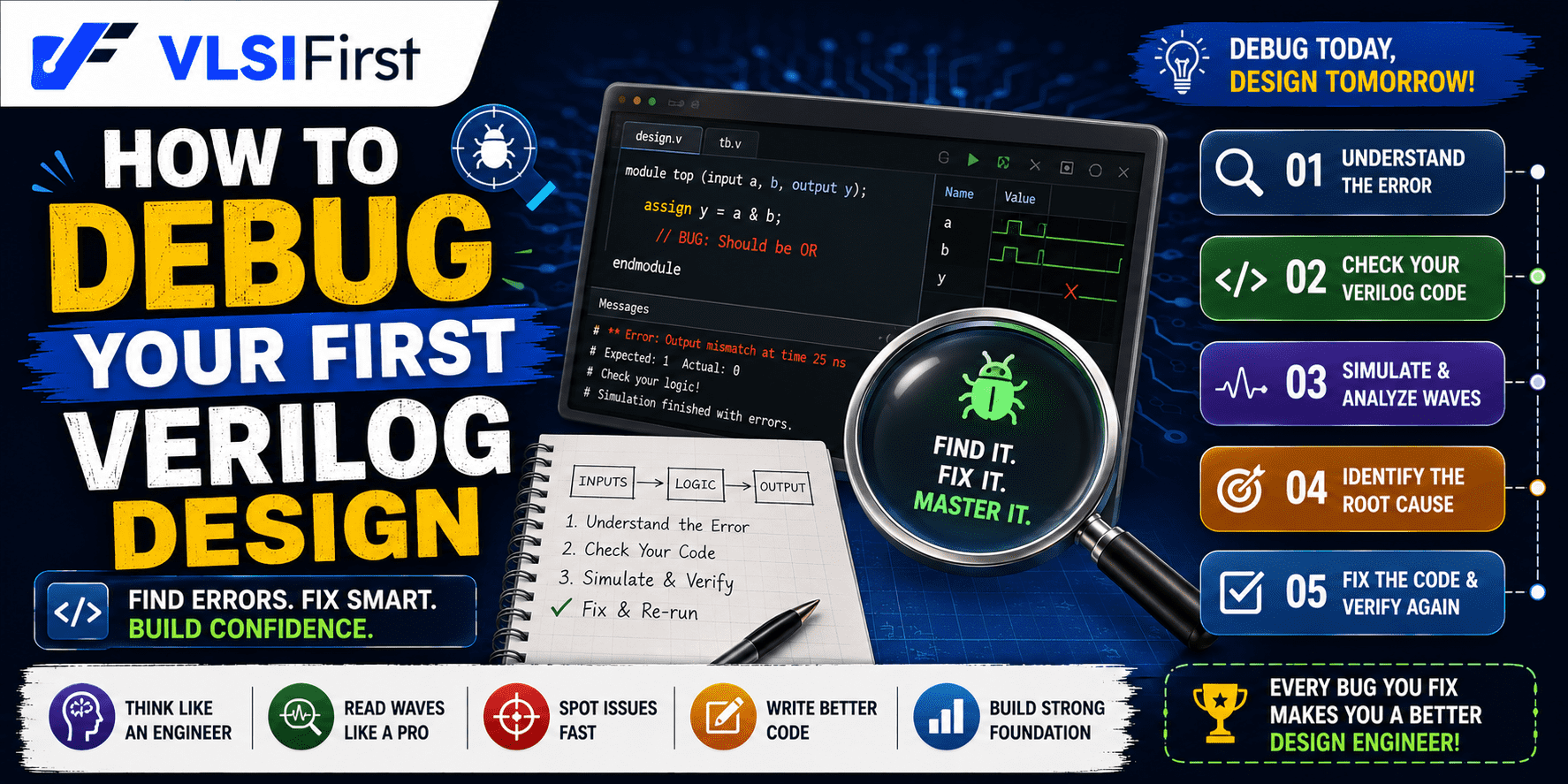
How to Debug Your First Verilog Design
Debugging your first Verilog design with practical RTL debug techniques, waveform analysis, testbench tips, FSM debugging, and common beginner mistakes. Read now!
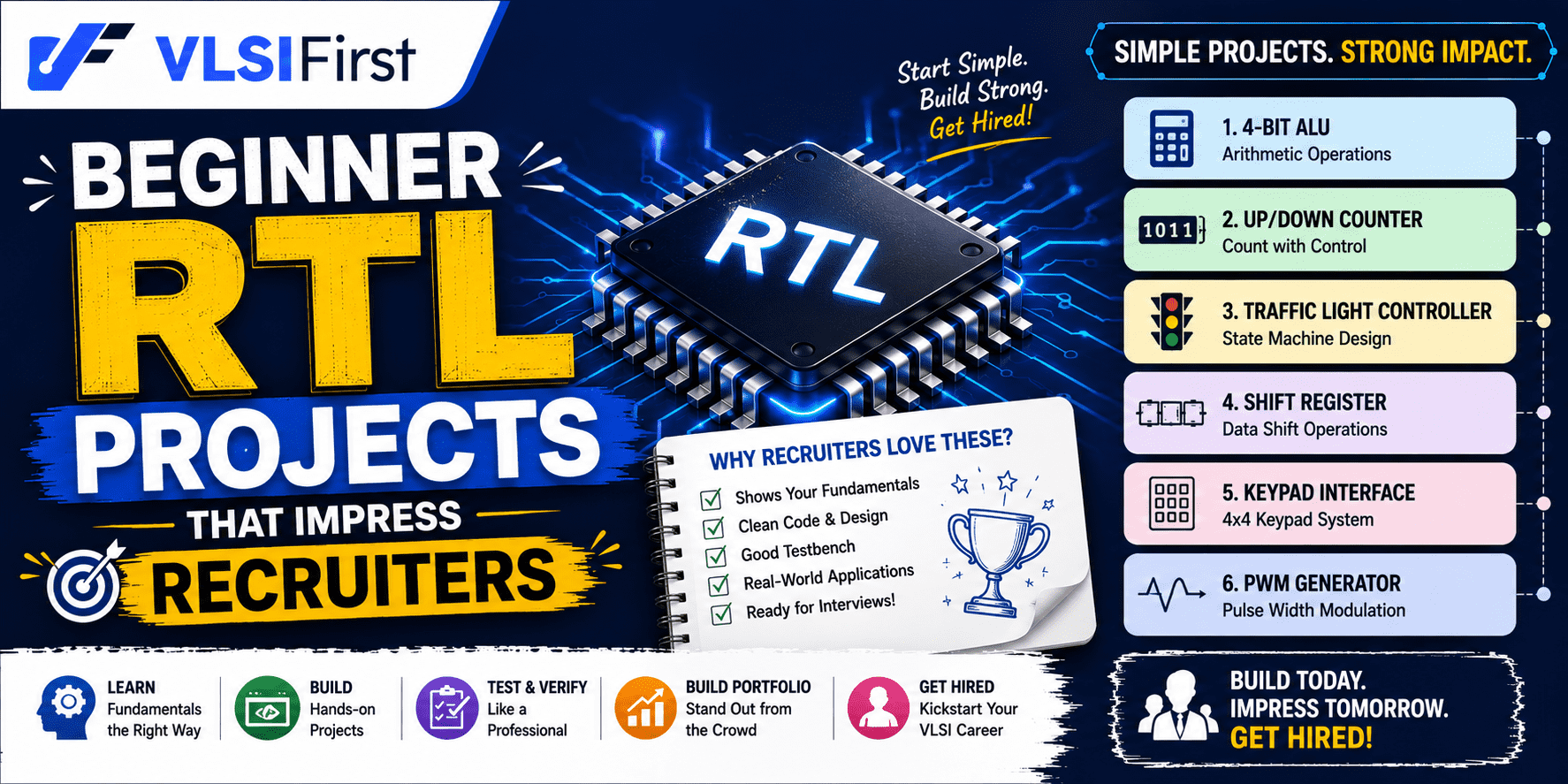
Beginner RTL Projects That Impress Recruiters
Discover beginner RTL projects that impress VLSI recruiters. Learn which Verilog projects build practical skills, strengthen your portfolio, and improve interview success.


Hours
2-98/1, Gurram Guda Road, Gurram Guda, Hyderabad, Rangareddy, Telangana, 501510
Copyright 2025 © VLSI Technologies Private Limited
Designed and developed by KandraDigitalCopyright 2025 © VLSI Technologies Private Limited
Designed, Developed & Marketing by KandraDigital