
The growing demand for semiconductor engineers has led to a surge in VLSI training institutes across India. With more students exploring careers in chip design, many institutes promote their courses using placement guarantees, high salary promises, and impressive success rates.
However, not all these claims are genuine.
Many students enroll in VLSI courses based on attractive placement advertisements, only to realize later that the promises were exaggerated or misleading. This leads to frustration, financial loss, and delayed career growth.
So how do you identify whether a VLSI institute’s placement claims are real or fake?
This guide will help you understand common red flags, verification strategies, and practical tips to evaluate placement promises before joining any VLSI training program.
Why Placement Claims Can Be Misleading
Placement marketing is one of the strongest selling points for training institutes. Terms like:
- “100% placement guarantee”
- “Assured job within 3 months”
- “High salary packages for all students”
are commonly used to attract students.
However, the reality is that placements in the semiconductor industry depend on skills, projects, and interview performance, not just course enrollment.
Recruiters look beyond certificates and evaluate candidates based on practical knowledge, problem-solving ability, and hands-on experience.
Common Types of Fake Placement Claims
1. “100% Placement Guarantee”
This is one of the most common marketing statements.
In reality, no institute can guarantee placements for every student because:
- student performance varies
- interview outcomes depend on multiple factors
- company hiring requirements change
A genuine institute may offer placement support, but not guaranteed results.
2. Highlighting Only Top Salaries
Some institutes advertise high salary packages like:
- “Up to 12 LPA”
- “Highest package achieved by our student”
But they do not mention:
- average salary
- number of students placed
- roles offered
This creates a misleading impression.
3. Listing Companies Without Proof
Many institutes display logos of well-known semiconductor companies on their websites.
However, they may not have official partnerships or consistent placement records with these companies.
Always verify whether students were actually placed in those organizations.
4. Showing Fake or Incomplete Testimonials
Testimonials can be manipulated easily.
Some red flags include:
- No LinkedIn profile of the candidate
- generic or repetitive feedback
- missing company details
Authentic testimonials usually include verifiable information.
5. Internships Presented as Placements
Some institutes present internships as full-time placements.
While internships are valuable, they are not equivalent to permanent job offers.
Students should clearly understand:
- duration of the internship
- stipend (if any)
- conversion to full-time role
Red Flags to Watch Before Joining
1. Lack of Transparent Data
A reliable institute should provide:
- number of students trained
- number of students placed
- placement percentage
- average salary range
If this information is missing or vague, it is a warning sign.
2. No Focus on Skills or Projects
Institutes that focus only on placement promises often ignore:
- project-based learning
- tool exposure
- practical assignments
But in VLSI, skills matter more than claims.
3. Overly Short Course Duration
Some institutes promise placements after very short training durations (e.g., 1–2 months).
VLSI is a complex field that requires:
- strong fundamentals
- HDL coding practice
- debugging experience
Short courses rarely provide enough depth for job readiness.
4. No Information About Trainers
If an institute does not highlight trainer experience, it may indicate:
- lack of industry exposure
- limited practical knowledge
Trainer quality directly impacts learning outcomes.
5. No Real Student Portfolio or Projects
Students who complete genuine VLSI training usually have:
- RTL design projects
- verification test benches
- GitHub portfolios
If an institute cannot showcase student work, placement claims may not be reliable.
How to Verify Placement Claims
1. Check LinkedIn Profiles
Search for the institute name on LinkedIn and verify:
- where students are currently working
- roles they have secured
- career progression
LinkedIn is one of the most reliable platforms for verifying placements.
2. Speak to Past Students
Contact alumni directly and ask:
- what they learned in the course
- whether placement support was helpful
- how long it took to get a job
Real student feedback provides valuable insights.
3. Ask for Detailed Placement Reports
A genuine institute should provide:
- company names
- job roles
- salary ranges
- number of students placed
Avoid institutes that provide only vague or partial information.
4. Attend Demo Sessions
Demo classes help you evaluate:
- trainer expertise
- teaching quality
- practical approach
This gives you a clearer idea of whether the institute can actually deliver results.
5. Compare with Industry Expectations
Check whether the course teaches skills required by real job roles such as:
- RTL design
- verification
- physical design
What Genuine Placement Support Looks Like
Instead of fake guarantees, reliable institutes provide:
- resume building assistance
- mock interviews
- project guidance
- job referrals
- continuous mentorship
They focus on improving student skills rather than making unrealistic promises.
How VLSIFirst Stands Out
While many institutes rely on exaggerated claims, platforms like VLSIFirst focus on:
- industry-relevant curriculum
- real-time projects
- tool-based training
- mentorship from experienced professionals
Rather than promising unrealistic outcomes, the focus is on making students job-ready through practical learning.
Final Thoughts
Choosing a VLSI training institute is a crucial decision that can shape your entire career. While placement claims may seem attractive, they should never be the sole factor in your decision.
Always remember:
- no institute can guarantee placements
- skills and projects matter more than marketing
- real results can be verified through data and alumni
By carefully evaluating placement claims and focusing on skill development, students can avoid common traps and make informed decisions.
In the end, your career success in VLSI depends on your learning, practice, and consistency—not on promises made in advertisements.
For more guidance on VLSI careers, training strategies, and industry insights, explore additional resources on VLSIFirst.com.

How to Test Your RTL Before Simulation: A Practical Pre-Simulation Checklist for Beginners
Learn how to test your RTL before simulation with a practical pre-simulation checklist. Improve Verilog quality, reduce debugging time, and build industry-ready RTL skills.
From Logic Diagram to Verilog Code – Complete Workflow
Learn the complete workflow from logic diagram to Verilog code, including specifications, RTL architec ture, coding, simulation, debugging, verification, and documentation.
Common Mistakes While Writing Verilog Code
Learn the most common Verilog coding mistakes beginners make and how to avoid them. Improve RTL coding, simulation, debugging, verification, and interview readiness.
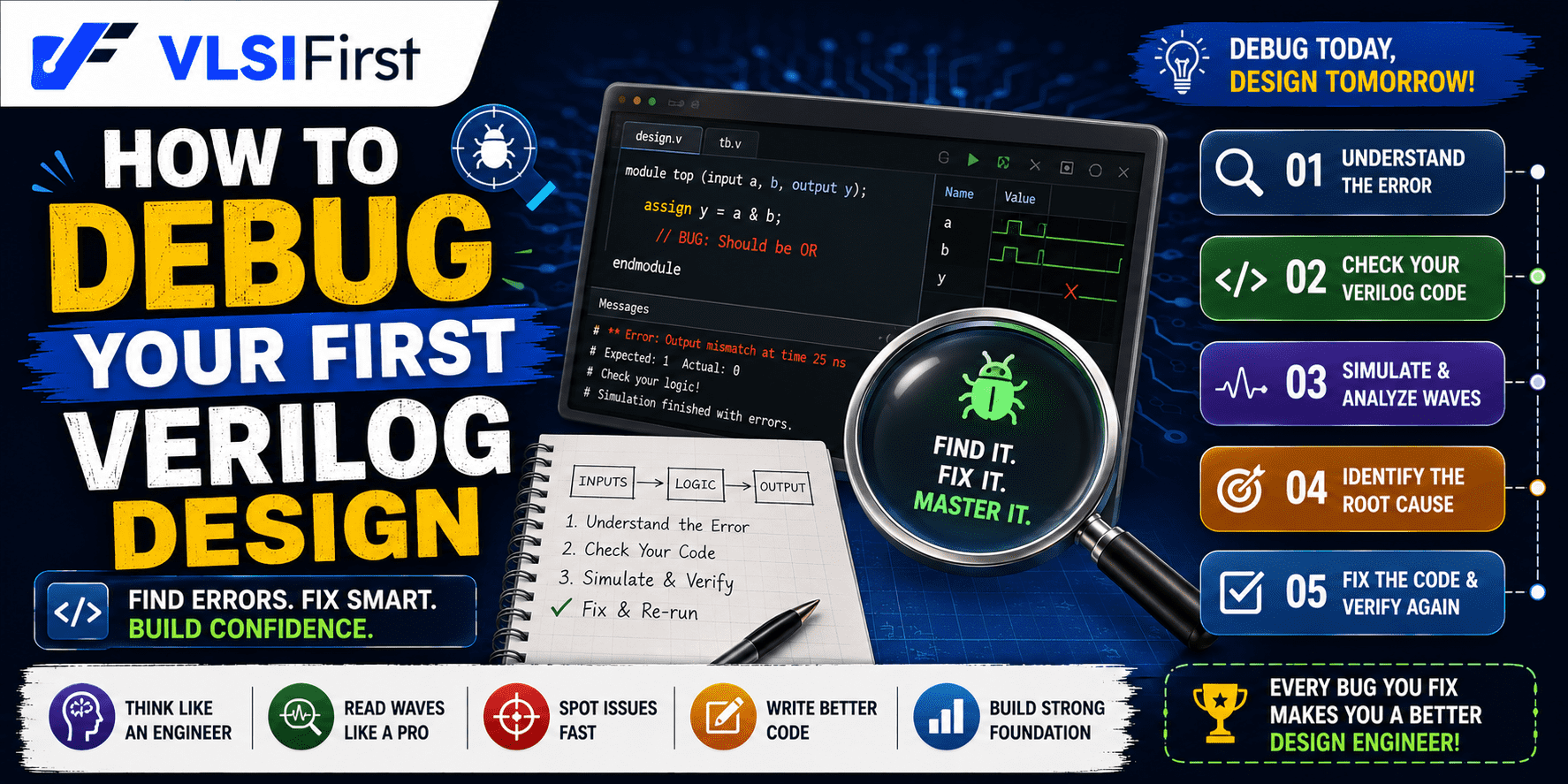
How to Debug Your First Verilog Design
Debugging your first Verilog design with practical RTL debug techniques, waveform analysis, testbench tips, FSM debugging, and common beginner mistakes. Read now!
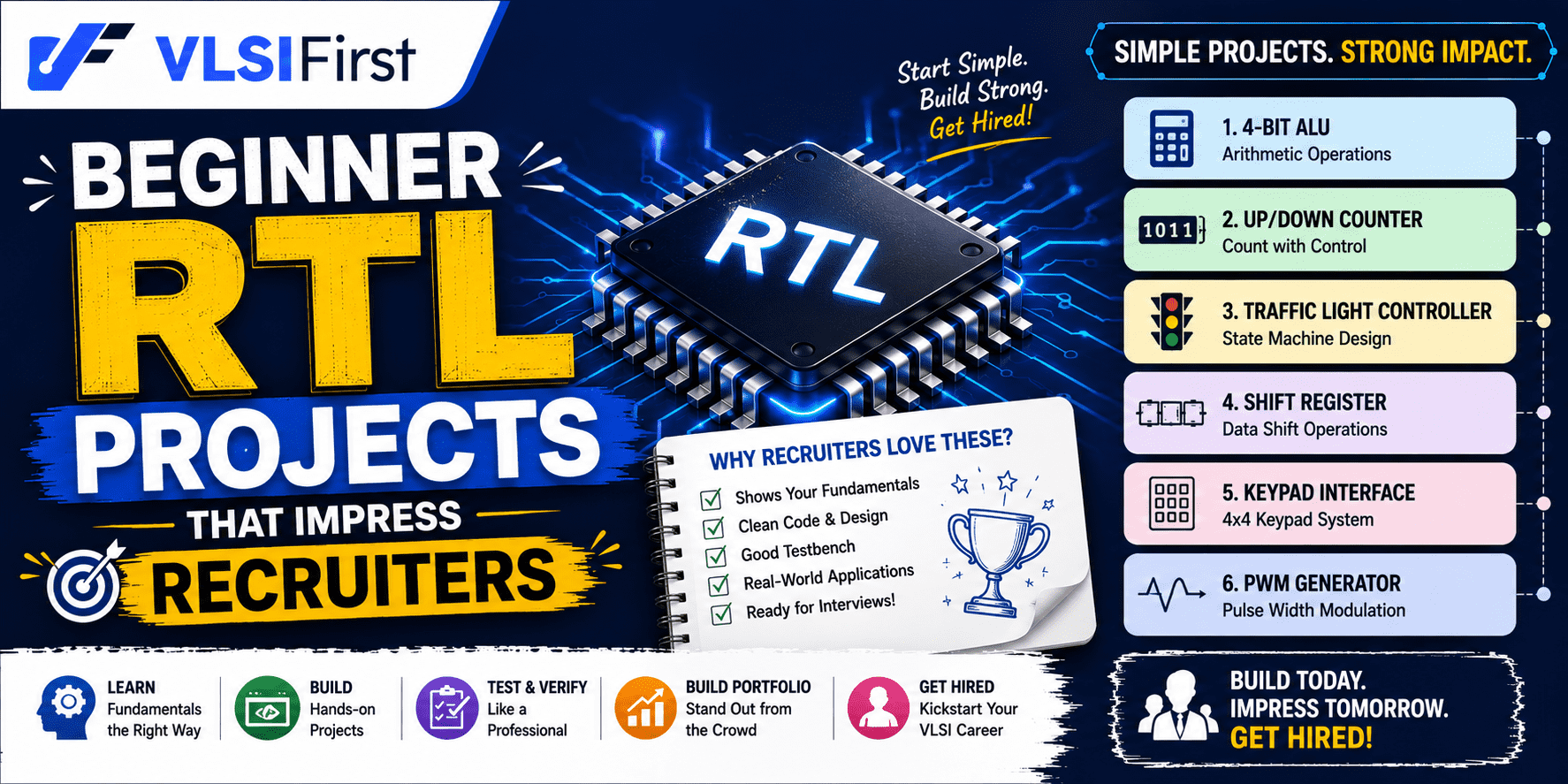
Beginner RTL Projects That Impress Recruiters
Discover beginner RTL projects that impress VLSI recruiters. Learn which Verilog projects build practical skills, strengthen your portfolio, and improve interview success.


Hours
2-98/1, Gurram Guda Road, Gurram Guda, Hyderabad, Rangareddy, Telangana, 501510
Copyright 2025 © VLSI Technologies Private Limited
Designed and developed by KandraDigitalCopyright 2025 © VLSI Technologies Private Limited
Designed, Developed & Marketing by KandraDigital