
A Self-Assessment Guide for ECE & EEE Students
Choosing a career in electronics today is no longer straightforward. With options like software development, embedded systems, power electronics, data science, and VLSI, many ECE and EEE students feel overwhelmed when deciding their future.
VLSI (Very Large Scale Integration) often stands out as a high-paying, core-domain career, but it is not meant for everyone. This guide is designed to help you honestly evaluate whether VLSI aligns with your skills, mindset, and long-term goals before you invest time, money, and effort into a course.
This is not a promotional article. Think of it as a self-check framework; by the end, you should clearly know whether VLSI is the right career path for you.
What a Career in VLSI Really Involves
Before assessing yourself, it’s important to understand what working in VLSI actually means.
A VLSI engineer works on:
- Designing digital or analog circuits
- Verifying complex chip functionality
- Implementing layouts and ensuring timing, power, and reliability
- Debugging logical, functional, or physical design issues
- Collaborating across global design teams
This is deep technical work, not a “quick IT job.” Most VLSI roles fall into areas like:
- RTL Design
- Functional Verification
- Physical Design
- DFT (Design for Testability)
- Analog / Mixed Signal Design
If you’re new to these roles, start with a structured overview like VLSI Career Paths Explained.
Self-Assessment #1: Your Interest in Core Electronics
Ask yourself honestly:
- Do you enjoy subjects like Digital Electronics, CMOS, VLSI Design, Control Systems, or Semiconductor Physics?
- Do you feel curious about how chips work internally, not just how software runs on them?
- When solving circuit problems, do you enjoy the process—even if it takes time?
Why this matters
VLSI is a long-term learning career. If you dislike electronics fundamentals, you may struggle to stay motivated once the initial excitement fades.
Self-Assessment #2: Your Patience With Complexity
VLSI engineering is not fast gratification work.
You may spend:
- Days debugging a single timing issue
- Weeks understanding a complex block
- Months mastering one tool flow
Ask yourself:
- Can you stay calm when solutions are not immediate?
- Are you okay revisiting the same concept multiple times?
- Do you enjoy structured problem-solving rather than instant results?
Reality check
If you strongly prefer quick outputs, frequent UI changes, or visible results, software or front-end roles may suit you better.
VLSI rewards deep focus and persistence, not speed alone.
Self-Assessment #3: Your Learning Style
VLSI learning is different from most college subjects.
You’ll need to:
- Read technical documentation
- Understand design flows end-to-end
- Learn industry tools (not just theory)
- Apply concepts through projects and labs
Ask yourself:
- Do you prefer conceptual + practical learning over rote memorization?
- Are you willing to learn beyond your university syllabus?
- Can you learn step-by-step without rushing?
Self-Assessment #4: Your Comfort With Programming & Tools
You don’t need to be a hardcore coder, but VLSI is not coding-free.
Depending on the role, you may work with:
- Verilog / SystemVerilog
- TCL, Python, or Perl (basic to intermediate)
- EDA tools like simulators, synthesis, or P&R tools
Ask yourself:
- Are you open to learning scripting if required?
- Can you debug logical issues using waveforms and logs?
- Are you comfortable working on Linux-based environments?
Important: You don’t need mastery on day one. What matters is willingness to learn.
Related read: How Much Coding Is Required for VLSI Jobs?.
Self-Assessment #5: Your Career Expectations
Many students choose VLSI purely for salary, but that can be risky.
Ask yourself:
- Are you okay with a steep learning curve in the first 1–2 years?
- Do you value technical depth and long-term growth?
- Are you willing to start with learning-focused roles rather than chasing titles?
Truth you should know
VLSI offers strong career stability and growth, but only after you build solid fundamentals. Shortcuts rarely work here.
For realistic expectations, see VLSI Salary Trends for Freshers and Experienced Engineers.
Self-Assessment #6: Your Academic Background (And Its Real Impact)
Many students worry:
- “I’m from a tier-3 college.”
- “My CGPA is low.”
- “I didn’t do any core internships.”
Here’s the reality:
- College brand helps initially, but skills matter more long-term
- CGPA matters less once you prove project capability
- Many successful VLSI engineers started with industry training after graduation
Ask yourself:
- Are you willing to build skills beyond your degree?
- Can you invest time in structured training and projects?
Signs VLSI Is the Right Career for You
You’re likely a good fit if:
- You enjoy understanding how things work internally
- You prefer engineering depth over flashy outputs
- You’re patient with learning and debugging
- You want a core-domain career with global relevance
- You’re okay with continuous upskilling
Signs You Should Reconsider (And That’s Okay)
VLSI may not be ideal if:
- You strongly dislike electronics fundamentals
- You want instant results and quick job switches
- You avoid debugging or complex problem-solving
- You’re unwilling to learn tools or scripting at all
This doesn’t mean you’ll fail, it just means another domain may suit you better.
How to Make a Confident Decision
If you’re still unsure, follow the below steps:
- Learn basics of digital design and VLSI flow
- Explore beginner-level projects
- Speak to industry mentors or trainers
- Avoid rushing into courses based on ads alone
A good starting point is a Beginner VLSI Roadmap or Foundational VLSI Training Program.
Final Thoughts
VLSI is a powerful, future-proof career, but only for those who choose it with clarity, not pressure.
If you resonate with the mindset, learning style, and patience required, VLSI can offer:
- Deep technical satisfaction
- Global career opportunities
- Long-term stability
Take the time to assess yourself honestly. The right decision today can save you years of regret, and open doors to meaningful engineering work.

How to Test Your RTL Before Simulation: A Practical Pre-Simulation Checklist for Beginners
Learn how to test your RTL before simulation with a practical pre-simulation checklist. Improve Verilog quality, reduce debugging time, and build industry-ready RTL skills.
From Logic Diagram to Verilog Code – Complete Workflow
Learn the complete workflow from logic diagram to Verilog code, including specifications, RTL architec ture, coding, simulation, debugging, verification, and documentation.
Common Mistakes While Writing Verilog Code
Learn the most common Verilog coding mistakes beginners make and how to avoid them. Improve RTL coding, simulation, debugging, verification, and interview readiness.
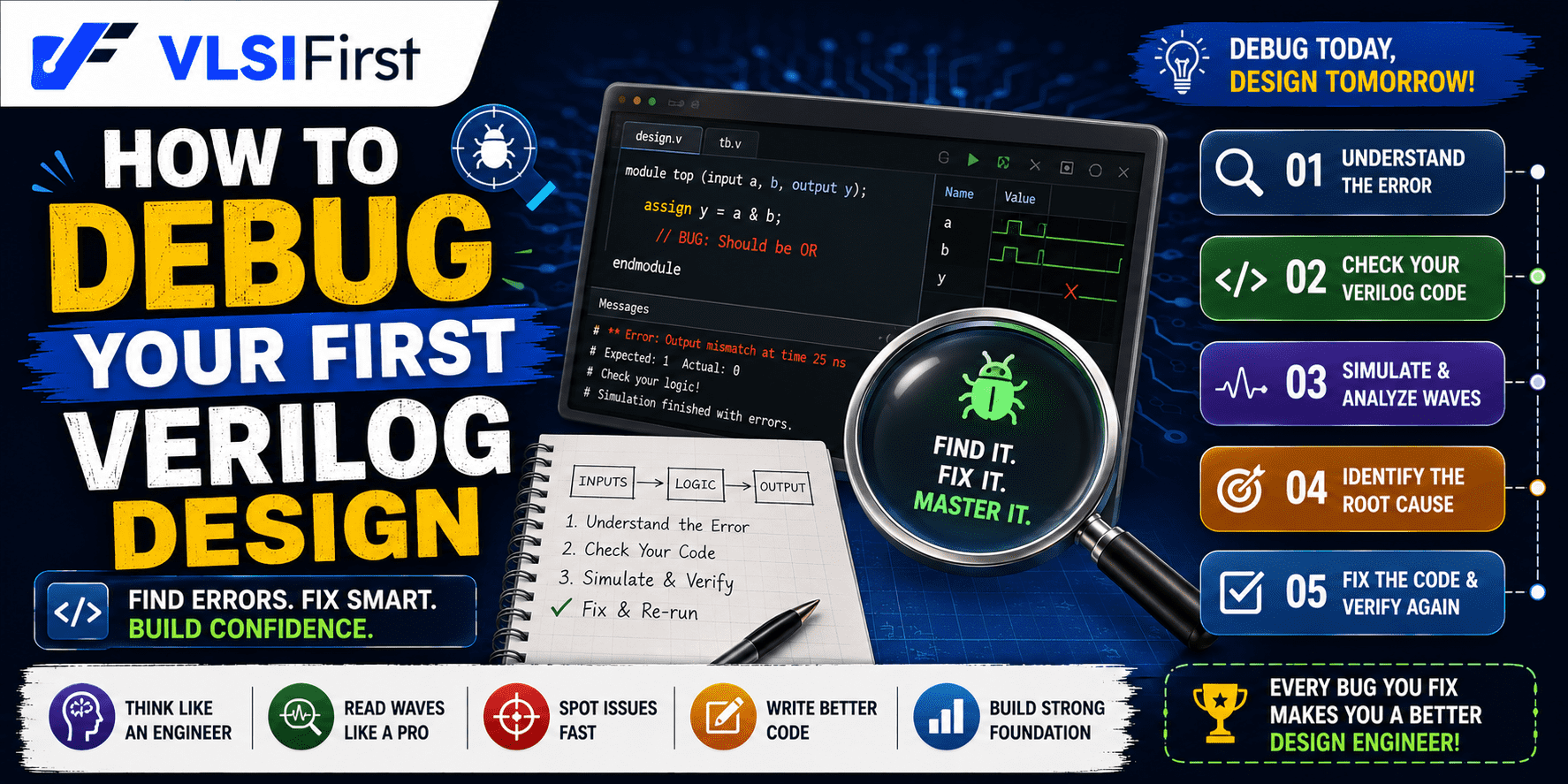
How to Debug Your First Verilog Design
Debugging your first Verilog design with practical RTL debug techniques, waveform analysis, testbench tips, FSM debugging, and common beginner mistakes. Read now!
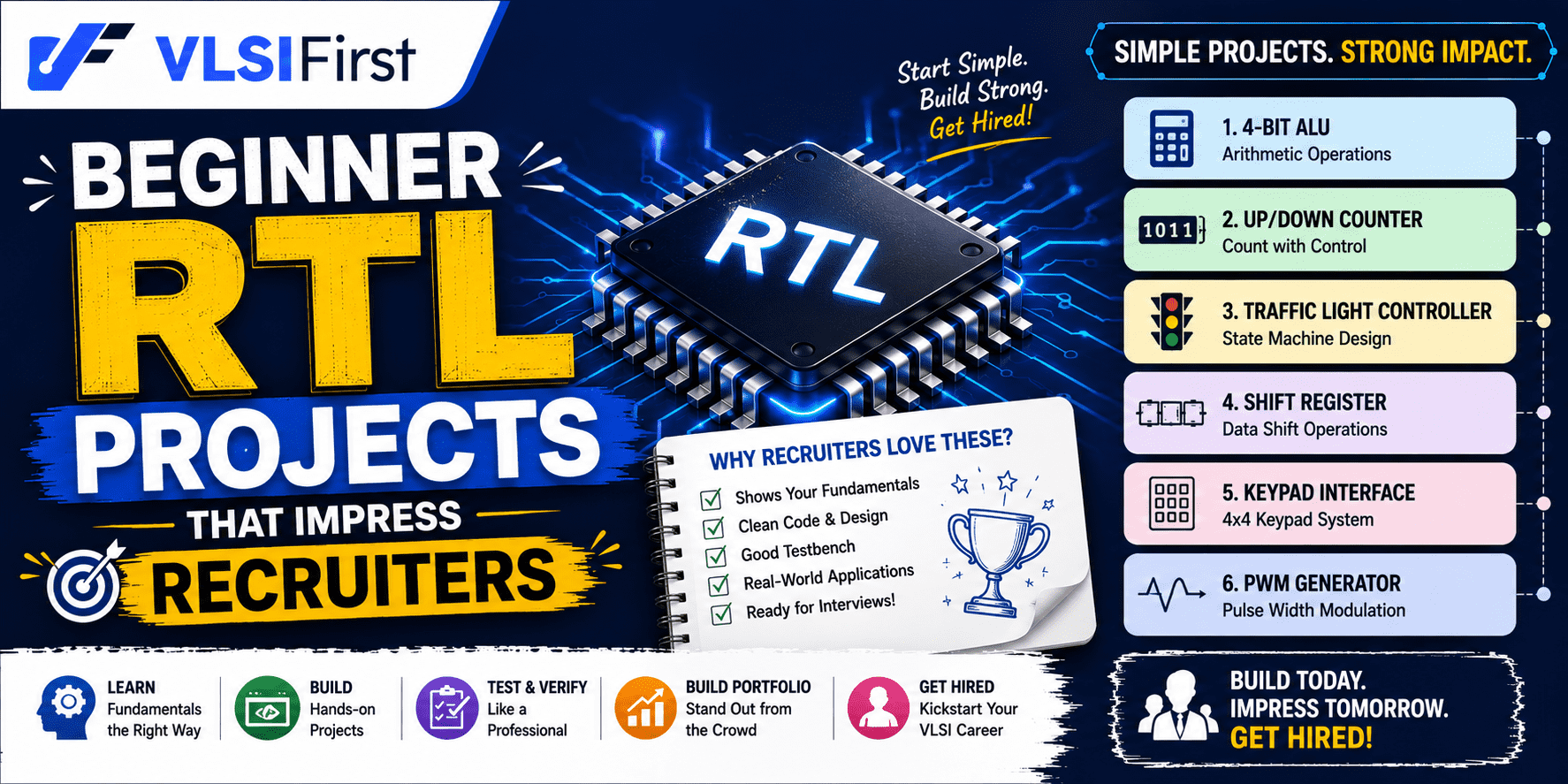
Beginner RTL Projects That Impress Recruiters
Discover beginner RTL projects that impress VLSI recruiters. Learn which Verilog projects build practical skills, strengthen your portfolio, and improve interview success.
.


Hours
2-98/1, Gurram Guda Road, Gurram Guda, Hyderabad, Rangareddy, Telangana, 501510
Copyright 2025 © VLSI Technologies Private Limited
Designed and developed by KandraDigitalCopyright 2025 © VLSI Technologies Private Limited
Designed, Developed & Marketing by KandraDigital