
The semiconductor industry is growing rapidly across the world, especially in India. With new chip design centers being established and global semiconductor companies expanding their teams, the demand for skilled VLSI engineers continues to increase.
As a result, thousands of engineering graduates are exploring VLSI training programs to enter this high-tech industry. However, one common question many students ask today is:
Should I choose online VLSI training or offline classroom training?
Over the last few years, online learning has become extremely popular. Many institutes now offer live virtual classes, recorded sessions, and cloud-based tools. At the same time, traditional classroom training still remains popular because of its structured environment and hands-on mentorship.
So which option actually works better now?
The answer is not as simple as choosing one over the other. The effectiveness of VLSI training depends on several factors including practical exposure, mentorship, project experience, and the student’s learning style.
This article explores the advantages, limitations, and future trends of online and offline VLSI training, helping you decide the best path for your semiconductor career.
Why the Mode of VLSI Training Matters
VLSI is not just another academic subject, it is a skill-based engineering discipline. Engineers must work with complex design flows, debug simulations, analyze timing reports, and use Electronic Design Automation (EDA) tools.
Because of this, learning VLSI effectively requires:
- strong conceptual understanding
- hands-on tool practice
- debugging experience
- real project exposure
The training mode you choose can influence how easily you acquire these skills.
While online learning offers flexibility and accessibility, classroom environments often provide stronger interaction and practical guidance.
Understanding these differences can help students select the most suitable training approach.
What Is Online VLSI Training?
Online VLSI training delivers course content through virtual platforms such as live classes, recorded lectures, and learning management systems.
Students can attend classes from anywhere using a laptop and internet connection.
Typical features of online VLSI courses include:
- live virtual sessions
- recorded lecture access
- online assignments and quizzes
- remote project guidance
- digital discussion forums
Online VLSI courses have become extremely popular because they allow students to learn from industry experts regardless of location.
Advantages of Online VLSI Training
1. Learning Flexibility
One of the biggest benefits of online training is flexibility.
Students can:
- attend classes from home
- learn after college or office hours
- revisit recorded sessions for revision
This flexibility makes online training particularly useful for working professionals and final-year students.
2. Access to Trainers Across India
Previously, students had to move to cities like Bangalore, Hyderabad, or Pune to attend VLSI institutes.
Now, online training allows students to learn from experienced industry engineers without relocating.
This expands access to quality training even for students living in smaller cities.
3. Lower Overall Cost
Online training often costs less than classroom training.
Students can save money on:
- accommodation
- travel
- relocation expenses
Because of these cost advantages, online courses are often more accessible to students from different financial backgrounds.
4. Recorded Content for Revision
VLSI concepts such as timing analysis, RTL debugging, or verification methodologies can be difficult to understand in a single lecture.
Recorded classes allow students to revisit complex topics multiple times, improving understanding and retention.
Limitations of Online VLSI Training
Despite its advantages, online learning also has some challenges.
1. Less Immediate Mentorship
Online training sometimes limits real-time interaction with instructors.
Although live sessions allow questions, the experience may not match the depth of face-to-face discussions.
Direct communication with mentors is often easier in physical classrooms.
2. Requires Strong Self-Discipline
Online learning requires students to stay motivated without the structure of a classroom.
Many learners start enthusiastically but lose consistency over time.
Without proper discipline, online training can turn into passive “video watching” instead of active skill development.
3. Limited Networking Opportunities
Offline institutes often allow students to interact with peers, seniors, and trainers in person.
These interactions sometimes lead to valuable industry connections and job opportunities.
Online learning environments attempt to replicate this through chat groups and forums, but the experience may still feel less engaging.
What Is Offline VLSI Training?
Offline VLSI training refers to classroom-based learning conducted at physical training institutes.
Students attend lectures in person and often work in labs with direct guidance from trainers.
Typical features include:
- classroom lectures
- lab sessions with tools
- real-time debugging assistance
- peer discussions
- structured assignments
Offline training is often preferred by students who benefit from a disciplined learning environment.
Advantages of Offline VLSI Training
1. Strong Hands-On Lab Exposure
One of the biggest strengths of offline training is practical lab experience.
Students can work with tools under trainer supervision, allowing them to understand debugging techniques more effectively.
In technical fields like semiconductor design, practical experience is extremely important.
2. Face-to-Face Mentorship
Classroom learning allows immediate interaction with trainers.
Students can:
- ask questions instantly
- receive one-to-one guidance
- solve problems collaboratively
Face-to-face mentoring improves learning clarity and confidence.
3. Structured Learning Environment
Offline training programs usually follow fixed schedules and regular assessments.
This structure helps students stay focused and maintain learning discipline.
Studies show that many learners feel classroom environments improve communication and knowledge retention compared to purely online formats.
4. Peer Learning and Networking
Offline training allows students to interact with classmates regularly.
Group discussions and collaborative problem-solving often lead to deeper learning.
These interactions can also build professional networks useful for job referrals.
Limitations of Offline VLSI Training
Although classroom training has advantages, it also has some limitations.
1. Higher Cost
Offline training programs usually cost more due to infrastructure, lab facilities, and classroom expenses.
Students may also need to spend additional money on accommodation and travel.
2. Location Constraints
Many reputed VLSI institutes are located in major tech cities.
Students from smaller towns may need to relocate to attend these programs.
3. Less Flexibility
Offline training follows fixed schedules.
Students who miss classes due to personal reasons may find it difficult to catch up.
Online vs Offline VLSI Training: Quick Comparison
|
Feature |
Online Training |
Offline Training |
|
Flexibility |
High |
Limited |
|
Cost |
Lower |
Higher |
|
Trainer Interaction |
Moderate |
Strong |
|
Hands-on Practice |
Depends on tools |
Strong |
|
Networking |
Limited |
Better |
|
Learning Discipline |
Self-driven |
Structured |
Both training methods have advantages depending on the student's learning preferences.
The Rise of Hybrid VLSI Training
In recent years, a new learning model has emerged that combines the strengths of both formats.
This model is called hybrid or blended learning.
Hybrid training combines online theoretical lessons with offline practical sessions and mentoring.
For example, students may:
- learn theory through online lectures
- practice tools through remote labs
- attend mentorship sessions for project debugging
Many engineering education studies suggest that hybrid learning can improve both flexibility and practical skill development.
As semiconductor training evolves, hybrid models are expected to become increasingly popular.
Which VLSI Training Mode Is Better for Freshers?
For beginners entering the semiconductor industry, offline training or hybrid learning often works best.
This is because beginners benefit from:
- structured guidance
- regular mentorship
- supervised tool practice
Freshers who need strong fundamentals may find classroom learning easier.
Which Mode Is Better for Working Professionals?
Working professionals often prefer online VLSI training.
The flexibility allows them to balance learning with their jobs.
Online courses can be particularly useful for engineers transitioning from other domains.
What Actually Matters More Than Training Mode
While the debate between online and offline learning continues, one truth remains clear: The quality of training matters far more than the learning format.
Students should focus on institutes that provide:
- strong hands-on tool training
- real chip design projects
- experienced industry mentors
- interview preparation support
Final Thoughts
Both online and offline VLSI training have proven to be effective pathways for building semiconductor careers.
Online training offers flexibility, affordability, and access to expert mentors from anywhere. Offline training provides structured learning, stronger mentorship, and practical lab environments.
Instead of asking “Which mode is better?”, students should ask:
- Does the course include real projects?
- Are industry tools included?
- Are trainers experienced professionals?
- Does the program prepare students for interviews?
Ultimately, success in VLSI depends not on whether the training is online or offline, but on how consistently you practice, build projects, and develop real engineering skills.

How to Test Your RTL Before Simulation: A Practical Pre-Simulation Checklist for Beginners
Learn how to test your RTL before simulation with a practical pre-simulation checklist. Improve Verilog quality, reduce debugging time, and build industry-ready RTL skills.
From Logic Diagram to Verilog Code – Complete Workflow
Learn the complete workflow from logic diagram to Verilog code, including specifications, RTL architec ture, coding, simulation, debugging, verification, and documentation.
Common Mistakes While Writing Verilog Code
Learn the most common Verilog coding mistakes beginners make and how to avoid them. Improve RTL coding, simulation, debugging, verification, and interview readiness.
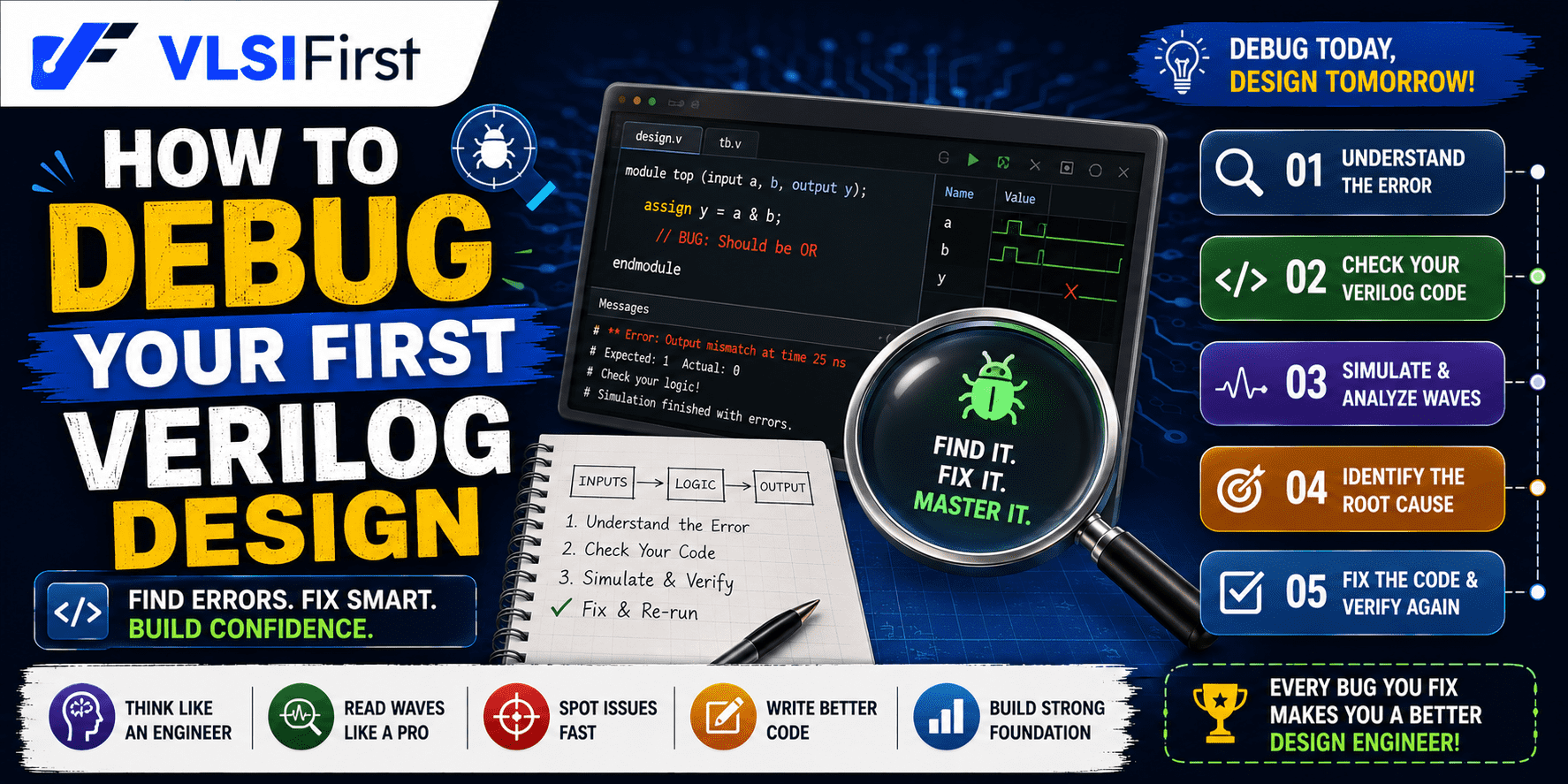
How to Debug Your First Verilog Design
Debugging your first Verilog design with practical RTL debug techniques, waveform analysis, testbench tips, FSM debugging, and common beginner mistakes. Read now!
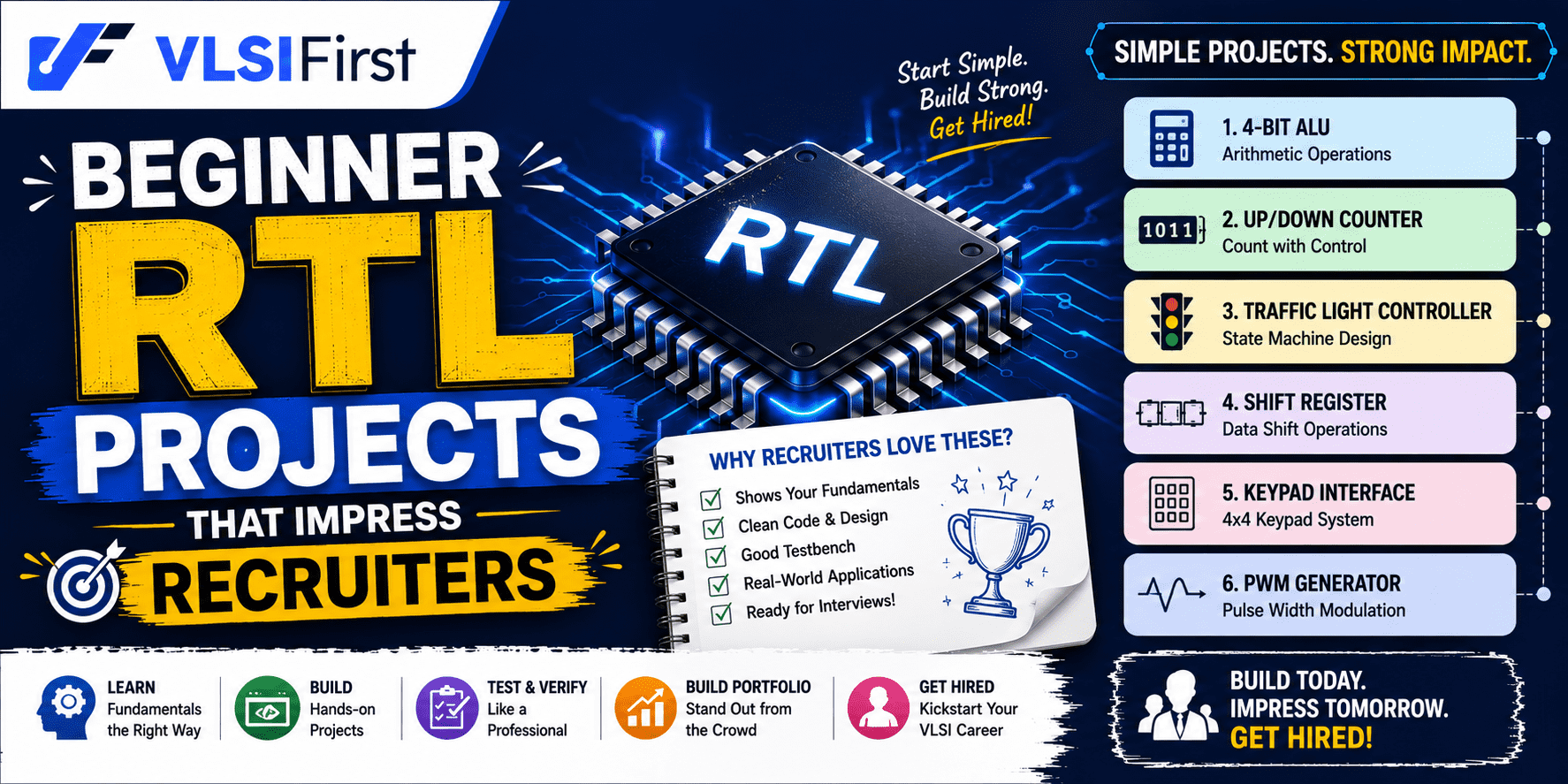
Beginner RTL Projects That Impress Recruiters
Discover beginner RTL projects that impress VLSI recruiters. Learn which Verilog projects build practical skills, strengthen your portfolio, and improve interview success.


Hours
2-98/1, Gurram Guda Road, Gurram Guda, Hyderabad, Rangareddy, Telangana, 501510
Copyright 2025 © VLSI Technologies Private Limited
Designed and developed by KandraDigitalCopyright 2025 © VLSI Technologies Private Limited
Designed, Developed & Marketing by KandraDigital