
The world today runs on chips—microprocessors, GPUs, memory devices, network accelerators, and AI engines. Every smartphone, laptop, smartwatch, EV, medical device, and even space technology depends on semiconductors. This massive global demand has created one of the most rewarding and future-proof engineering career paths: VLSI (Very Large-Scale Integration).
For ECE, EEE, CSE, and even ME/IT students who want a high-paying, stable, and globally in-demand career, VLSI is a powerful choice. But many students struggle with one question:
“What is the right VLSI career roadmap? How do I go from student to semiconductor engineer?”
This comprehensive guide explains the step-by-step VLSI career roadmap, the skills you need, job roles available, how to prepare for interviews, and how to transition smoothly into the semiconductor industry.
Understanding the VLSI Industry and Its Opportunities
VLSI involves designing and developing integrated circuits—chips containing billions of transistors. This field continues to grow due to:
- AI and machine learning
- 5G and 6G communication
- Electric vehicles (EV/HEV)
- IoT and smart devices
- Cloud and data centers
- Medical electronics
- Aerospace and defense
As new innovations emerge, semiconductor companies need skilled engineers for design, verification, testing, optimization, and implementation.
Who can build a VLSI career?
- ECE students
- EEE students
- CSE students with hardware interest
- Instrumentation/Telecommunication graduates
- M.Tech/MS VLSI students
If you understand digital basics and have interest in chip design, you can build a strong career in VLSI.
Build Strong Fundamentals During Engineering
Before diving into advanced VLSI domains, engineering students must solidify the fundamentals.
Core Subjects You Should Master
- Digital Electronics
- CMOS VLSI (basics + advanced concepts)
- Microprocessors & Microcontrollers
- Computer Architecture
- Signals & Systems
- Verilog or SystemVerilog basics
- Basic C or Python (for scripting)
These form the foundation of every semiconductor role.
Why fundamentals are important
Most VLSI job interviews begin with digital logic, Boolean algebra, FSMs, and timing concepts. Strong fundamentals immediately give you an edge over other candidates.
Learn Industry-Required VLSI Skills
Engineering colleges usually do not teach all the advanced skills needed for VLSI jobs. This is where learning industry-oriented tools and concepts becomes essential.
Here are the must-have skills:
Hardware Description Languages
- Verilog
- SystemVerilog
- VHDL (optional)
These languages are used to design and verify digital circuits.
Scripting Languages
- Python
- TCL
- Shell scripting
Automation is crucial in semiconductor workflows.
EDA Tools (Most Important)
You must get familiar with tools from:
- Synopsys (Design Compiler, VCS, PrimeTime)
- Cadence (Genus, Innovus, Xcelium, Tempus)
- Mentor/Siemens tools
- Open-source tools (for practice)
Hands-on tool experience dramatically increases your employability.
Advanced VLSI Concepts
- Static Timing Analysis
- Clock gating, power gating, UPF
- Low-power design
- Synthesis basics
- Floorplanning and routing concepts
- Testability (DFT) fundamentals
This knowledge helps identify which specialization is right for you.
Choose Your VLSI Specialization
VLSI is a vast industry with multiple domains. Freshers usually choose one of the following
:
- RTL Design
you write the logic using Verilog/SystemVerilog.
Best for: Students who love logic design and coding.
- Verification (UVM/SystemVerilog)
The most in-demand VLSI job.
Best for: Students who enjoy coding, debugging, and automation.
- Physical Design (PD)
Converting RTL into layout using EDA tools.
Best for: Students who enjoy tool-based, optimization-focused work.
- Static Timing Analysis (STA)
Ensures timing closure of chips.
Best for: Analytical thinkers with strong timing knowledge.
- DFT (Design for Test)
Adding scan chains, ATPG, BIST, and testing structures.
Best for: Students who enjoy patterns and debugging.
- Analog & Mixed-Signal Design
Transistor-level circuit design.
Best for: Students with strong electronics and circuit interest.
- Layout Design
Creating physical layouts for analog/digital blocks.
Best for: Students who enjoy precision, geometry, and visual design.
- FPGA Design
Implementing logic on FPGA boards.
Best for: Hands-on hardware enthusiasts.
How to Choose Your VLSI Domain
Ask yourself:
- Do I enjoy coding? → Verification / RTL
- Am I good with tools and optimization? → Physical Design
- Do timing concepts excite me? → STA
- Do I enjoy circuit theory? → Analog
- Do I like structured debugging? → DFT
Your strengths will naturally guide you to the best VLSI specialization.
Build Hands-On Projects
To get a job, you need projects, not just theory.
Beginner Projects
- 8-bit ALU
- 4/8/16-bit counter
- UART design
- FIFO, RAM/ROM design
Intermediate Projects
- RISC-V based mini processor
- AXI protocol implementation
- Pipelined CPU
- DSP blocks (MAC, filters)
FPGA Projects
- Implementing design on boards like Basys3
- Debug using logic analyzer and ILA
- Timing closure on FPGA tools
Physical Design Projects
- Synthesis and floorplanning
- Placement and routing
- CTS and congestion analysis
- Sign-off ECO experiments
Projects make your resume stand out and help you crack technical interviews.
Create a Strong VLSI Resume
Your resume must highlight:
- Technical Skills: HDLs, scripting, EDA tools, domain knowledge.
- Relevant Projects: Hands-on exposure with proper explanation.
- Tools Worked On: Synopsys, Cadence, Mentor, or open-source flows.
- Internships or academic work: Even small internships help.
- GitHub or Portfolio Link: Shows professionalism and practical skills.
A good resume gets you shortlisted—your skills get you hired.
Prepare for VLSI Job Interviews
VLSI interview preparation involves:
Core Topics
- Digital electronics
- FSMs
- Timing concepts
- Verilog/SystemVerilog
- Scripting
Domain-Specific Questions
- RTL → combinational/sequential logic, blocking vs non-blocking, synthesis
- Verification → UVM components, coverage, SVA
- Physical Design → STA, floorplan, CTS, IR drop, hold/setup
- STA → constraints, clock skew, OCV, timing paths
- DFT → scan, ATPG, compression
- Analog → transistor basics, op-amps, amplifiers
Problem-Solving Questions
Real design/verification scenarios.
Tool Commands
Basic knowledge of tool flow helps you stand out.
HR + Communication
Clear communication matters because semiconductor teams are cross-functional.
Apply for VLSI Jobs Strategically
The semiconductor industry hires through:
- Campus Placements
Always apply where companies visit.
- Off-Campus Hiring
Companies like:
- Intel
- Qualcomm
- AMD
- NVIDIA
- Texas Instruments
- Synopsys
- Cadence
- Siemens EDA
- HCL
- Wipro
- Sankalp
- InSemi
- Tata Elxsi
- Internships & Trainee Programs
Many freshers enter through 6-month paid internships.
- VLSI Training Institutes with Placement
These provide tool access + hands-on projects + mock interviews.
A structured path increases your chances of landing a high-paying VLSI job.
Grow Into a Semiconductor Professional
Once you enter the industry, you can grow into senior technical and managerial positions.
Career Growth Path
Fresher → Design Engineer → Senior Engineer → Lead → Architect → Director → VP
High-Level Roles After 7–15 Years
- Physical Design Architect
- Verification Lead
- RTL Architect
- SOC Integration Lead
- STA Specialist
- DFT Architect
- Analog Architect
VLSI provides long-term stability, high salaries, and global opportunities.
The Future of VLSI Careers is Brighter Than Ever
With governments investing billions into chip manufacturing and the world depending on advanced electronics, the semiconductor industry will grow for decades.
Why VLSI Is Future-Proof
- AI and 5G demand more chips
- EVs require 10× more semiconductors
- Smartphones and wearables evolve yearly
- Space and defense sectors expanding
- Semiconductor fabs opening across India
There has never been a better time to start a VLSI career.
Conclusion
Becoming a semiconductor engineer is not an overnight process. It requires:
- Strong fundamentals
- Practical tool experience
- Domain specialization
- Hands-on projects
- Smart resume building
- Interview preparation
But once you follow the right VLSI career roadmap, the industry rewards you with:
- High salaries
- Global job opportunities
- Technical depth
- Career stability
- Work on cutting-edge technology
For engineering graduates, VLSI is not just a career—it's a long-term, future-proof profession with immense growth potential. If you want a career that combines innovation, impact, and excellent compensation, the semiconductor industry is the perfect choice.
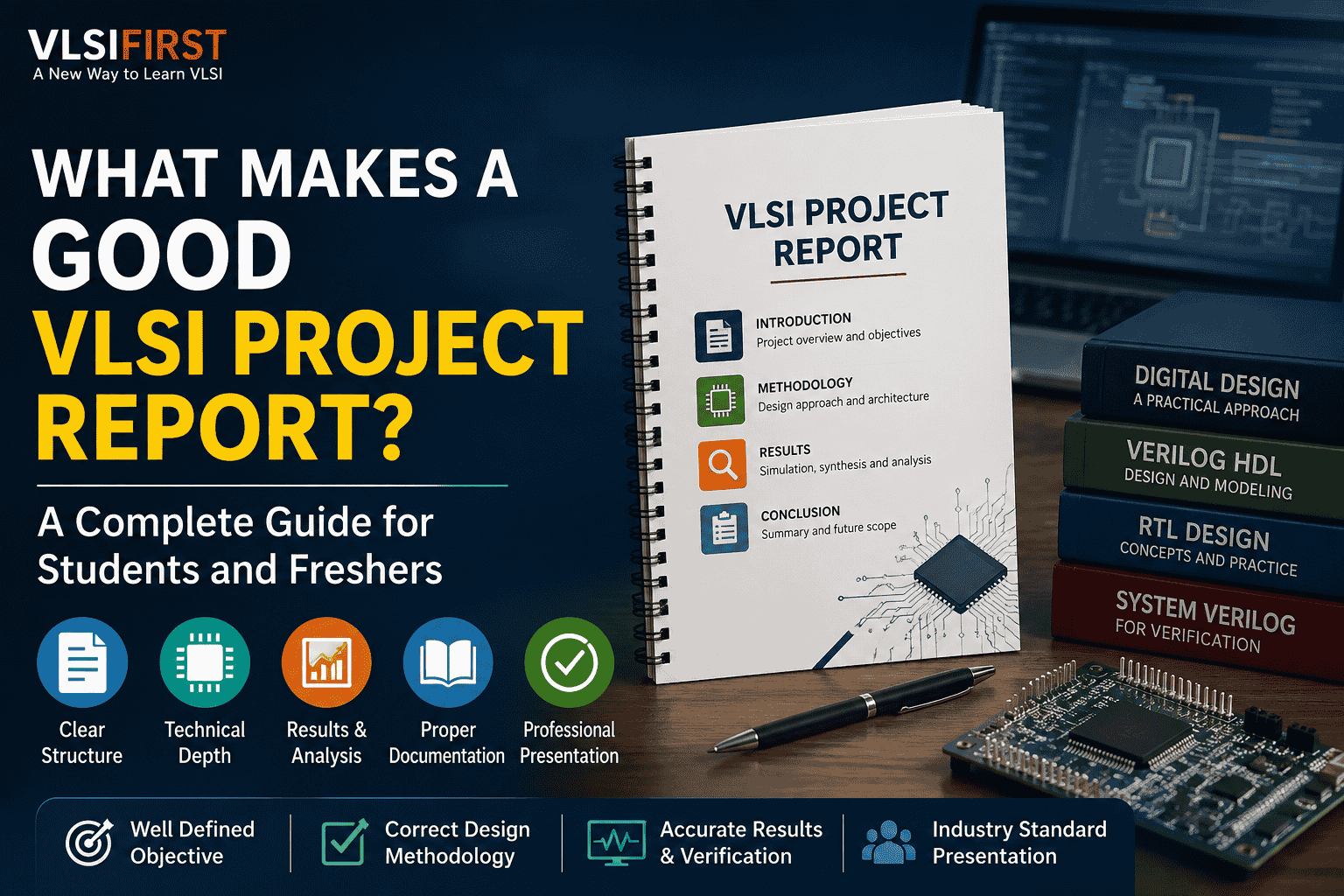
What Makes a Good VLSI Project Report? A Complete Guide for Students and Freshers
Learn how to write a professional VLSI project report with the right structure, RTL documentation, verification strategy, debugging details, and interview-ready presentation tips.
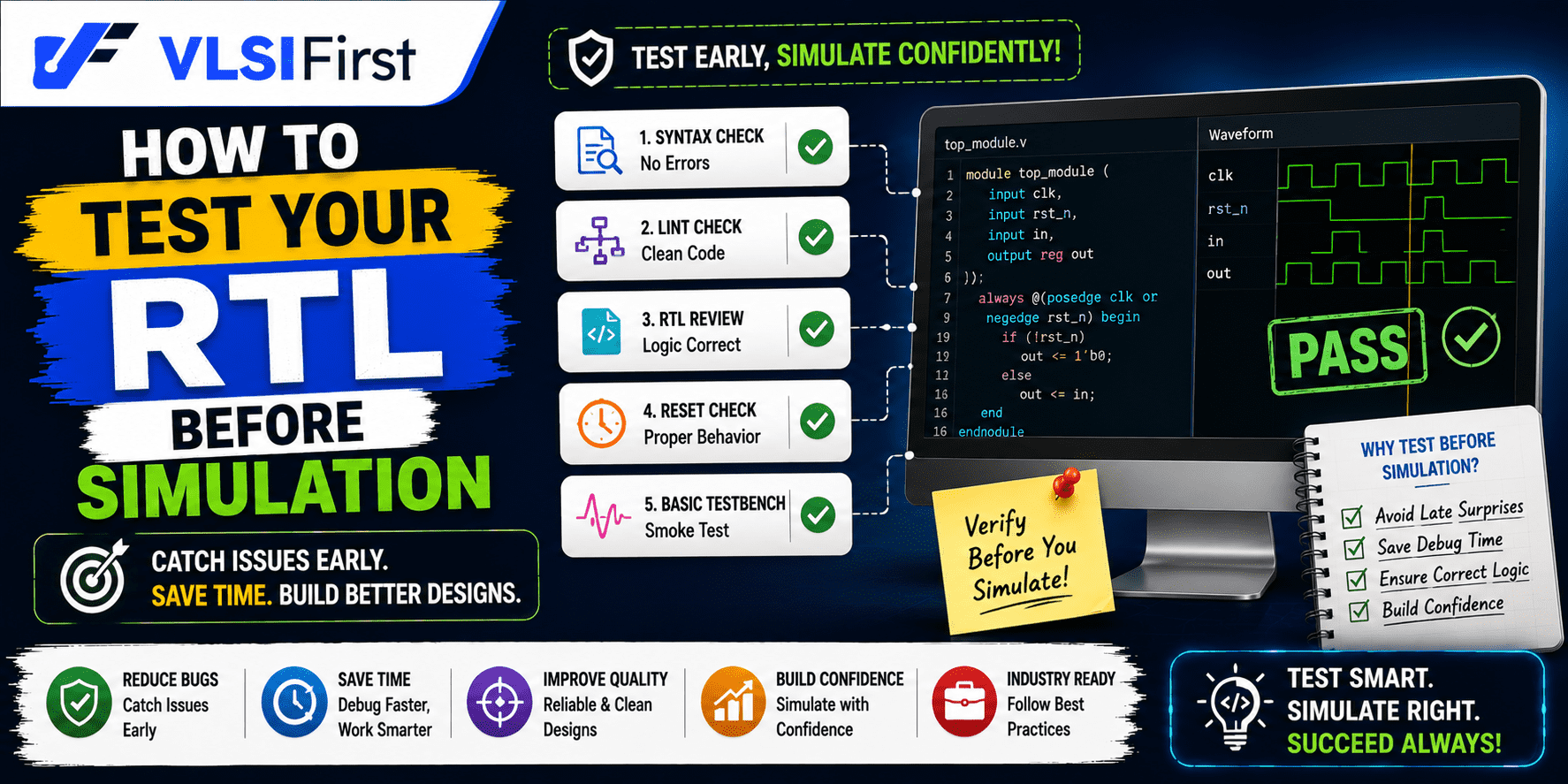
How to Test Your RTL Before Simulation: A Practical Pre-Simulation Checklist for Beginners
Learn how to test your RTL before simulation with a practical pre-simulation checklist. Improve Verilog quality, reduce debugging time, and build industry-ready RTL skills.

From Logic Diagram to Verilog Code – Complete Workflow
Learn the complete workflow from logic diagram to Verilog code, including specifications, RTL architec ture, coding, simulation, debugging, verification, and documentation.
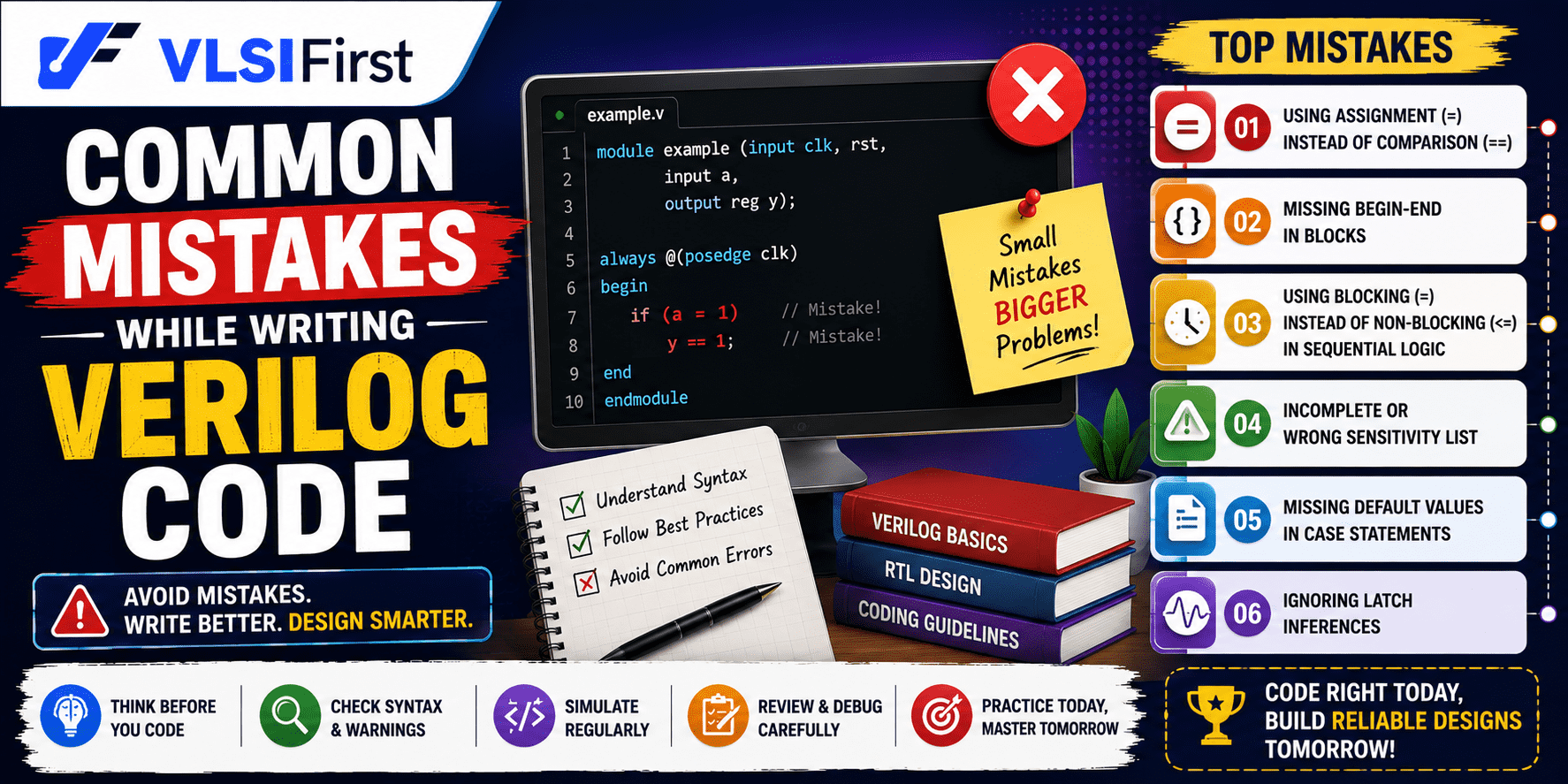
Common Mistakes While Writing Verilog Code
Learn the most common Verilog coding mistakes beginners make and how to avoid them. Improve RTL coding, simulation, debugging, verification, and interview readiness.
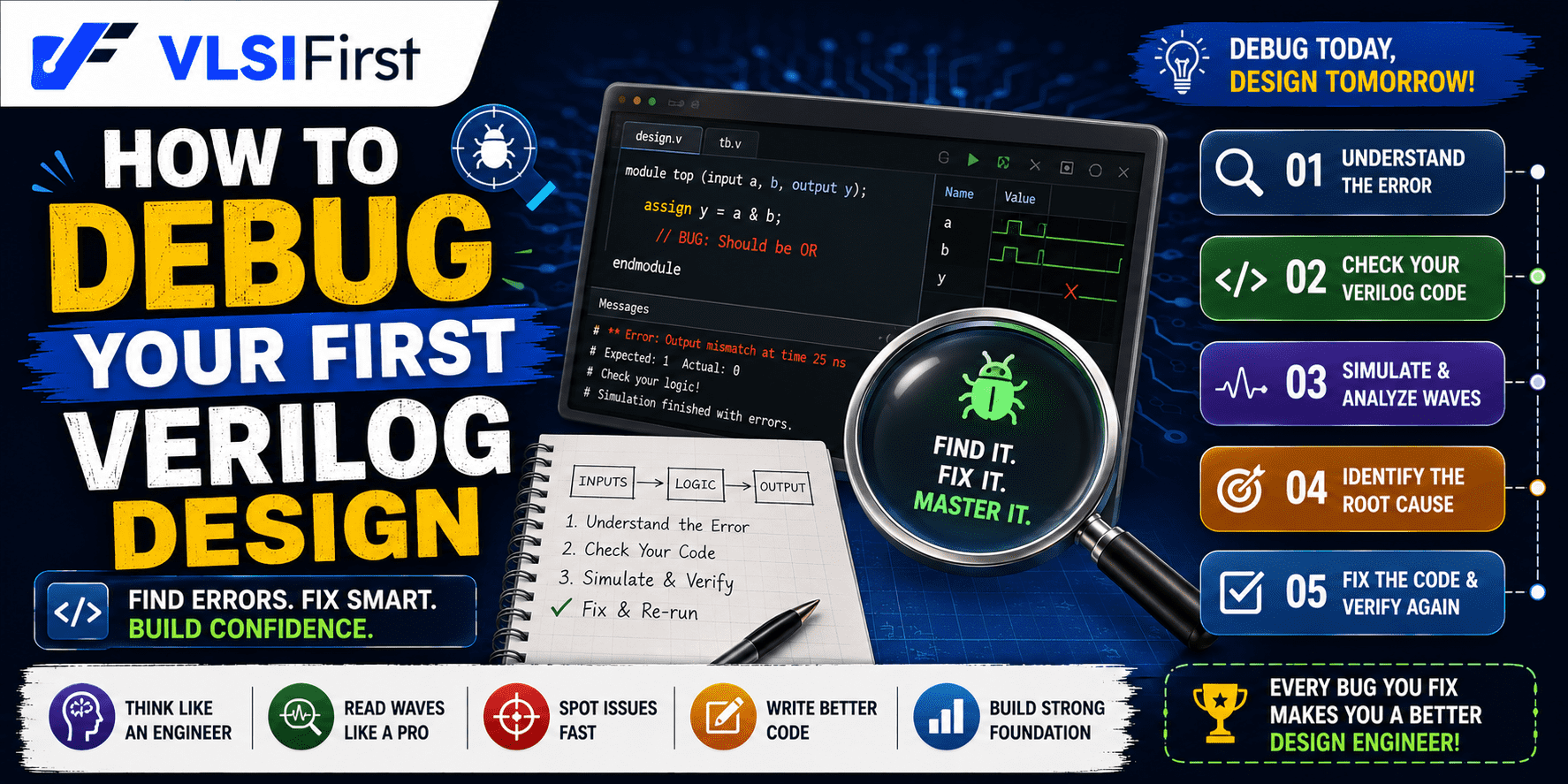
How to Debug Your First Verilog Design
Debugging your first Verilog design with practical RTL debug techniques, waveform analysis, testbench tips, FSM debugging, and common beginner mistakes. Read now!
.


Hours
2-98/1, Gurram Guda Road, Gurram Guda, Hyderabad, Rangareddy, Telangana, 501510
Copyright 2025 © VLSI Technologies Private Limited
Designed and developed by KandraDigitalCopyright 2025 © VLSI Technologies Private Limited
Designed, Developed & Marketing by KandraDigital