
Choosing between VLSI (Very Large-Scale Integration) and Software after engineering is one of the biggest dilemmas students face today—especially graduates from ECE, EEE, CSE, and IT. Both industries are booming, both offer high-paying roles, and both promise strong global opportunities. But the path, skills, work culture, and long-term career growth are very different.
In this comprehensive guide, you’ll get a real comparison between VLSI and software—focusing on future scope, salary, work-life balance, job availability, required skill sets, and growth potential. Whether you are confused, exploring options, or looking for clarity before choosing a career path, this guide will help you make a confident and informed decision.
Understanding the Basics: What Are VLSI and Software?
What Is VLSI?
VLSI involves designing and developing semiconductor chips used in smartphones, laptops, cars, servers, satellites, wearables, and AI hardware. It includes domains such as:
- RTL Design
- ASIC Design
- FPGA Development
- Verification
- Physical Design
- DFT (Design for Test)
- STA / Synthesis
- Low-Power Design
- Analog & Mixed Signal
This field is at the heart of the semiconductor and electronics revolution.
What Is Software Development?
Software engineering involves building applications, websites, APIs, data systems, tools, and software products using:
- Java, Python, C++, Go
- Web development frameworks
- Cloud computing
- DevOps, AI/ML, Data Science
Software is easier to enter because training availability is high and job roles are abundant.
Job Availability: Which Has More Opportunities?
Software Industry
- Larger number of companies (startups → MNCs).
- Easier to get entry-level roles.
- Remote work options are widely available.
- Multiple job verticals: Web dev, backend dev, mobile apps, cloud, data, AI, testing, DevOps.
Software wins in terms of volume of job opportunities.
VLSI Industry
- Limited companies, but massive demand for skilled engineers.
- Entry is tougher, but once in, the career accelerates fast.
- Semiconductor boom is creating huge hiring demand globally due to chip shortages and manufacturing expansion.
Companies hiring heavily:
- Intel
- Qualcomm
- Nvidia
- AMD
- Broadcom
- Samsung
- Micron
- MediaTek
- NXP
- Cadence, Synopsys, Siemens EDA
Not as many openings as software, but demand for skilled engineers is very high—leading to high salaries.
Salary Comparison: VLSI vs Software
Software Development Salaries (India)
- Freshers: ₹4–10 LPA
- Experienced (5+ yrs): ₹15–30 LPA
- Senior/Architect Roles: ₹40–60 LPA
- Product-Based Companies: Very high incentives
- Global roles: $100K+ in the US and Europe
VLSI Salaries (India)
- Freshers (good skillset): ₹6–18 LPA
- Mid-level engineers (3–6 yrs): ₹20–40 LPA
- Senior ASIC/Physical Design/Verification: ₹50–80 LPA
- US/Canada roles: $120K–$180K
- Niche skill roles earn more than software engineers in most cases.
VLSI wins for long-term high salaries. Software offers easier entry but more competition.
Skill Sets Required: Which Is Harder?
Skill Requirements in Software
- Programming fundamentals
- Data structures, algorithms
- OOP concepts
- Web, mobile, cloud, or backend skills
- Analytical and debugging skills
Difficulty Level: Moderate
Skill Requirements in VLSI
- Digital electronics
- CMOS principles
- Verilog/SystemVerilog
- Scripting (Python, Tcl, Perl)
- STA, Synthesis, PD, DFT, or Verification depending on domain
- EDA tools (Cadence, Synopsys, Siemens)
- Understanding of complete RTL → GDSII flow
Difficulty Level: High
VLSI requires deeper technical understanding, while software is more straightforward and beginner-friendly.
Work Environment and Roles: What Will You Actually Do?
Software Engineering Work Roles
- Writing code
- Reviewing pull requests
- Building new features
- Testing & debugging
- Working with agile teams
- Cloud deployments
- Customer-focused features
Work is dynamic, often fast-paced.
VLSI Roles
- Designing chip architectures
- Writing RTL
- Verifying functionality using testbenches
- Running synthesis/STA
- Timing closure
- Floorplanning & routing
- Debugging waveforms
- Working with complex EDA tools
Work is highly technical and detail-oriented.
If you enjoy electronics, logic design, and problem-solving with precision → VLSI is best.
If you enjoy building applications and problem-solving with algorithms → Software is best.
Future Scope: Which Industry Will Grow Faster?
Software Industry Future
- AI/ML
- Cloud-native development
- Cybersecurity
- Automation
- Web3
- Mobile-first applications
Growth is stable, but competition is extremely high.
VLSI Industry Future
Semiconductors are the backbone of:
- AI accelerators
- Electric vehicles
- IoT devices
- 5G/6G infrastructure
- Smartphones
- Servers & datacenters
Countries like India, USA, Taiwan, South Korea, Japan, and Europe are investing billions in chip manufacturing.
India-specific opportunities:
With initiatives like ISMC, Tata Semiconductor, Micron FAB, PM Modi’s Chip Mission, VLSI careers are expected to explode in the next decade.
VLSI will see the fastest growth globally, supported by government and industry investments.
Job Security: Which Is More Stable?
Software
- More layoffs due to rapid market changes.
- Outsourcing and automation threaten certain roles.
- Job switching is frequent and expected.
VLSI
- Semiconductor industry rarely fires skilled engineers.
- High learning curve increases job stability.
- Experienced VLSI engineers are in extremely high demand worldwide.
VLSI provides higher job security once you enter the field.
Learning Curve: How Easy Is It to Enter Each Industry?
Software Learning Curve
- Online courses available everywhere
- Low cost of entry
- Beginner-friendly
- You can self-learn
VLSI Learning Curve
- Harder to learn without expert guidance
- Tool access is expensive
- Requires mentorship, projects, and real-time tool experience
- Specialized training institutes like VLSIFIRST give a major advantage
Software is easier to begin, but VLSI offers more reward for those who prefer depth and challenge.
Long-Term Career Comparison
Software Long-Term Career
- Many career routes: developer → senior dev → tech lead → architect → manager
- Can enter AI, ML, Data Science
- Can go independent (freelancer/startup)
VLSI Long-Term Career
- Engineer → Senior Engineer → Lead → Architect → Chip Design Manager
- Opportunities in research, EDA tools, hardware startups
- Global opportunities skyrocket after 4–6 years of experience
Both fields offer strong long-term careers, but VLSI engineers often reach higher pay points faster.
So, VLSI or Software? Which Should You Choose?
Here’s a simple breakdown:
|
Criteria |
Software |
VLSI |
|
Ease of Entry |
Easy |
Difficult |
|
Job Availability |
Very high |
Moderate |
|
Salary Growth |
Good |
Very high |
|
Learning Curve |
Moderate |
Hard |
|
Job Security |
Medium |
High |
|
Future Demand |
High |
Extremely high |
|
Global Opportunities |
High |
Very high |
Who Should Choose Software?
Choose software if:
- You enjoy coding and building applications
- You want quick entry into the job market
- You prefer flexible career paths
- You want remote work opportunities
- You like learning fast-changing technologies
Who Should Choose VLSI?
Choose VLSI if:
- You love electronics, circuits, logic design
- You want a high-paying, stable career
- You prefer deep technical problem-solving
- You want to work on cutting-edge chip technologies
- You’re okay with a tougher first year of learning
Conclusion
- If you want faster entry → Software
- If you want higher earnings and strong long-term growth → VLSI
- If you want job security and global opportunities → VLSI
- If you want flexibility and variety → Software
Both are excellent careers—your interest and strengths matter most.
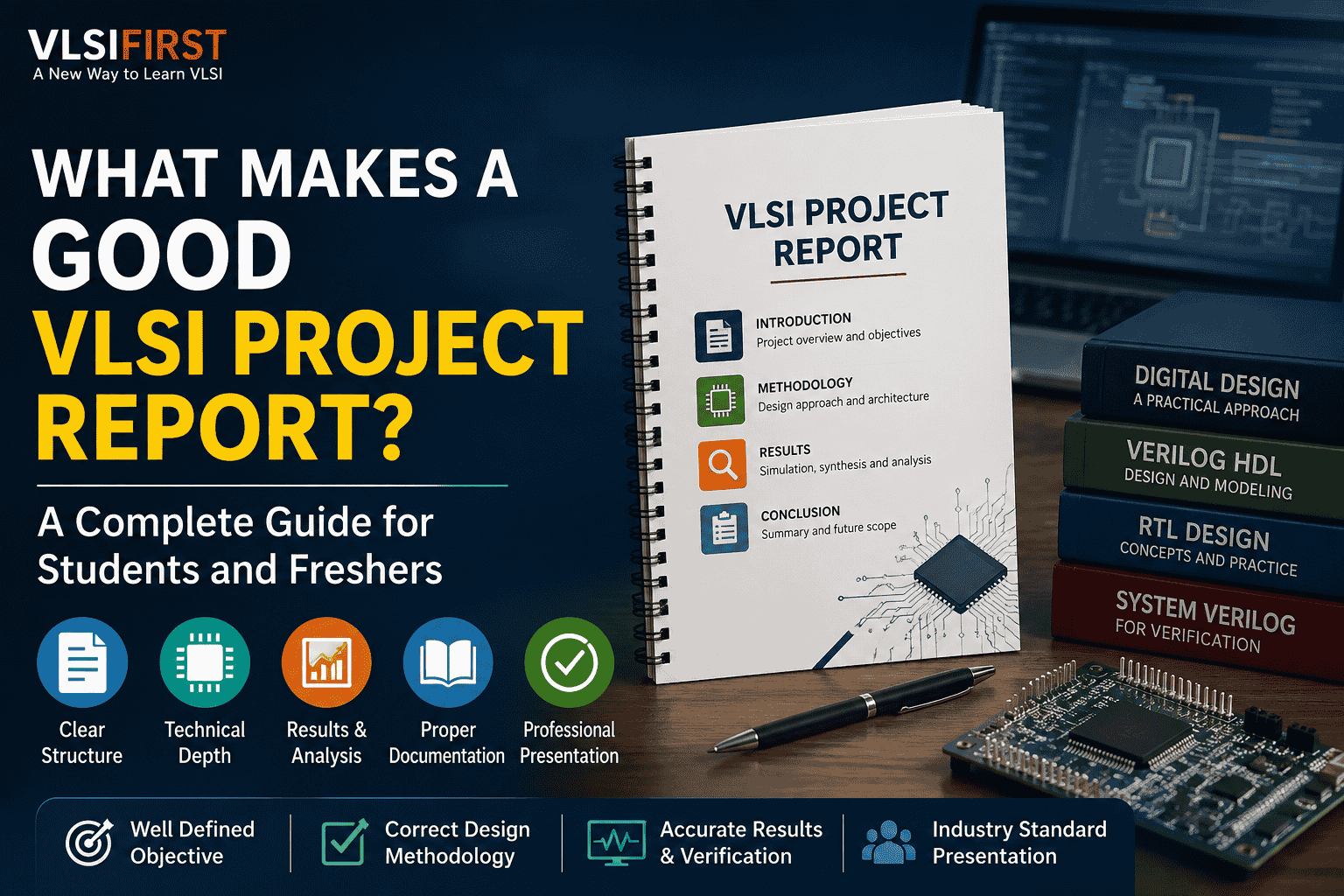
What Makes a Good VLSI Project Report? A Complete Guide for Students and Freshers
Learn how to write a professional VLSI project report with the right structure, RTL documentation, verification strategy, debugging details, and interview-ready presentation tips.
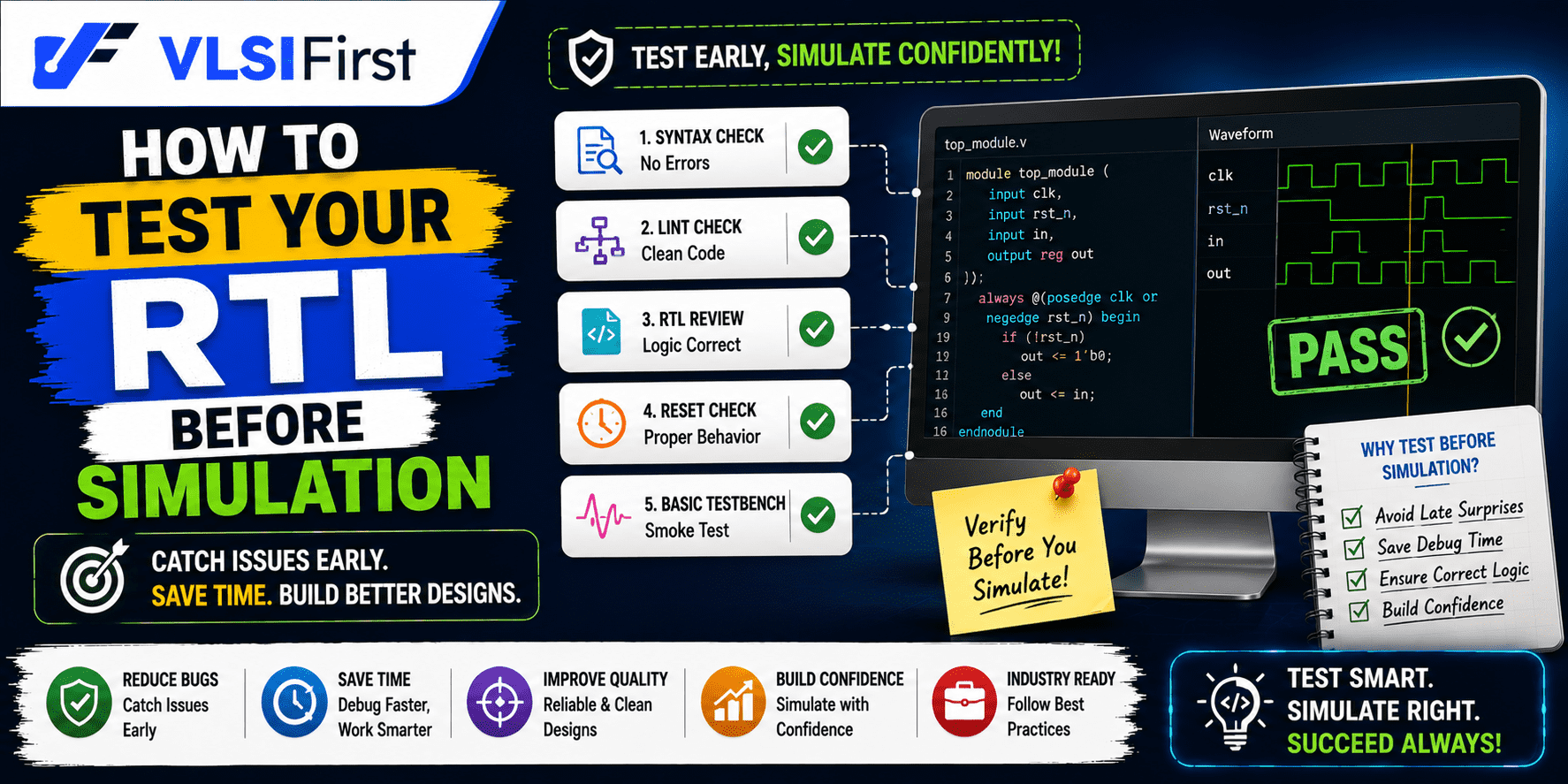
How to Test Your RTL Before Simulation: A Practical Pre-Simulation Checklist for Beginners
Learn how to test your RTL before simulation with a practical pre-simulation checklist. Improve Verilog quality, reduce debugging time, and build industry-ready RTL skills.

From Logic Diagram to Verilog Code – Complete Workflow
Learn the complete workflow from logic diagram to Verilog code, including specifications, RTL architec ture, coding, simulation, debugging, verification, and documentation.
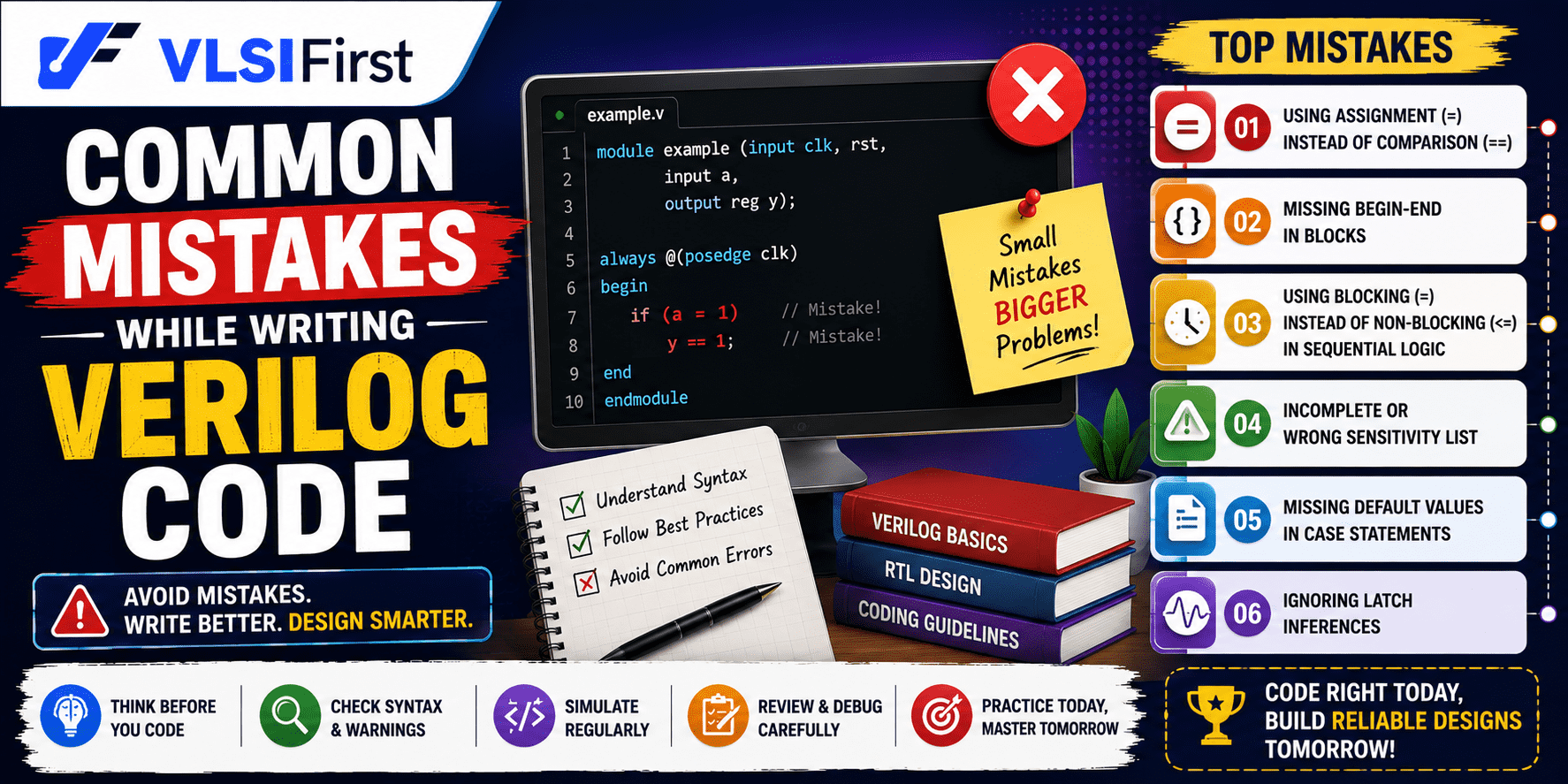
Common Mistakes While Writing Verilog Code
Learn the most common Verilog coding mistakes beginners make and how to avoid them. Improve RTL coding, simulation, debugging, verification, and interview readiness.
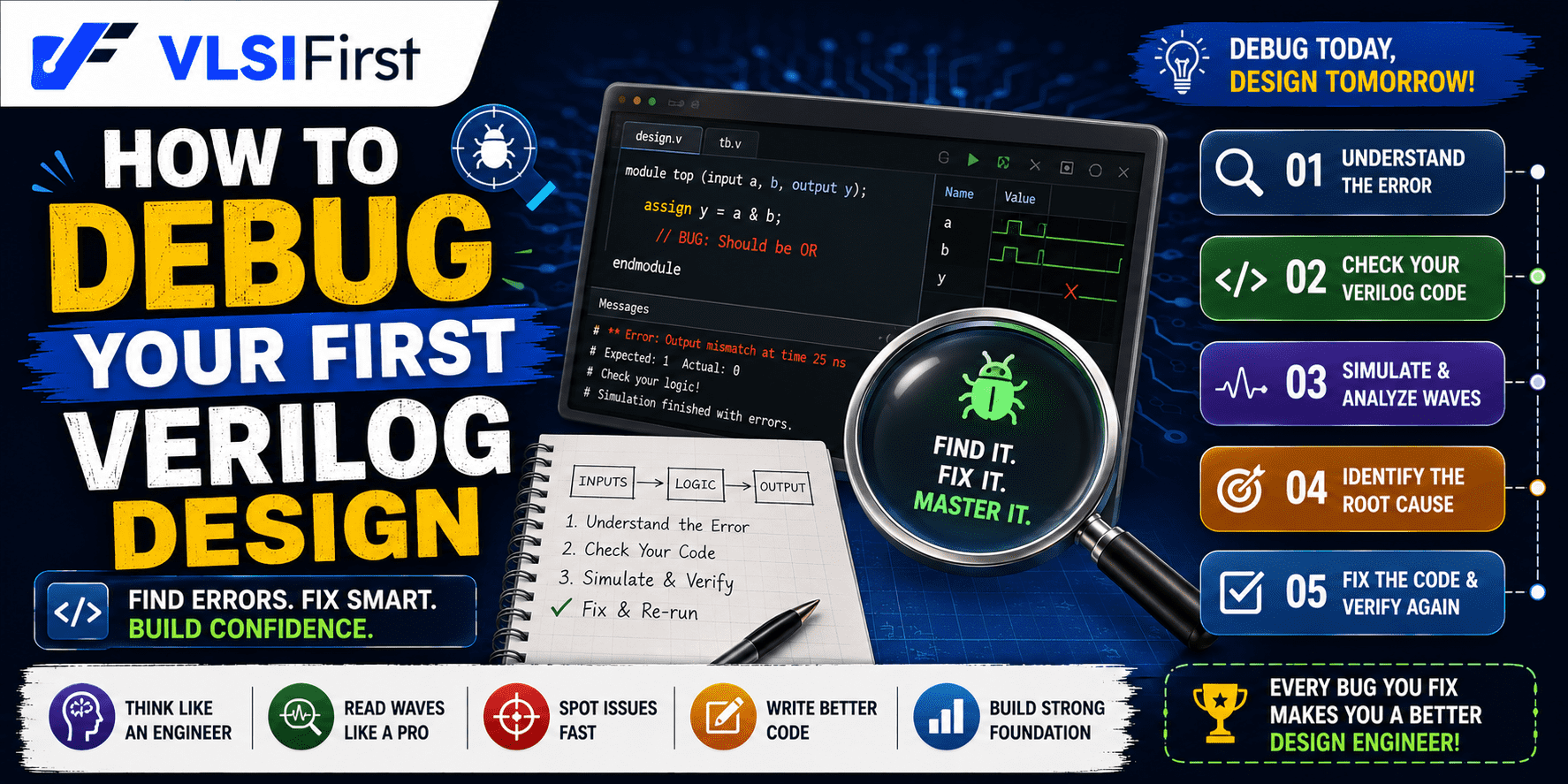
How to Debug Your First Verilog Design
Debugging your first Verilog design with practical RTL debug techniques, waveform analysis, testbench tips, FSM debugging, and common beginner mistakes. Read now!
.


Hours
2-98/1, Gurram Guda Road, Gurram Guda, Hyderabad, Rangareddy, Telangana, 501510
Copyright 2025 © VLSI Technologies Private Limited
Designed and developed by KandraDigitalCopyright 2025 © VLSI Technologies Private Limited
Designed, Developed & Marketing by KandraDigital