
Very Large Scale Integration (VLSI) design is the backbone of modern electronics, enabling the creation of complex integrated circuits used in smartphones, computers, automobiles, and advanced AI systems. For freshers, learning VLSI design from scratch may seem challenging, but with a step-by-step approach, it becomes achievable and highly rewarding.
Step 1: Understand What VLSI Design Is
Before starting, freshers must clearly understand what VLSI design involves. VLSI design focuses on integrating millions or billions of transistors onto a single chip to perform complex functions efficiently.
Key Areas in VLSI Design
- Digital VLSI Design
- Analog and Mixed-Signal Design
- Physical Design (Back-End VLSI)
- Verification and Validation
- Semiconductor Fabrication
Understanding these domains helps freshers choose the right learning path based on their interests.
Step 2: Build Strong Digital Electronics Fundamentals
Digital electronics form the foundation of VLSI design. Without a solid understanding of digital concepts, progressing in VLSI becomes difficult.
Core Topics to Learn
- Number systems and binary arithmetic
- Logic gates and Boolean algebra
- Combinational circuits (adders, multiplexers)
- Sequential circuits (flip-flops, counters)
- Finite State Machines (FSMs)
Freshers should focus on conceptual clarity, not memorization.
Step 3: Learn CMOS Technology Fundamentals
CMOS (Complementary Metal-Oxide Semiconductor) technology is the heart of VLSI chip design.
Important CMOS Topics
- MOSFET operation
- CMOS inverter characteristics
- Noise margins and power dissipation
- Scaling and short-channel effects
Understanding CMOS helps freshers design circuits that are power-efficient and high-performance.
Step 4: Master Hardware Description Languages (HDL)
Hardware Description Languages allow designers to model and implement digital circuits.
Recommended HDLs
- Verilog (most widely used and beginner-friendly)
- VHDL (commonly used in aerospace and defense)
What to Focus On
- RTL coding style
- Combinational and sequential modeling
- Testbench creation
- Simulation and debugging
Freshers should write and simulate small modules before moving to complex designs.
Step 5: Practice with FPGA-Based Projects
FPGA projects are the fastest way to convert theory into practical skills.
Beginner FPGA Projects
- LED blinking and counters
- 7-segment display controller
- Traffic light controller using FSM
- UART communication
- Simple ALU design
Working on FPGA projects improves confidence and real-world problem-solving abilities.
Step 6: Learn ASIC Design Flow
The ASIC (Application-Specific Integrated Circuit) design flow is central to professional VLSI roles.
Key Stages in ASIC Flow
- Specification and architecture
- RTL design
- Functional verification
- Logic synthesis
- Physical design
- Sign-off and tape-out
Freshers should understand how a design moves from RTL to silicon.
Step 7: Explore VLSI Verification Fundamentals
Verification ensures that the chip works correctly before fabrication.
Important Verification Concepts
- Functional coverage
- Assertions
- Testbench architecture
- Simulation and debugging
Freshers interested in verification should start with SystemVerilog basics.
Step 8: Understand Physical Design (Back-End VLSI)
Physical Design transforms synthesized logic into a manufacturable layout.
Topics to Learn
- Floorplanning and placement
- Clock Tree Synthesis (CTS)
- Routing and optimization
- Timing closure
- DRC and LVS checks
Even front-end engineers should have basic physical design knowledge.
Step 9: Learn VLSI EDA Tools
EDA (Electronic Design Automation) tools are essential for VLSI design.
Commonly Used Tools
- RTL simulation tools
- Synthesis tools
- Physical design tools
- Static timing analysis tools
Freshers can begin with open-source tools and later move to industry-grade software.
Step 10: Build a Strong VLSI Project Portfolio
Projects demonstrate practical skills and improve employability.
Ideal VLSI Projects
- RISC processor design
- UART-based communication system
- Low-power FSM design
- FIFO and memory controller
- Mini SoC architecture
Document your projects with block diagrams, RTL code, and simulation results.
Step 11: Learn Semiconductor Manufacturing Basics
Understanding fabrication enhances design decisions.
Topics to Cover
- IC fabrication steps
- Lithography and etching
- Yield and reliability
- Packaging and testing
This knowledge helps freshers connect design choices with manufacturing outcomes.
Step 12: Prepare for VLSI Interviews and Jobs
A structured interview preparation plan is essential.
Focus Areas
- Digital design fundamentals
- Verilog coding questions
- Timing and FSM problems
- CMOS theory
- Project explanation
Mock interviews and problem-solving practice significantly boost confidence.
Common Mistakes Freshers Should Avoid
- Skipping fundamentals
- Learning tools without understanding concepts
- Ignoring hands-on practice
- Copying projects without understanding
- Not documenting learning progress
Career Paths in VLSI for Freshers
- RTL Design Engineer
- Verification Engineer
- Physical Design Engineer
- FPGA Design Engineer
- DFT Engineer
Each role requires a strong foundation and continuous learning.
Conclusion
Learning VLSI design from scratch is a journey that demands patience, consistency, and hands-on practice. By following a structured step-by-step approach, freshers can gradually build expertise in digital electronics, Verilog, FPGA projects, ASIC flow, and physical design.
VLSI is a high-growth field with global opportunities. Starting early with the right roadmap allows freshers to stand out in a competitive semiconductor industry and build a successful, long-term career.
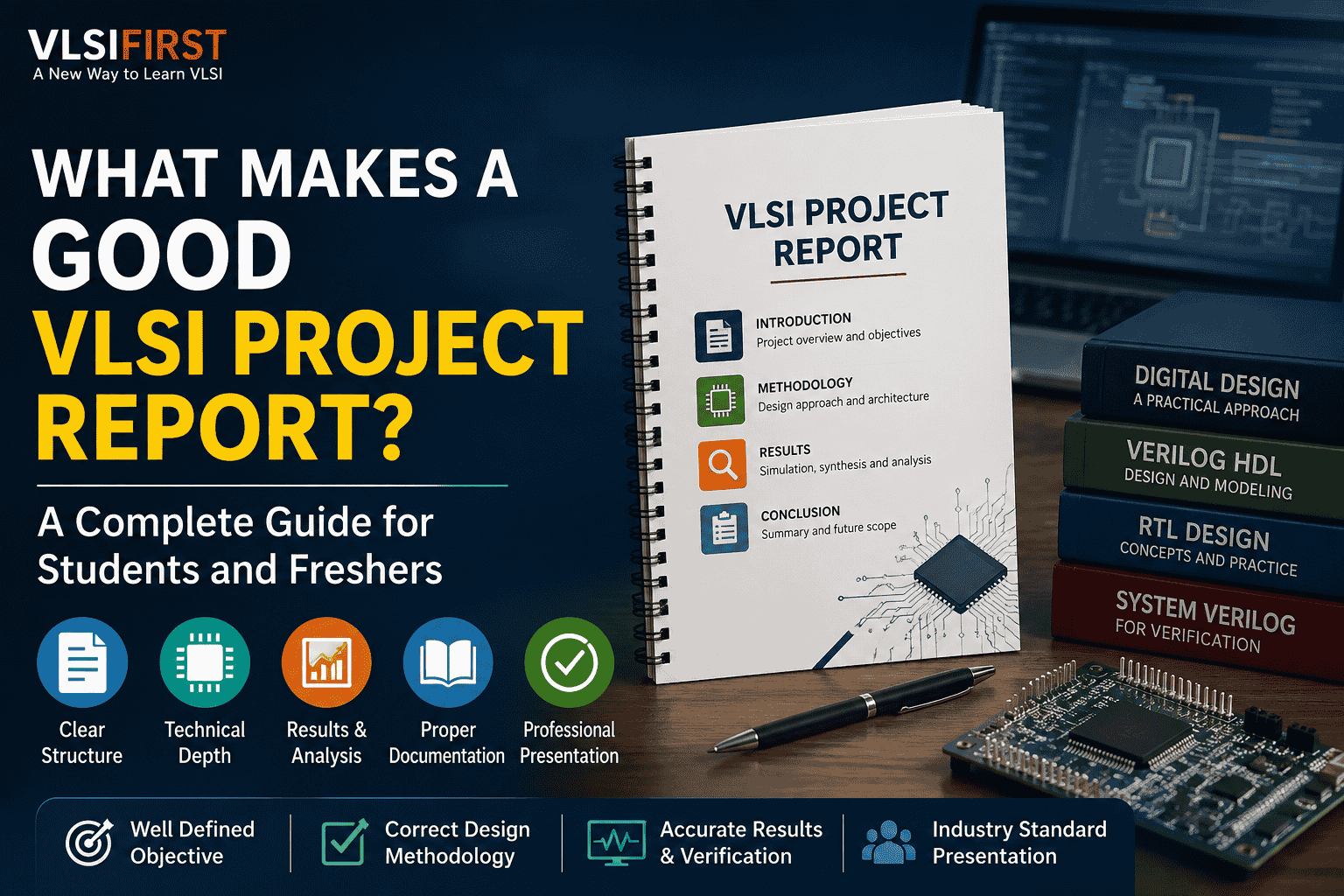
What Makes a Good VLSI Project Report? A Complete Guide for Students and Freshers
Learn how to write a professional VLSI project report with the right structure, RTL documentation, verification strategy, debugging details, and interview-ready presentation tips.
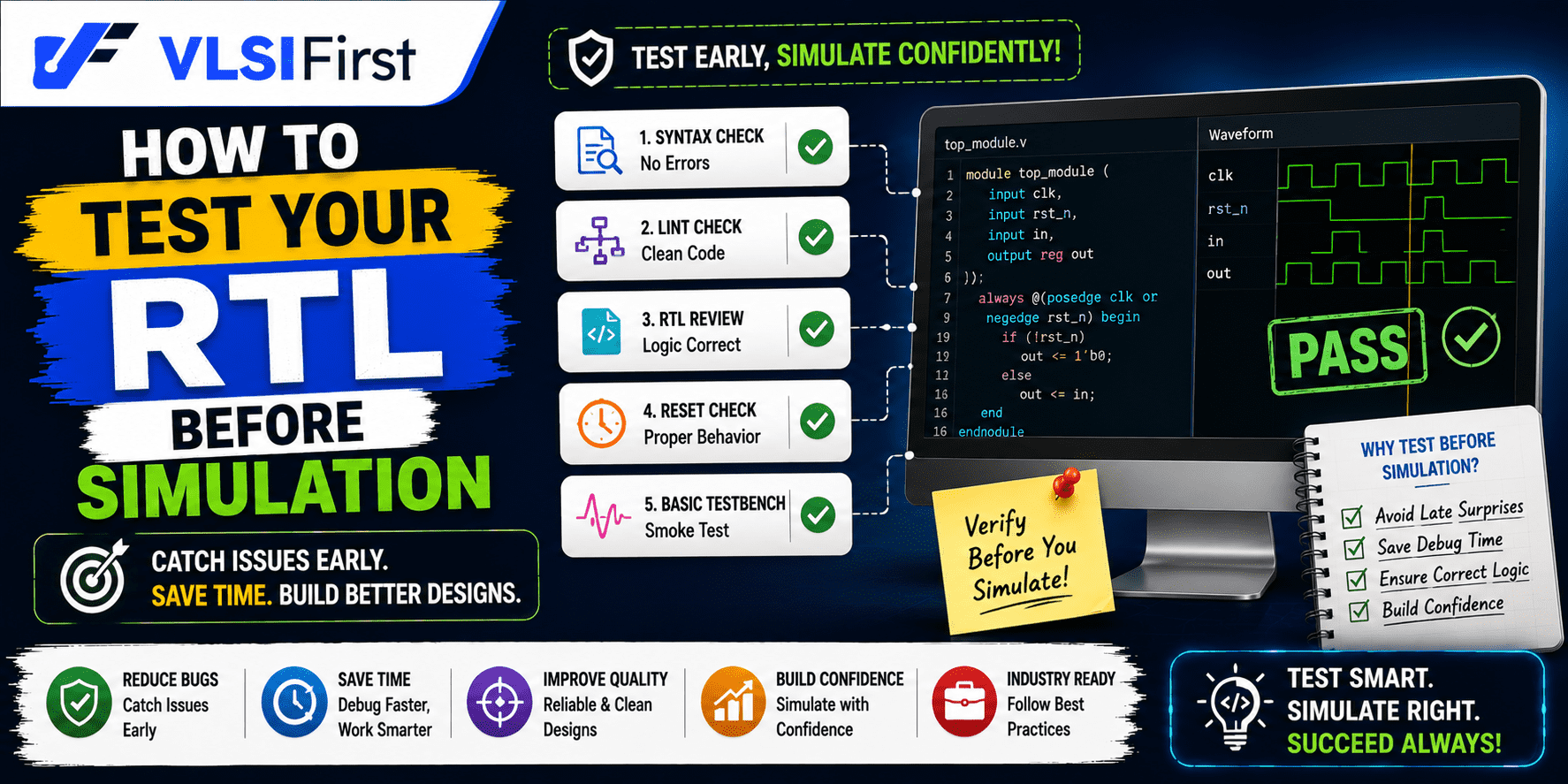
How to Test Your RTL Before Simulation: A Practical Pre-Simulation Checklist for Beginners
Learn how to test your RTL before simulation with a practical pre-simulation checklist. Improve Verilog quality, reduce debugging time, and build industry-ready RTL skills.

From Logic Diagram to Verilog Code – Complete Workflow
Learn the complete workflow from logic diagram to Verilog code, including specifications, RTL architec ture, coding, simulation, debugging, verification, and documentation.
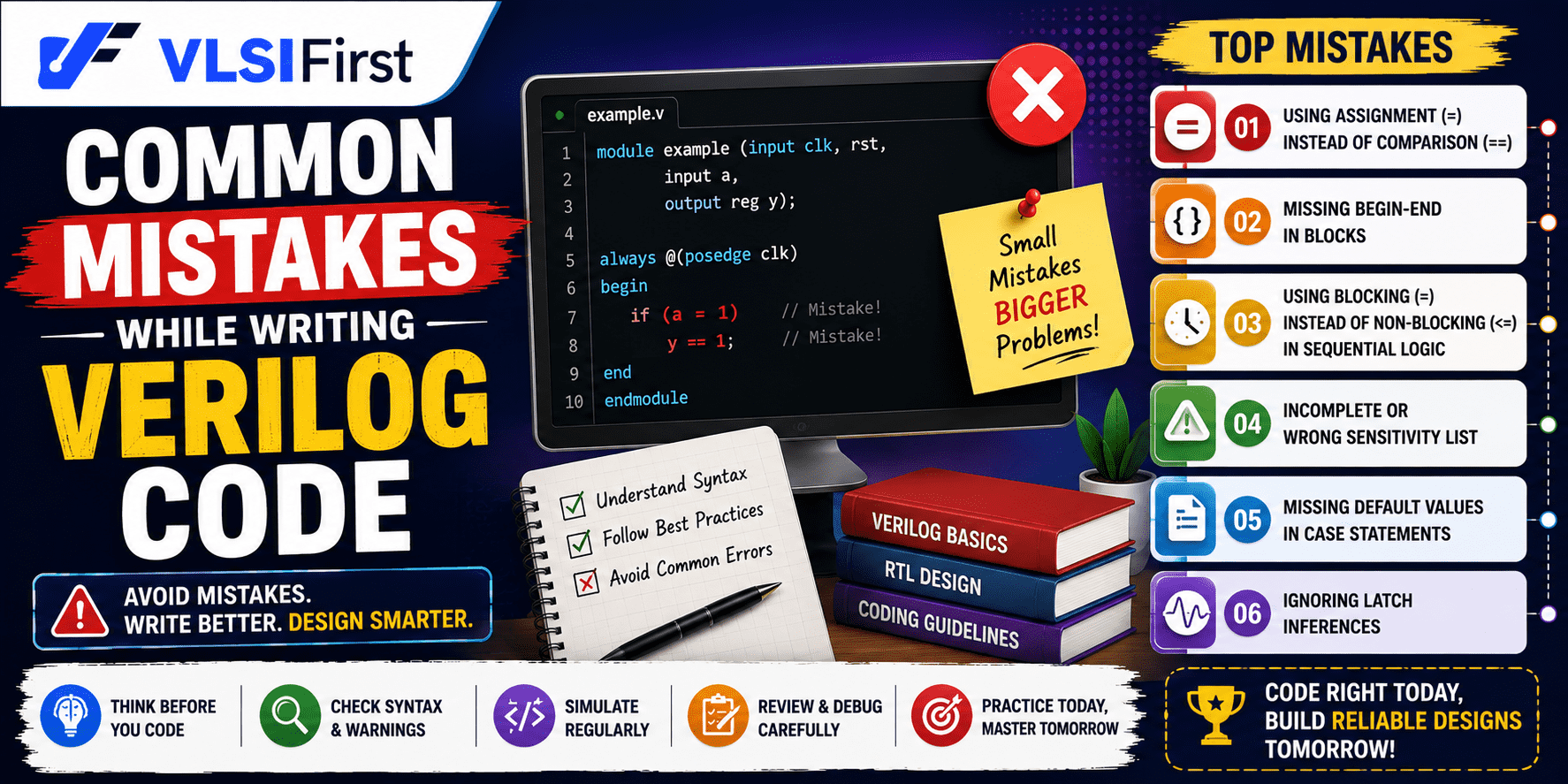
Common Mistakes While Writing Verilog Code
Learn the most common Verilog coding mistakes beginners make and how to avoid them. Improve RTL coding, simulation, debugging, verification, and interview readiness.
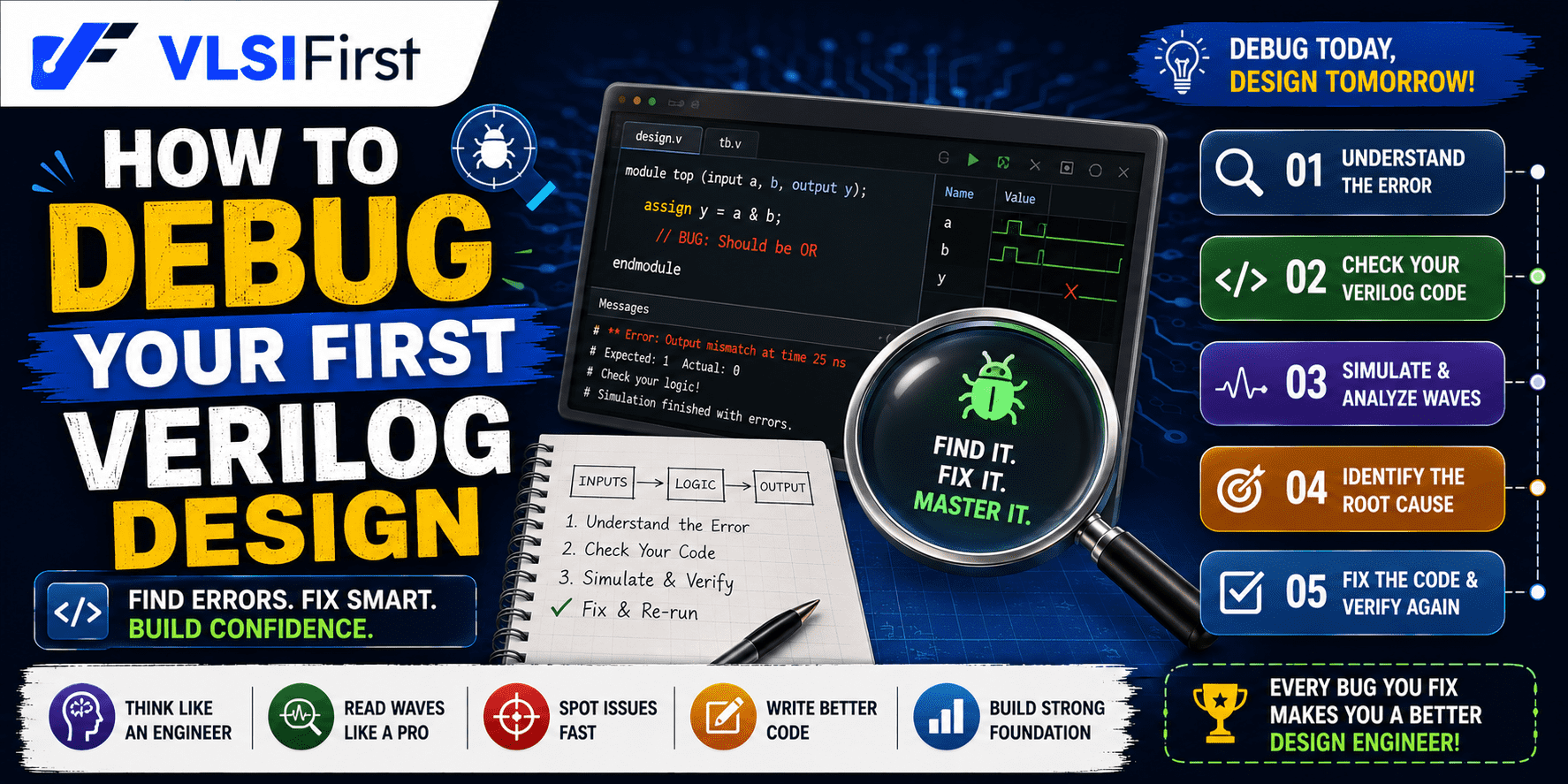
How to Debug Your First Verilog Design
Debugging your first Verilog design with practical RTL debug techniques, waveform analysis, testbench tips, FSM debugging, and common beginner mistakes. Read now!
.


Hours
2-98/1, Gurram Guda Road, Gurram Guda, Hyderabad, Rangareddy, Telangana, 501510
Copyright 2025 © VLSI Technologies Private Limited
Designed and developed by KandraDigitalCopyright 2025 © VLSI Technologies Private Limited
Designed, Developed & Marketing by KandraDigital