
One of the most common questions asked by ECE and EEE students is not “Is VLSI a good career?”, but “When should I start VLSI training?”
Some students hear advice like:
- “Start VLSI from 2nd year itself.”
- “Focus on college, do VLSI only in final year.”
- “First graduate, then do proper VLSI training.”
The truth is: there is no one-size-fits-all answer. The right time to start VLSI training depends on your academic stage, clarity level, learning capacity, and career goals.
This article breaks down each stage: 2nd year, final year, and after graduation, objectively, so you can make a confident, regret-free decision.
Why Timing Matters in VLSI Careers
VLSI is not a short-term skill. It involves:
- Strong fundamentals in electronics
- Industry-level tools and flows
- Continuous learning over multiple years
Starting too early without clarity can lead to confusion. Starting too late without preparation can delay your career.
Choosing the right time helps you:
- Learn concepts without pressure
- Align training with job readiness
- Avoid wasting money on mismatched courses
If you’re still unsure about VLSI as a career, read Is VLSI the Right Career for You? A Self-Assessment Guide for ECE & EEE Students.
Starting VLSI Training in 2nd Year: Early Exposure Phase
Who Usually Considers This?
- Curious students interested in core electronics
- Students who want a long-term head start
- Those exploring career options early
Advantages of Starting in 2nd Year
- More time to build fundamentals (Digital Electronics, CMOS basics)
- Low pressure, no immediate job anxiety
- Ability to explore multiple VLSI domains slowly
- Better understanding of later subjects like VLSI Design and Microelectronics
Limitations You Should Know
- Core electronics subjects are still ongoing
- Tool-based training may feel abstract
- Industry-level concepts may not fully make sense yet
- Risk of losing interest if learning is rushed
Best Way to Start in 2nd Year
Instead of joining a full-fledged job-oriented course:
- Focus on fundamentals of digital design
- Learn basic Verilog
- Understand the overall VLSI flow
- Build curiosity, not pressure
A beginner-friendly resource like Introduction to VLSI Career Paths on VLSIFirst.com is ideal at this stage.
Verdict:
- Good for exploration and foundation
- Not ideal for intensive, placement-focused training
Starting VLSI Training in Final Year: Balanced & Strategic Phase
Who Is This Best For?
- Students who have completed most core subjects
- Those thinking seriously about core electronics jobs
- Students worried about placements and job readiness
Why Final Year Is a Popular Choice
By final year:
- You’ve studied Digital Electronics, VLSI, CMOS, and Signals
- You can relate theory to real-world chip design
- You’re mentally prepared to think about careers
Key Benefits
- Concepts make more practical sense
- Training aligns well with placement timelines
- Projects can be added to your resume
- Easier transition from learning to interviews
Common Challenges
- Balancing academics, projects, and placements
- Limited time if preparation starts too late
- Confusion between software and core roles
Smart Strategy for Final-Year Students
- Choose one VLSI domain (Verification, PD, Design)
- Focus on industry-relevant skills and tools
- Build 2–3 strong projects
- Start interview preparation early
Verdict:
- One of the best times to start structured VLSI training
- Ideal balance between learning and job readiness
Starting VLSI Training After Graduation: Focused Career-Building Phase
Who Takes This Path?
- Students without core placements
- Graduates from tier-2 or tier-3 colleges
- Those who realized late that VLSI suits them
- Working professionals switching domains
Why Post-Graduation Training Works Well
After graduation:
- You can give undivided attention to learning
- No exam or semester pressure
- Clear career objective: job readiness
- Faster learning due to maturity and focus
Advantages
- Structured, end-to-end understanding
- Better tool exposure
- Strong project depth
- Higher confidence during interviews
Things to Be Careful About
- Avoid rushed or shortcut-based courses
- Choose training with real-world relevance
- Stay disciplined, self-motivation matters
Many successful engineers follow this route through Industry-Oriented VLSI Training Programs offered on VLSIFirst.com.
Verdict:
- Best for serious, job-focused learners
- Highly effective when done with the right institute
Comparison Summary: Which Stage Is Right for You?
|
Stage |
Best Purpose |
Risk Level |
Recommended Focus |
|
2nd Year |
Exploration & fundamentals |
Medium |
Basics, curiosity |
|
Final Year |
Career alignment |
Low |
Domain + projects |
|
After Graduation |
Job readiness |
Low (with right training) |
Tools + interviews |
Common Myths About Timing in VLSI
Myth 1: “If I don’t start in 2nd year, it’s too late”
False. Many VLSI engineers start after graduation and succeed.
Myth 2: “Early start guarantees a job”
Wrong. Quality and relevance of learning matter more than timing.
Myth 3: “Final year is already too late”
Incorrect. Final year is actually one of the most effective times.
How to Decide Your Right Time: A Simple Checklist
Ask yourself:
- Do I understand basic electronics concepts?
- Do I have clarity about choosing VLSI?
- Can I dedicate consistent time for learning?
- Am I learning for interest or job readiness?
If your answer is:
- Exploration → Start lightly in 2nd year
- Career clarity → Start seriously in final year
- Job-focused → Start after graduation
Final Thoughts
The right time to start VLSI training is not defined by your semester, it’s defined by your clarity and commitment.
- Early starters gain exposure
- Final-year students gain alignment
- Graduates gain focus and depth
What truly matters is learning the right skills, in the right way, with the right expectations.
Take a thoughtful decision. VLSI is a long-term career, and when started at the right time, it can be deeply rewarding.
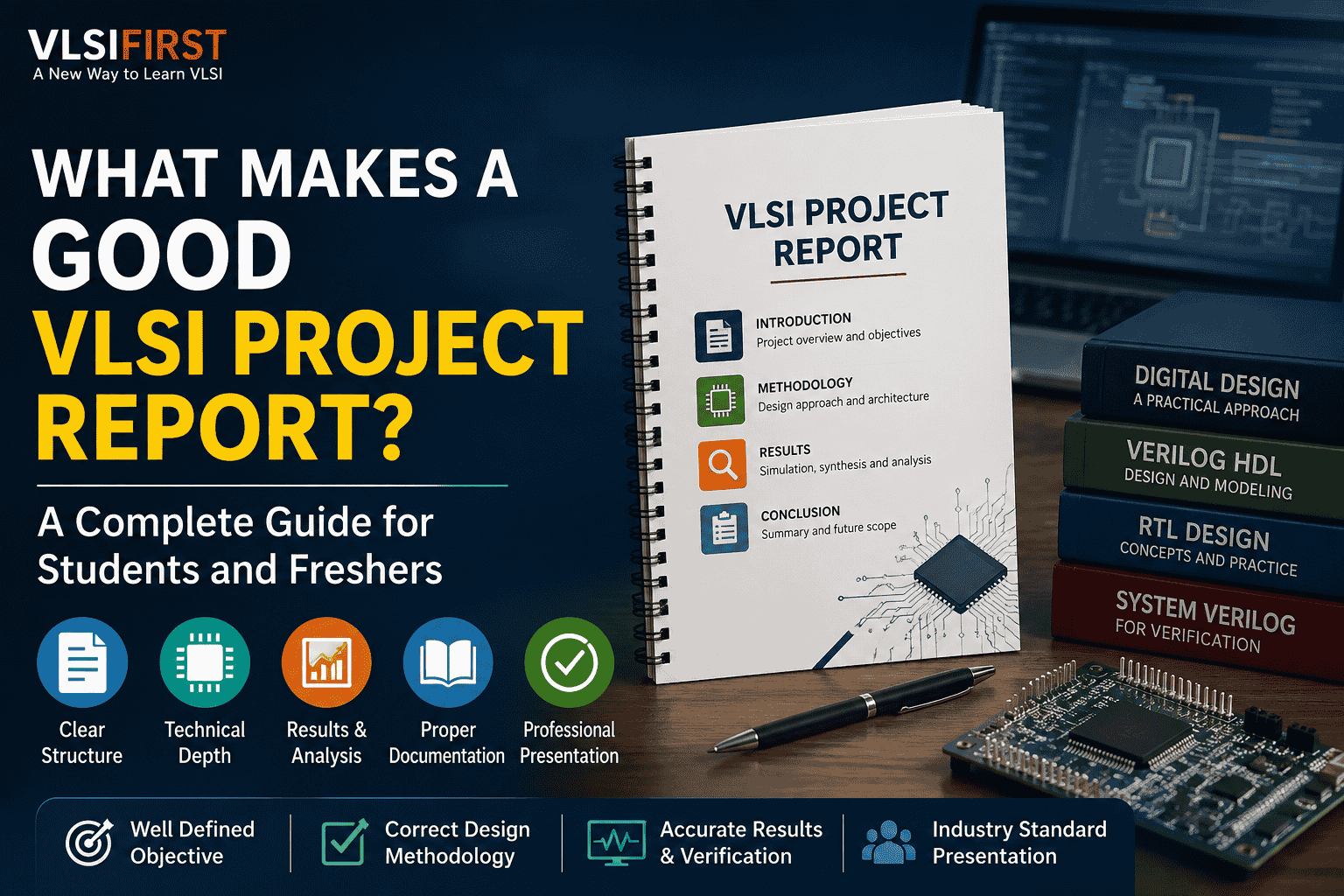
What Makes a Good VLSI Project Report? A Complete Guide for Students and Freshers
Learn how to write a professional VLSI project report with the right structure, RTL documentation, verification strategy, debugging details, and interview-ready presentation tips.
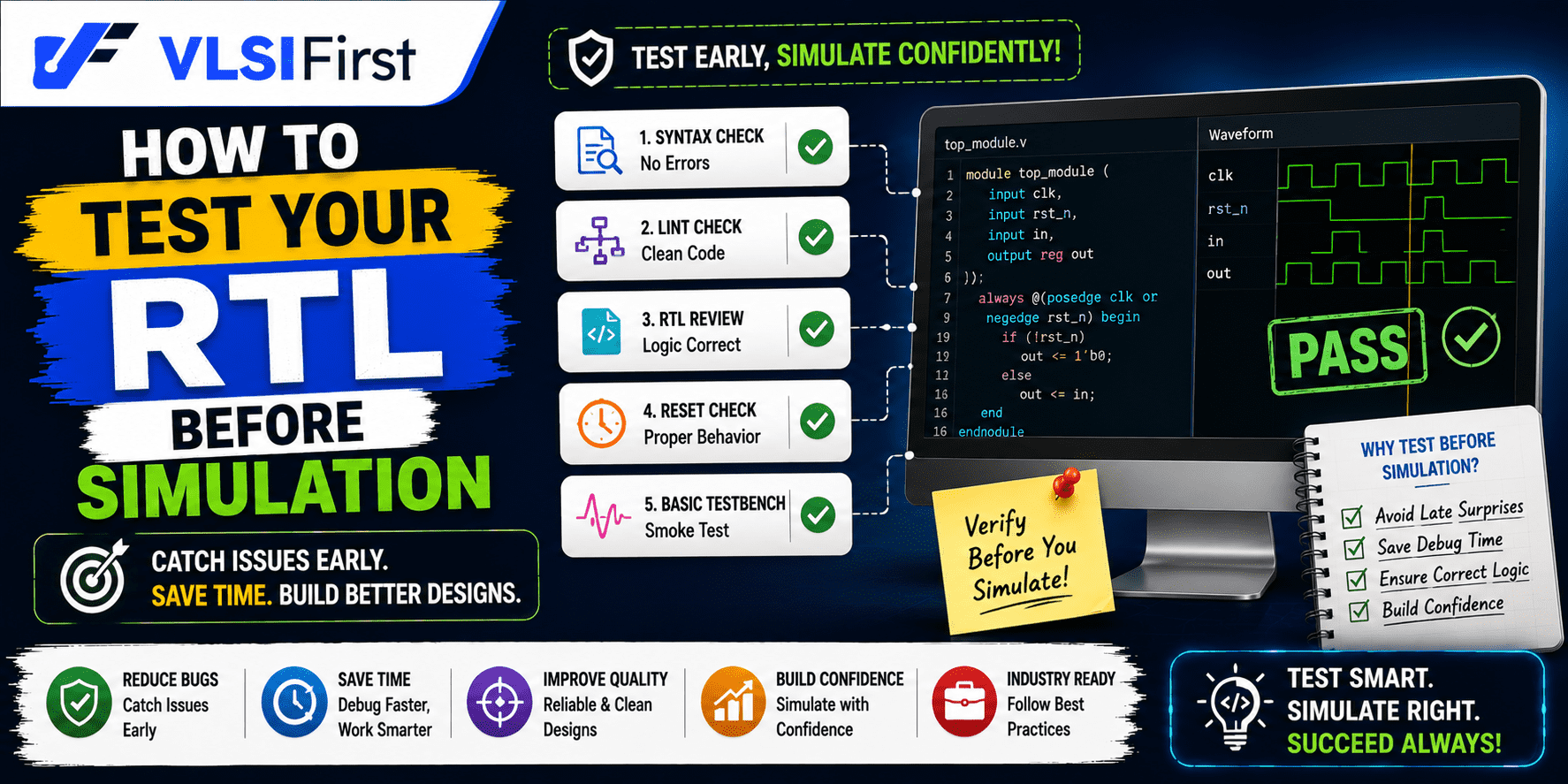
How to Test Your RTL Before Simulation: A Practical Pre-Simulation Checklist for Beginners
Learn how to test your RTL before simulation with a practical pre-simulation checklist. Improve Verilog quality, reduce debugging time, and build industry-ready RTL skills.

From Logic Diagram to Verilog Code – Complete Workflow
Learn the complete workflow from logic diagram to Verilog code, including specifications, RTL architec ture, coding, simulation, debugging, verification, and documentation.
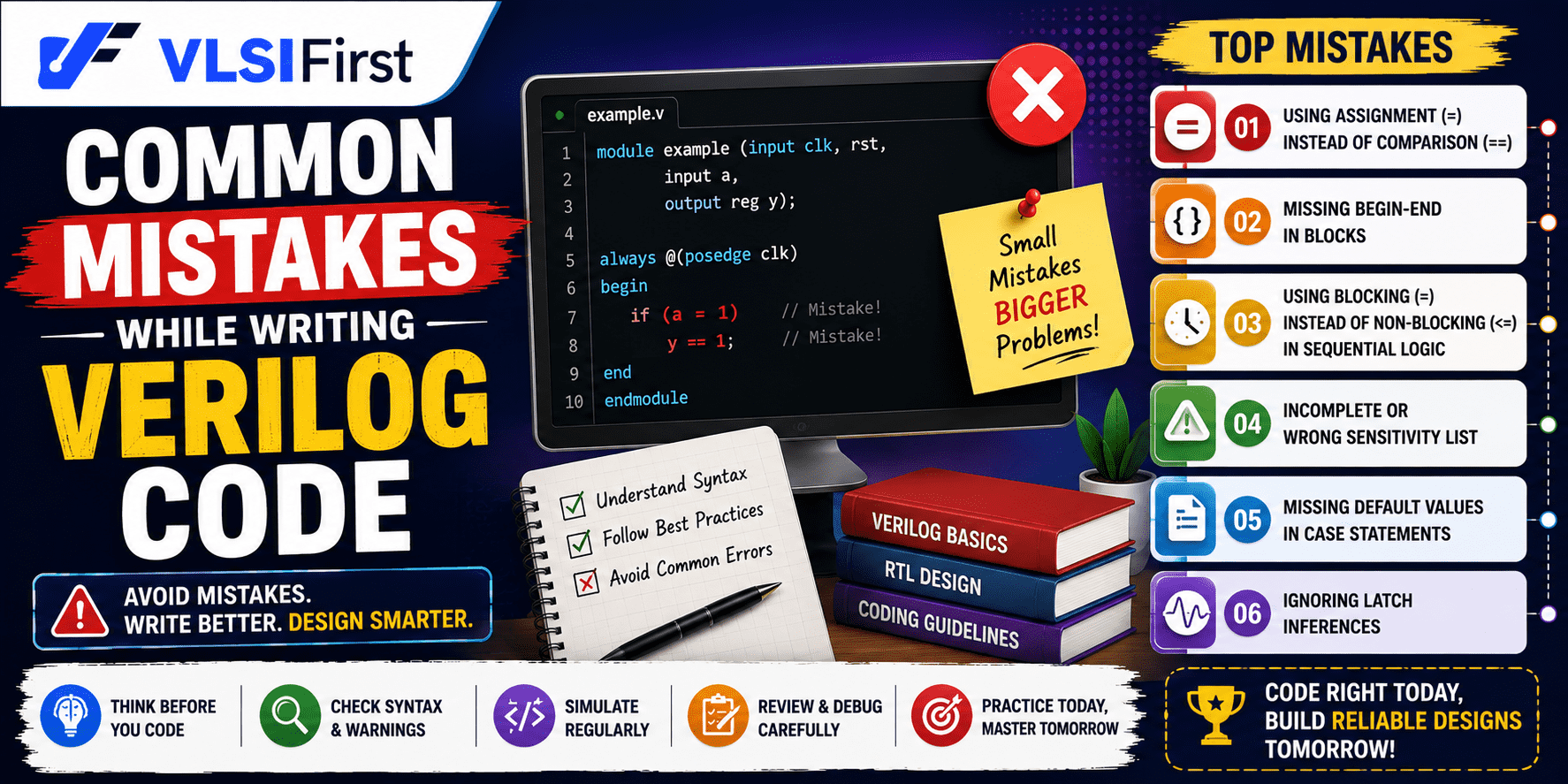
Common Mistakes While Writing Verilog Code
Learn the most common Verilog coding mistakes beginners make and how to avoid them. Improve RTL coding, simulation, debugging, verification, and interview readiness.
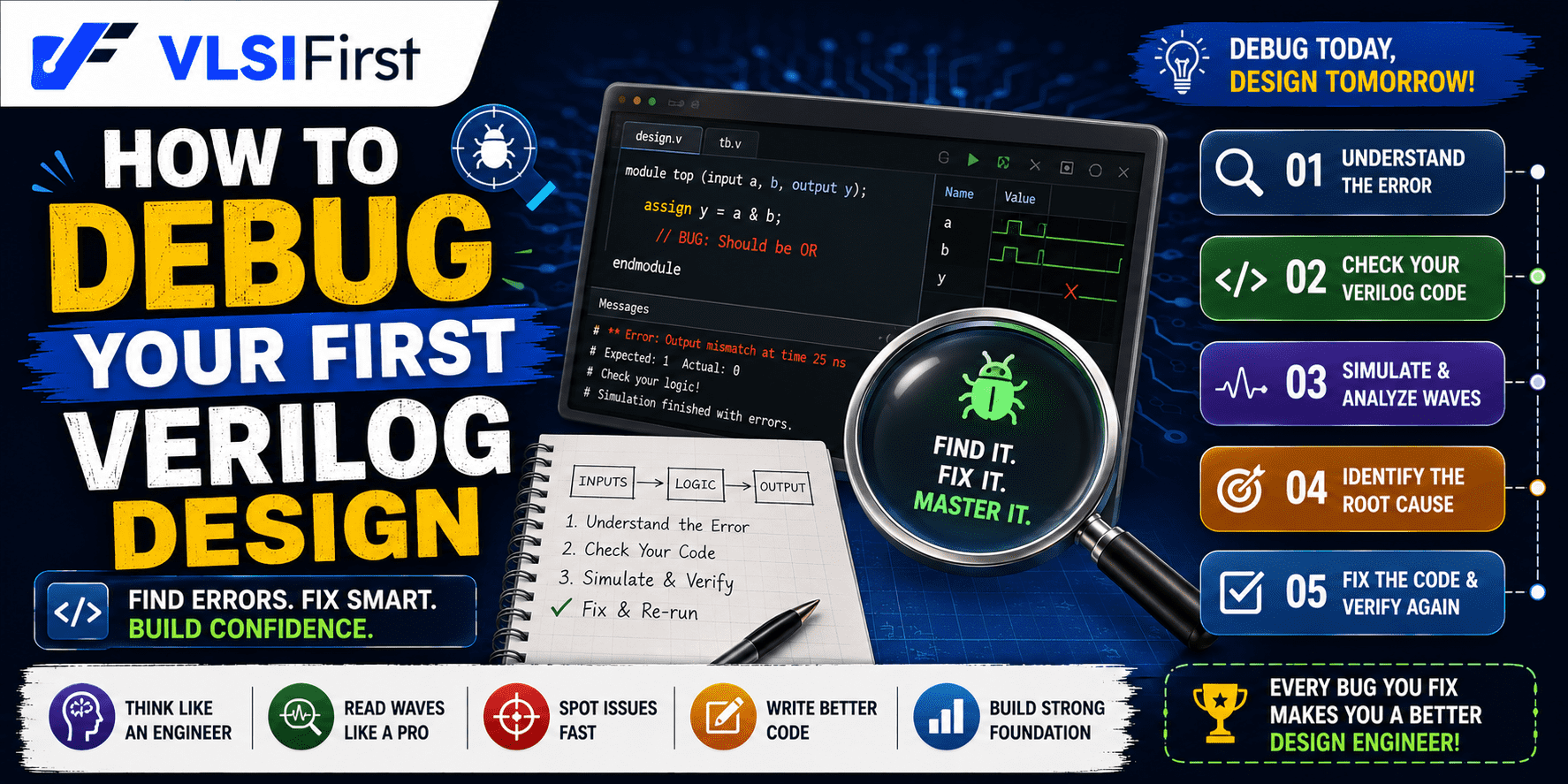
How to Debug Your First Verilog Design
Debugging your first Verilog design with practical RTL debug techniques, waveform analysis, testbench tips, FSM debugging, and common beginner mistakes. Read now!
.


Hours
2-98/1, Gurram Guda Road, Gurram Guda, Hyderabad, Rangareddy, Telangana, 501510
Copyright 2025 © VLSI Technologies Private Limited
Designed and developed by KandraDigitalCopyright 2025 © VLSI Technologies Private Limited
Designed, Developed & Marketing by KandraDigital