
The semiconductor industry is evolving faster than ever. With the rise of artificial intelligence, autonomous vehicles, high-performance computing, and IoT devices, modern chips are becoming more complex and powerful. As a result, semiconductor companies are actively searching for engineers who are not only knowledgeable but also industry-ready from day one.
Because of this demand, many institutes now offer VLSI training programs promising quick entry into the chip design industry. However, not every course truly prepares students for real semiconductor engineering roles.
A course that was relevant five years ago may not meet the expectations of semiconductor companies now. Today’s employers look for engineers who understand modern design flows, industry tools, and advanced verification methodologies.
So what exactly makes a VLSI course industry-relevant today?
This article explores the key features that define an industry-relevant VLSI training program and how students can evaluate whether a course will genuinely prepare them for semiconductor careers.
Why Industry-Relevant VLSI Training Matters
The semiconductor design process has become extremely sophisticated. Modern chips may contain billions of transistors, requiring advanced design tools, verification techniques, and engineering workflows.
Companies expect new engineers to understand the complete ASIC design flow, which includes RTL design, synthesis, timing analysis, physical design, and verification.
Students who only learn theory often struggle to transition into real projects because the semiconductor industry is highly tool-driven and process-oriented.
Therefore, industry-relevant training focuses on:
- practical design experience
- real chip design workflows
- debugging and verification skills
- exposure to industry tools
Such training bridges the gap between academic knowledge and real engineering work.
1. Coverage of the Complete ASIC Design Flow
One of the biggest indicators of an industry-relevant VLSI course is whether it teaches the complete chip design lifecycle.
A modern VLSI curriculum should explain how a chip moves from design concept to fabrication.
The course should include topics such as:
- RTL design
- logic synthesis
- static timing analysis (STA)
- physical design (PnR)
- verification and debugging
- chip sign-off processes
Understanding the RTL-to-GDSII flow helps engineers make better design decisions early in development and understand how their designs affect the final chip.
If a course teaches only isolated topics without connecting them to the overall chip development flow, it may not reflect real industry practices.
2. Strong Hardware Description Language (HDL) Training
HDL programming remains one of the most fundamental skills for VLSI engineers.
Designers use languages such as Verilog and SystemVerilog to model digital circuits and simulate their behavior.
Modern semiconductor companies expect engineers to know:
- RTL coding guidelines
- modular design techniques
- parameterized coding
- simulation debugging
Verilog is widely used for RTL design, while SystemVerilog plays a major role in verification environments.
A strong VLSI course should therefore include extensive HDL coding practice along with debugging exercises.
3. Exposure to Industry-Standard EDA Tools
Another critical feature of an industry-relevant course is hands-on training with Electronic Design Automation (EDA) tools.
In real chip design teams, engineers rarely work directly with raw circuit diagrams. Instead, they use advanced software tools to simulate, analyze, and optimize designs.
Common industry tools include:
- VCS, Questa, and Xcelium for simulation
- Design Compiler for synthesis
- PrimeTime for timing analysis
- Innovus and ICC2 for physical design
- Calibre for sign-off verification
Engineers trained on these tools gain a significant advantage during placements because semiconductor roles are heavily tool-driven.
4. Functional Verification and UVM Methodology
In modern chip development, verification consumes more than half of the total design effort.
This means verification engineers play a critical role in ensuring chip reliability.
A modern VLSI course should include:
- functional verification concepts
- SystemVerilog test benches
- assertion-based verification
- coverage-driven verification
- UVM methodology
Verification engineers use simulation tools and advanced methodologies to ensure chips behave exactly as intended before manufacturing.
Courses that ignore verification training may not prepare students for the most in-demand VLSI roles.
5. Real-World Projects and Design Implementation
Industry-relevant training must include hands-on projects.
Projects allow students to apply theoretical concepts and demonstrate their skills to recruiters.
Typical VLSI training projects include:
- UART controller design
- FIFO memory implementation
- bus protocol design
- processor subsystem modules
Some courses also include FPGA implementation, which allows students to physically test their designs.
FPGA prototyping enables engineers to validate designs quickly before fabrication.
Projects also help students build technical portfolios.
6. Training in Modern Semiconductor Trends
The semiconductor industry is rapidly evolving, and modern VLSI courses must reflect current technology trends.
Important emerging areas include:
- AI and accelerator chip design
- low-power design techniques
- advanced process nodes such as FinFET
- hardware-software co-design
- system-level chip architecture
Understanding processor subsystems, SoC architectures, and accelerator design has become increasingly important in modern chip development.
Courses that update their curriculum based on industry trends remain relevant for longer.
7. Scripting and Automation Skills
Large chip designs involve millions of design elements, making automation essential.
Engineers frequently use scripting languages to automate workflows such as simulation, testing, and report analysis.
Important scripting languages include:
- Python
- TCL
- Shell scripting
- Perl
Automation helps engineers analyze design reports, run simulations faster, and improve productivity.
Courses that teach scripting alongside VLSI design provide a major advantage for students.
8. Domain Specialization Opportunities
VLSI includes multiple career paths, and industry-relevant courses should help students specialize in one domain.
Common specialization tracks include:
- RTL Design
- Functional Verification
- Physical Design
- Analog and Mixed-Signal Design
- Design for Testability (DFT)
For example, verification engineers build test benches and debug simulation failures, while physical design engineers perform placement, routing, and timing optimization.
9. Career Preparation and Interview Training
Industry-relevant courses also prepare students for semiconductor job interviews.
Good training programs provide:
- resume building guidance
- mock technical interviews
- problem-solving sessions
- debugging exercises
Recruiters evaluate not only technical knowledge but also how candidates approach design problems.
10. Mentorship from Industry Engineers
One of the most valuable aspects of industry-relevant training is learning from experienced semiconductor professionals.
Industry mentors provide insights into:
- real chip design workflows
- debugging strategies
- project challenges
- interview expectations
These insights help students understand the realities of semiconductor engineering.
Final Thoughts
An industry-relevant VLSI course is not defined by marketing promises or short-term training schedules. Instead, it is defined by how effectively it prepares students for real semiconductor engineering work.
A modern VLSI course should include:
- complete ASIC design flow understanding
- HDL programming skills
- industry EDA tool exposure
- verification methodologies like UVM
- real design projects
- scripting and automation skills
- mentorship from industry professionals
Students who choose training programs aligned with these factors, such as VLSIFirst, will gain the practical knowledge and confidence required to succeed in semiconductor careers.

How to Test Your RTL Before Simulation: A Practical Pre-Simulation Checklist for Beginners
Learn how to test your RTL before simulation with a practical pre-simulation checklist. Improve Verilog quality, reduce debugging time, and build industry-ready RTL skills.
From Logic Diagram to Verilog Code – Complete Workflow
Learn the complete workflow from logic diagram to Verilog code, including specifications, RTL architec ture, coding, simulation, debugging, verification, and documentation.
Common Mistakes While Writing Verilog Code
Learn the most common Verilog coding mistakes beginners make and how to avoid them. Improve RTL coding, simulation, debugging, verification, and interview readiness.
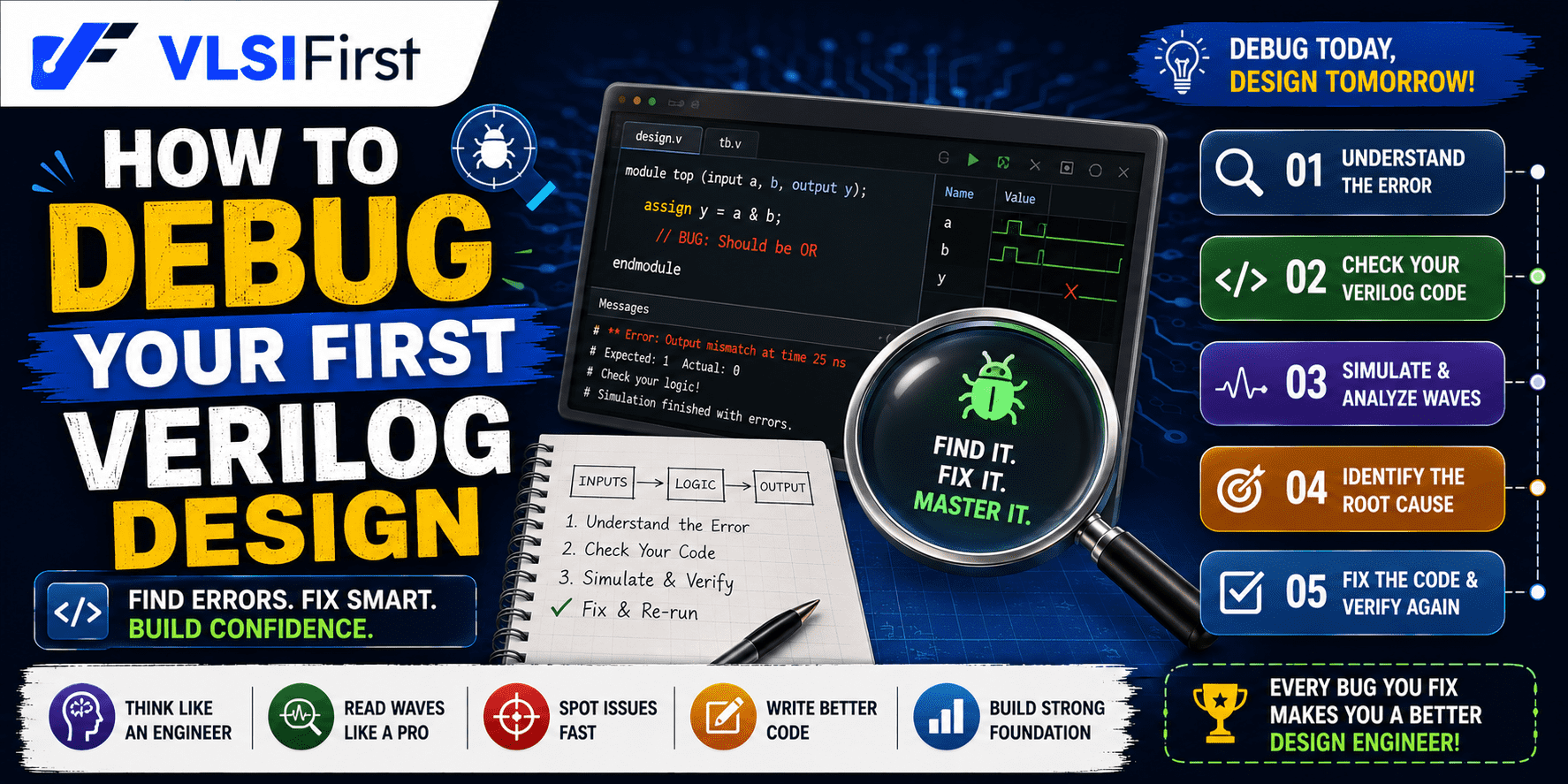
How to Debug Your First Verilog Design
Debugging your first Verilog design with practical RTL debug techniques, waveform analysis, testbench tips, FSM debugging, and common beginner mistakes. Read now!
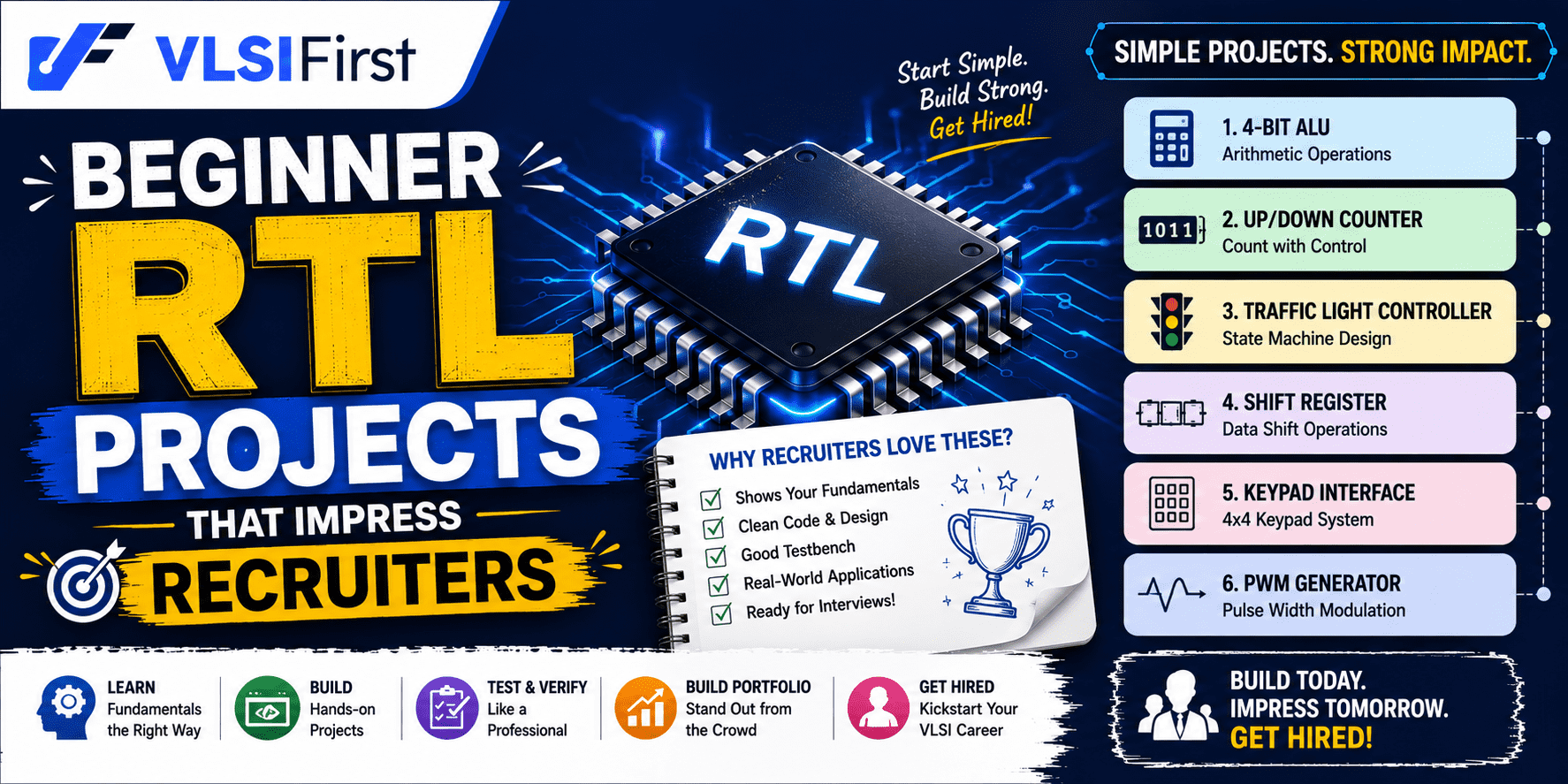
Beginner RTL Projects That Impress Recruiters
Discover beginner RTL projects that impress VLSI recruiters. Learn which Verilog projects build practical skills, strengthen your portfolio, and improve interview success.


Hours
2-98/1, Gurram Guda Road, Gurram Guda, Hyderabad, Rangareddy, Telangana, 501510
Copyright 2025 © VLSI Technologies Private Limited
Designed and developed by KandraDigitalCopyright 2025 © VLSI Technologies Private Limited
Designed, Developed & Marketing by KandraDigital