
For many engineering students in India, especially from Tier-3 colleges, one common concern is:
“Can I build a strong career in VLSI without studying in a top college?”
This question is valid.
Tier-1 colleges often dominate placement statistics, and many top semiconductor companies visit only selected campuses. But the reality is evolving, and it’s far more encouraging than most students think.
Yes, students from Tier-3 colleges can build strong VLSI careers, but the path is different and requires strategy.
This blog gives you a realistic, data-backed view of:
- the challenges Tier-3 students face
- what has changed in hiring trends
- how successful students break into VLSI
- a practical roadmap to build your career
The Reality of Tier-3 College Placements
Let’s start with the honest truth.
- Only 30–50% of students in Tier-3 colleges get campus placements
- Average packages are typically ₹2.5–₹4.5 LPA
- Many companies either don’t visit or hire in very small numbers
This creates a major challenge:
Limited exposure to core VLSI roles through campus placements
However, this is only part of the story.
The Big Shift: Skills Over College Brand
The biggest change is this:
Companies are focusing more on skills than college name
- Around 34% of employees in top tech companies come from Tier-3 colleges
- Many students secure jobs through off-campus opportunities, projects, and referrals
This means:
Your college may limit your starting point, but not your final outcome.
Challenges Faced by Tier-3 Students in VLSI
Even though opportunities exist, Tier-3 students face real challenges.
1. Lack of Core VLSI Placements
Most Tier-3 colleges:
- don’t have semiconductor companies visiting campus
- focus more on IT/service companies
This means students must rely on off-campus efforts.
2. Outdated Curriculum
Many colleges lag behind industry trends by:
- 3–5 years in syllabus updates
- limited exposure to modern tools and workflows
This creates a skill gap.
3. Limited Practical Exposure
Students often lack:
- hands-on tool experience
- real-world projects
- debugging skills
And in VLSI, theory alone is not enough.
4. High Competition
You compete with:
- Tier-1 graduates
- M.Tech students
- trained VLSI professionals
So you must stand out with skills, not just a degree.
The Biggest Myth: “Tier-3 Means No Future”
This is one of the most damaging misconceptions.
Reality:
- Many successful engineers come from Tier-3 backgrounds
- High-paying offers are often secured off-campus
- Companies now value “proof of work” more than college name
The difference is not college tier, it’s effort, strategy, and consistency.
How Tier-3 Students Can Build a Strong VLSI Career
Now let’s focus on what actually works.
1. Focus on Fundamentals First
Strong basics are critical:
- digital electronics
- logic design
- timing concepts
Without fundamentals, advanced VLSI topics become difficult.
2. Learn HDL Programming
Start with:
- Verilog
- SystemVerilog
These are essential for:
- RTL design
- verification roles
3. Gain Hands-On Tool Experience
This is where most Tier-3 students fall behind.
You must learn:
- simulation tools
- synthesis tools
- debugging workflows
Tools matter more than theory in VLSI.
4. Build Real Projects
Projects are your biggest advantage.
Examples:
- ALU design
- FIFO implementation
- protocol verification
Projects show recruiters:
- your practical skills
- problem-solving ability
5. Focus on Off-Campus Opportunities
Since campus placements are limited:
Off-campus is your main path.
Use:
- LinkedIn networking
- job portals
- referrals
- internships
In fact, many Tier-3 students land top jobs through off-campus routes.
6. Build a Strong Portfolio
Your portfolio should include:
- GitHub projects
- design documentation
- simulation results
Recruiters increasingly look for proof of skills, not just resumes.
7. Get Proper Training & Mentorship
Self-learning alone is often not enough.
A structured VLSI course helps with:
- guided learning
- tool access
- project support
- interview preparation
8. Prepare for Interviews Strategically
Focus on:
- fundamentals
- problem-solving
- project explanation
Ideal Career Path for Tier-3 Students
A realistic roadmap:
- Learn fundamentals (college + self-study)
- Take VLSI training (tools + projects)
- Build portfolio
- Apply off-campus
- Start with entry-level role
- Grow into specialized VLSI engineer
This path is slower than Tier-1, but equally powerful in the long run.
What Makes Tier-3 Students Successful in VLSI
Successful students typically:
- focus on skills early
- build strong projects
- stay consistent
- network actively
- don’t rely on campus placements
Final Verdict
So, can BTech students from Tier-3 colleges build a strong VLSI career?
Yes, but not through the traditional campus route.
Instead, success depends on:
- skill development
- hands-on practice
- project building
- off-campus job strategy
The industry is shifting toward:
“Skill Tier” instead of “College Tier”
If you are willing to:
- work harder than average
- learn continuously
- build real-world skills
then your college background will not limit your long-term success.
Final Advice
If you are from a Tier-3 college:
- Don’t compare your starting point
- Focus on building strong technical skills
- Treat VLSI as a skill-driven career, not a degree-driven one
With the right approach, you can not only enter VLSI, but build a high-growth, high-paying career.

How to Test Your RTL Before Simulation: A Practical Pre-Simulation Checklist for Beginners
Learn how to test your RTL before simulation with a practical pre-simulation checklist. Improve Verilog quality, reduce debugging time, and build industry-ready RTL skills.
From Logic Diagram to Verilog Code – Complete Workflow
Learn the complete workflow from logic diagram to Verilog code, including specifications, RTL architec ture, coding, simulation, debugging, verification, and documentation.
Common Mistakes While Writing Verilog Code
Learn the most common Verilog coding mistakes beginners make and how to avoid them. Improve RTL coding, simulation, debugging, verification, and interview readiness.
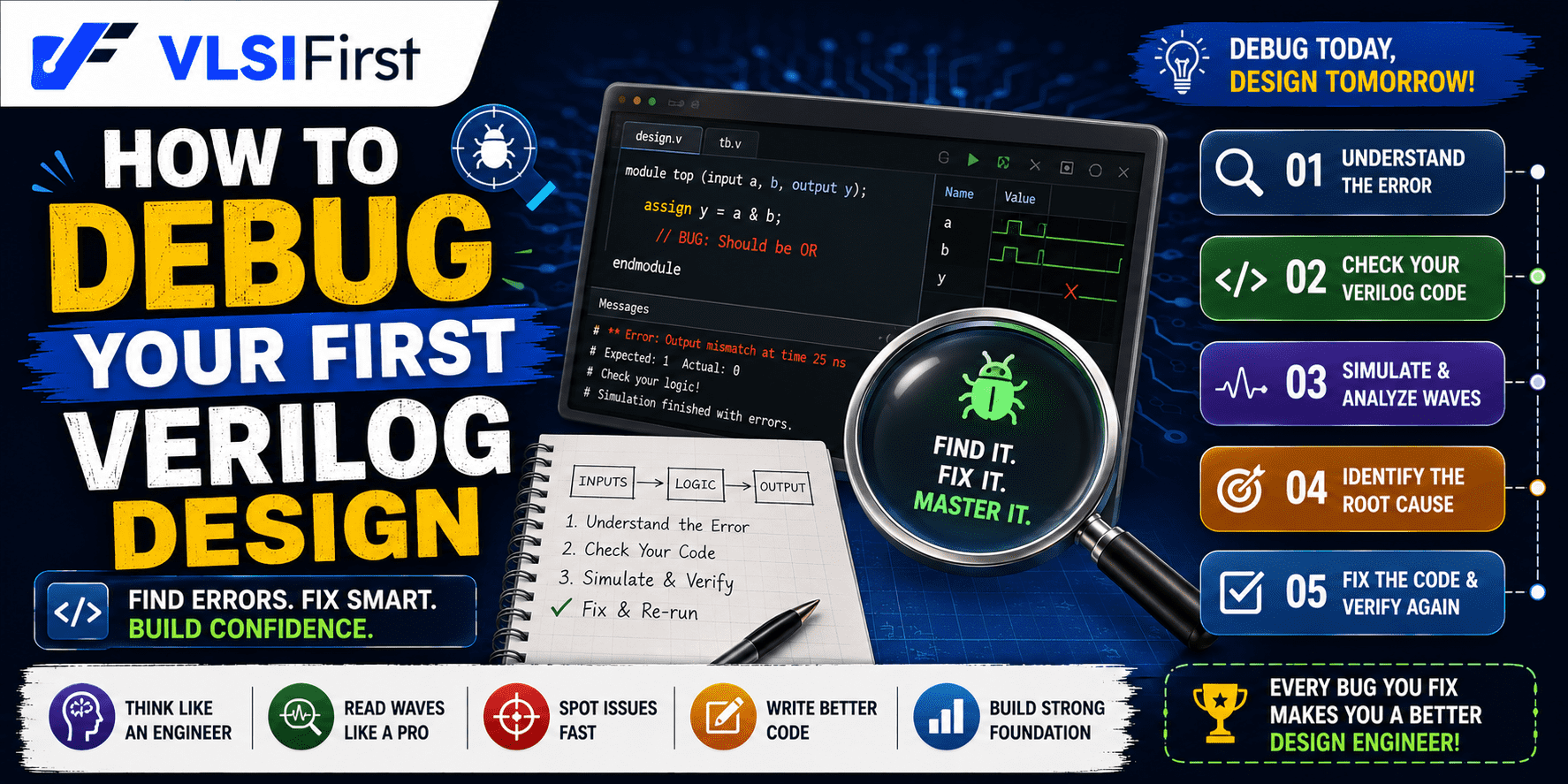
How to Debug Your First Verilog Design
Debugging your first Verilog design with practical RTL debug techniques, waveform analysis, testbench tips, FSM debugging, and common beginner mistakes. Read now!
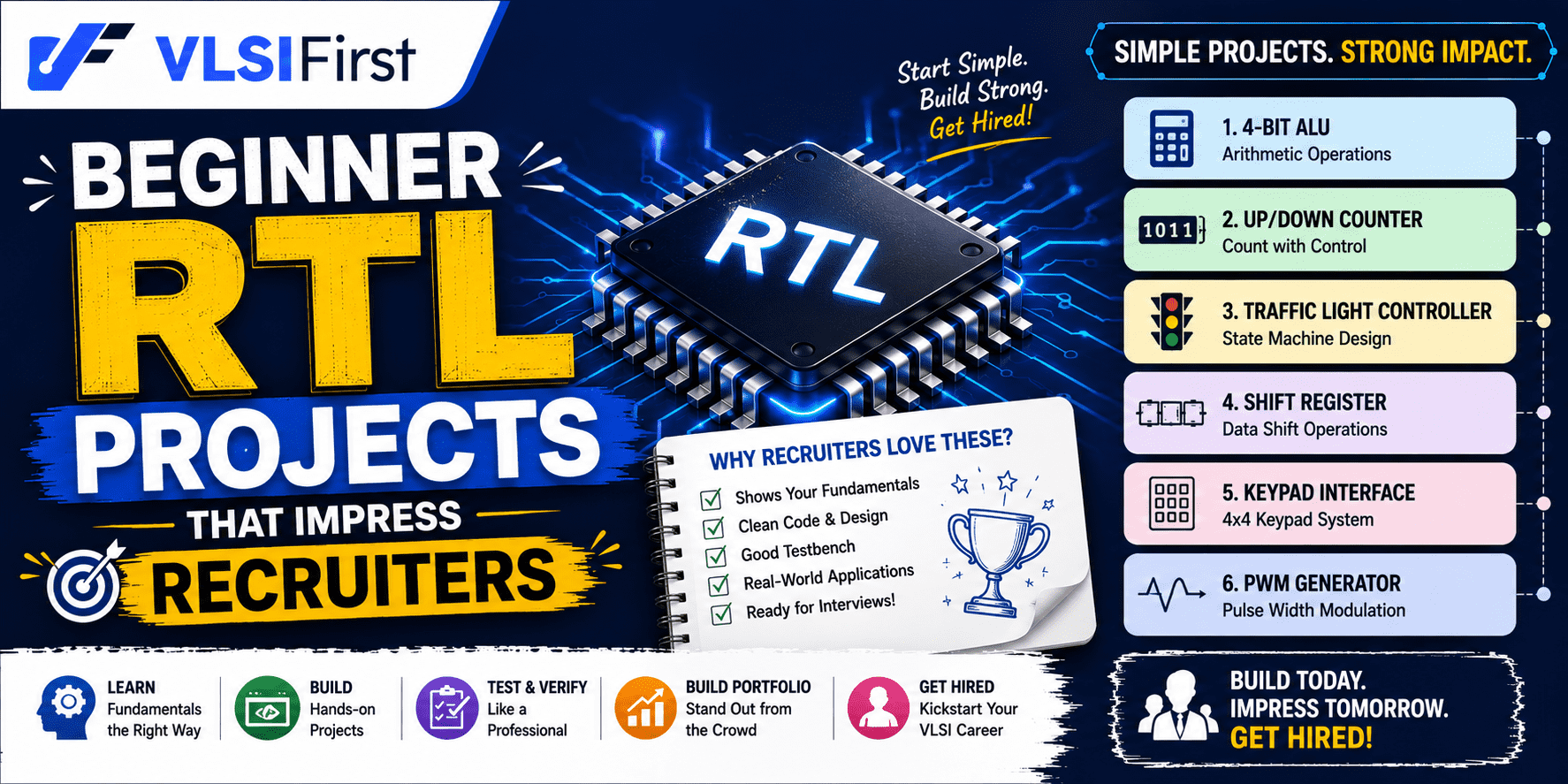
Beginner RTL Projects That Impress Recruiters
Discover beginner RTL projects that impress VLSI recruiters. Learn which Verilog projects build practical skills, strengthen your portfolio, and improve interview success.


Hours
2-98/1, Gurram Guda Road, Gurram Guda, Hyderabad, Rangareddy, Telangana, 501510
Copyright 2025 © VLSI Technologies Private Limited
Designed and developed by KandraDigitalCopyright 2025 © VLSI Technologies Private Limited
Designed, Developed & Marketing by KandraDigital