
For Electrical and Electronics Engineering (EEE) graduates, one of the biggest career dilemmas is choosing between VLSI (Very Large Scale Integration) and Power Electronics.
Both fields are core engineering domains with strong technical depth and real-world applications. However, they differ significantly in terms of:
- job roles
- industry demand
- required skills
- career growth
- salary potential
So the question is:
Is VLSI better than Power Electronics for EEE graduates?
The answer depends on your interests, career goals, and learning preferences. This article provides a complete, practical comparison to help you make the right decision.
Understanding the Two Domains
What is VLSI?
VLSI involves designing and developing integrated circuits (chips) used in:
- smartphones
- laptops
- automotive systems
- AI hardware
- IoT devices
Engineers work on:
- RTL design
- verification
- physical design
- chip architecture
VLSI is a software + hardware hybrid domain, requiring programming, logic design, and tool-based workflows.
What is Power Electronics?
Power Electronics focuses on conversion and control of electrical power using devices such as:
- inverters
- converters
- rectifiers
- motor drives
Applications include:
- electric vehicles (EVs)
- renewable energy systems
- industrial automation
- power distribution
It is a core electrical domain with a strong focus on hardware and systems.
Key Differences Between VLSI and Power Electronics
|
Factor |
VLSI |
Power Electronics |
|
Nature of Work |
Chip design |
Power systems & hardware |
|
Work Type |
Mostly software-based |
Mostly hardware-based |
|
Tools |
EDA tools, simulation |
MATLAB, hardware labs |
|
Work Environment |
Office/IT setups |
Labs, plants, field work |
|
Learning Curve |
Programming + logic |
Circuit + power systems |
Industry Demand
VLSI Demand
The semiconductor industry is growing rapidly due to:
- AI and machine learning
- 5G and IoT
- automotive electronics
- data centers
India is also investing heavily in semiconductor manufacturing and design.
This has created strong demand for:
- RTL design engineers
- verification engineers
- physical design engineers
Power Electronics Demand
Power Electronics is also growing due to:
- electric vehicles
- renewable energy adoption
- smart grids
- industrial automation
However, job growth is often slower compared to VLSI and may depend on manufacturing and infrastructure sectors.
Salary Comparison
VLSI Salaries
- Freshers: ₹4 LPA – ₹10 LPA
- Experienced: ₹10 LPA – ₹25+ LPA
Top semiconductor companies offer competitive packages, especially for skilled engineers.
Power Electronics Salaries
- Freshers: ₹2.5 LPA – ₹6 LPA
- Experienced: ₹6 LPA – ₹15 LPA
While salaries grow with experience, initial packages are generally lower compared to VLSI.
Skill Requirements
Skills Needed for VLSI
- digital electronics
- Verilog/SystemVerilog
- programming basics
- debugging and problem solving
- tool usage
Students must be comfortable with logic design and coding.
Skills Needed for Power Electronics
- circuit analysis
- control systems
- power devices
- MATLAB/Simulink
- hardware design
This field requires strong understanding of electrical systems and hardware behavior.
Job Opportunities and Roles
VLSI Roles
- RTL Design Engineer
- Verification Engineer
- Physical Design Engineer
- DFT Engineer
These roles are mostly in:
- semiconductor companies
- product-based companies
- design service firms
Power Electronics Roles
- Power Electronics Engineer
- Design Engineer (Converters/Inverters)
- EV Systems Engineer
- Control Systems Engineer
These roles are found in:
- manufacturing industries
- automotive companies
- renewable energy firms
Learning Curve and Training
VLSI Learning Path
VLSI requires structured training because:
- tools are complex
- workflows are industry-specific
- practical exposure is essential
Power Electronics Learning Path
Power Electronics can be learned through:
- academic courses
- lab work
- internships
However, real-world exposure often requires working in industries or labs.
Work Environment and Lifestyle
VLSI Work Environment
- office-based (IT environment)
- fixed working hours (mostly)
- remote/hybrid options available
Suitable for those who prefer desk-based technical work.
Power Electronics Work Environment
- lab or field-based
- may involve site visits
- hardware testing environments
Suitable for those who enjoy hands-on electrical systems work.
Which One Is Better for EEE Graduates?
The answer depends on your interests and strengths.
Choose VLSI If You:
- are interested in chip design and technology
- enjoy coding and logic design
- want higher salary potential
- prefer IT/office work environment
Choose Power Electronics If You:
- enjoy electrical systems and hardware
- prefer working with circuits and power devices
- are interested in EVs or renewable energy
- like field or lab-based work
Common Mistake EEE Students Make
Many students choose a domain based on:
- trends
- salary expectations
- peer influence
Instead, you should evaluate:
- your interest
- learning ability
- long-term goals
You can assess your suitability here: https://vlsifirst.com/blog/is-vlsi-the-right-career-for-you
Can You Switch Later?
Yes, but switching domains becomes harder with time.
For example:
- moving from Power Electronics to VLSI requires learning coding and tools
- switching from VLSI to Power Electronics requires hardware exposure
It’s better to make an informed decision early.
Final Verdict
So, is VLSI better than Power Electronics for EEE graduates?
From a career growth and salary perspective, VLSI often has an advantage.
From a core electrical and hardware perspective, Power Electronics is equally valuable.
VLSI stands out due to:
- rapid industry growth
- higher salary potential
- global opportunities
- increasing demand for semiconductor engineers
However, the “better” choice depends on what suits you best.
If you want a high-growth, tech-driven career, VLSI is a strong choice.
If you prefer core electrical engineering and hardware systems, Power Electronics is the right path.
How to Test Your RTL Before Simulation: A Practical Pre-Simulation Checklist for Beginners
Learn how to test your RTL before simulation with a practical pre-simulation checklist. Improve Verilog quality, reduce debugging time, and build industry-ready RTL skills.
From Logic Diagram to Verilog Code – Complete Workflow
Learn the complete workflow from logic diagram to Verilog code, including specifications, RTL architec ture, coding, simulation, debugging, verification, and documentation.
Common Mistakes While Writing Verilog Code
Learn the most common Verilog coding mistakes beginners make and how to avoid them. Improve RTL coding, simulation, debugging, verification, and interview readiness.
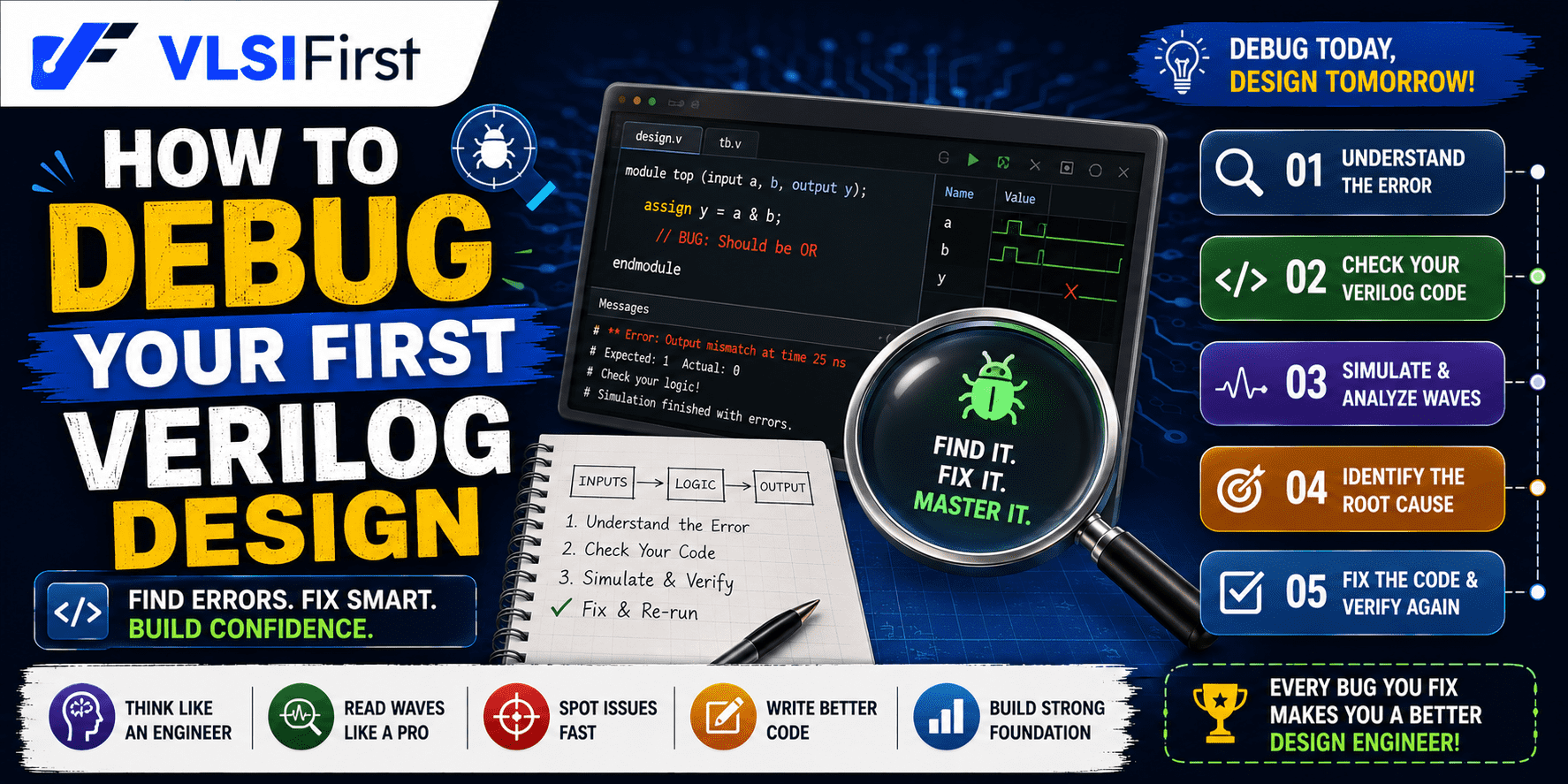
How to Debug Your First Verilog Design
Debugging your first Verilog design with practical RTL debug techniques, waveform analysis, testbench tips, FSM debugging, and common beginner mistakes. Read now!
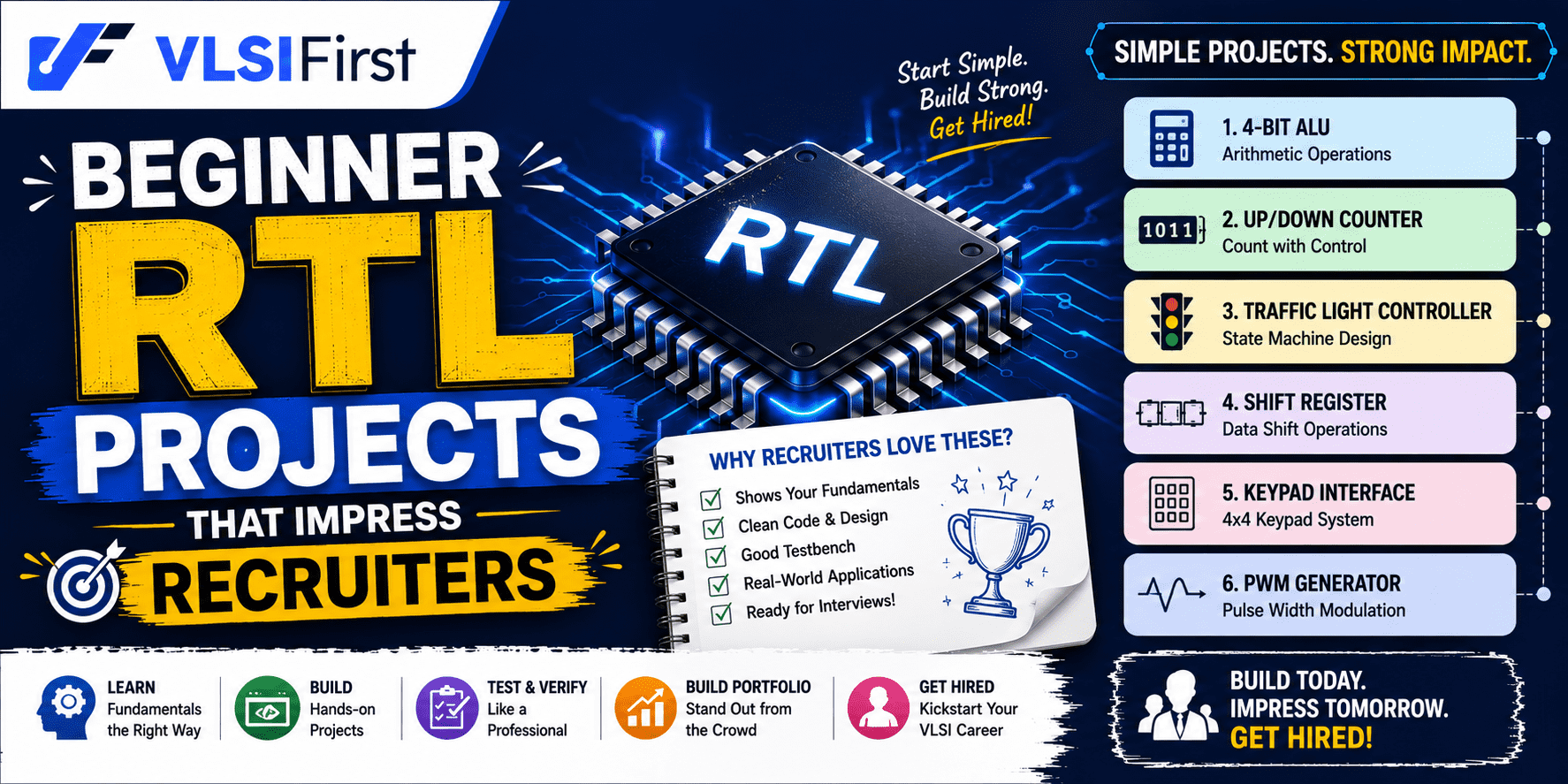
Beginner RTL Projects That Impress Recruiters
Discover beginner RTL projects that impress VLSI recruiters. Learn which Verilog projects build practical skills, strengthen your portfolio, and improve interview success.


Hours
2-98/1, Gurram Guda Road, Gurram Guda, Hyderabad, Rangareddy, Telangana, 501510
Copyright 2025 © VLSI Technologies Private Limited
Designed and developed by KandraDigitalCopyright 2025 © VLSI Technologies Private Limited
Designed, Developed & Marketing by KandraDigital