
The semiconductor industry is one of the fastest-growing technology sectors in the world. With increasing demand for chip design engineers, many students, including diploma holders in ECE/EEE, are exploring opportunities in VLSI (Very Large Scale Integration).
But a common and important question arises:
Can diploma holders really build a career in VLSI?
While the answer is yes, it comes with certain limitations, challenges, and realistic expectations.
This blog provides a complete, honest view of:
- opportunities available for diploma holders
- limitations you must be aware of
- skills required to succeed
- practical strategies to enter the VLSI domain
Understanding the Entry Barrier in VLSI
Unlike many IT fields, VLSI is a specialized engineering domain. Most semiconductor companies prefer candidates with:
- B.Tech / B.E. in ECE, EEE, or related fields
- strong fundamentals in digital electronics
- knowledge of HDL (Verilog/SystemVerilog)
- hands-on experience with tools
This creates a higher entry barrier for diploma holders.
However, it does not mean opportunities are completely closed, it simply means the path is more challenging and requires strategic effort.
What Opportunities Exist for Diploma Holders?
Let’s look at where diploma holders can realistically fit into the VLSI ecosystem.
1. Support and Technician Roles
Diploma holders may find opportunities in:
- lab technician roles
- hardware support
- testing and validation environments
These roles are more focused on:
- assisting engineers
- maintaining hardware setups
- supporting testing processes
While these are entry points, they are not core design roles.
2. Testing and Validation Roles
Some companies offer positions related to:
- chip testing
- validation support
- quality checks
These roles require:
- basic electronics knowledge
- understanding of testing procedures
They can serve as a stepping stone into the semiconductor industry.
3. Entry-Level Roles Through Skill-Based Hiring
In recent years, some startups and smaller companies have begun to focus more on skills than degrees.
If a diploma holder develops strong practical skills, they may get opportunities in:
- verification support roles
- junior design assistance
- scripting-based tasks
However, these cases are less common and highly competitive.
4. Indirect Entry Through Related Domains
Some diploma holders enter VLSI indirectly by first working in:
- embedded systems
- electronics support roles
- IT or software services
Later, they transition into VLSI by upgrading their skills.
Major Limitations Diploma Holders Face
While opportunities exist, it’s important to understand the limitations clearly.
1. Eligibility Constraints
Most core VLSI roles (like RTL design or physical design) require:
- a bachelor’s degree
- sometimes even a master’s degree
This means diploma holders may not qualify for many job openings.
2. Strong Competition
Diploma holders compete with:
- B.Tech graduates
- M.Tech candidates
- trained VLSI professionals
This makes it harder to stand out without exceptional skills.
3. Limited Access to Core Roles
Core VLSI roles involve:
- chip design
- verification
- architecture
These roles demand deep theoretical knowledge, which is typically covered in degree programs.
4. Learning Curve Challenges
VLSI requires:
- understanding of digital design
- HDL coding
- tool-based workflows
Without a strong academic foundation, learning these concepts can be more difficult.
Can Diploma Holders Overcome These Challenges?
Yes, but only with the right strategy.
Diploma holders who succeed in VLSI usually:
- invest heavily in skill development
- build strong project portfolios
- continuously upgrade their qualifications
Let’s explore how.
How Diploma Holders Can Enter VLSI
1. Upgrade to a Degree
The most effective way is to pursue:
- B.Tech / B.E. through lateral entry
This opens doors to:
- campus placements
- internships
- core VLSI roles
2. Build Strong Fundamentals
Focus on:
- digital electronics
- logic design
- CMOS basics
Without fundamentals, advanced topics become difficult.
3. Learn HDL Programming
Start with:
- Verilog
- SystemVerilog
These are essential for design and verification roles.
4. Gain Hands-On Experience
Practical exposure is critical.
Work on:
- RTL design projects
- simulation exercises
- debugging tasks
5. Build a Strong Portfolio
Create:
- GitHub repositories
- project documentation
- design case studies
A strong portfolio can compensate for lack of formal qualifications to some extent.
6. Choose the Right Training Program
A good VLSI course should provide:
- structured curriculum
- tool access
- mentorship
- project-based learning
What Diploma Holders Should Expect
It’s important to set realistic expectations.
What Is Possible
- entry into support or testing roles
- gradual transition into VLSI
- career growth with continuous learning
What Is Difficult
- direct entry into core design roles
- high salary packages initially
- quick career transition
Career Growth Path for Diploma Holders
A practical path could look like:
- Diploma → Entry-level role (support/testing)
- Skill development + projects
- Upgrade to B.Tech (optional but recommended)
- Move into core VLSI roles
- Grow into specialized engineer
This path requires patience and consistent effort.
Common Mistakes Diploma Holders Make
- expecting quick placement after short courses
- ignoring fundamentals
- not building projects
- choosing courses based only on placement promises
Conclusion
So, what’s the truth about VLSI opportunities for diploma holders?
Opportunities exist, but they are limited and competitive.
Success requires extra effort, skill-building, and long-term planning.
VLSI is not an impossible field for diploma holders, but it is not an easy entry either.
If you are willing to:
- upgrade your skills
- invest time in learning
- build real projects
- stay consistent
you can gradually build a successful career in the semiconductor industry.
If you’re a diploma holder serious about VLSI:
- Treat it as a long-term journey, not a quick shortcut
- Focus on skills over shortcuts
- Build strong fundamentals and projects
- Consider upgrading your qualifications
With the right mindset and strategy, even a challenging path can lead to strong career growth.

How to Test Your RTL Before Simulation: A Practical Pre-Simulation Checklist for Beginners
Learn how to test your RTL before simulation with a practical pre-simulation checklist. Improve Verilog quality, reduce debugging time, and build industry-ready RTL skills.
From Logic Diagram to Verilog Code – Complete Workflow
Learn the complete workflow from logic diagram to Verilog code, including specifications, RTL architec ture, coding, simulation, debugging, verification, and documentation.
Common Mistakes While Writing Verilog Code
Learn the most common Verilog coding mistakes beginners make and how to avoid them. Improve RTL coding, simulation, debugging, verification, and interview readiness.
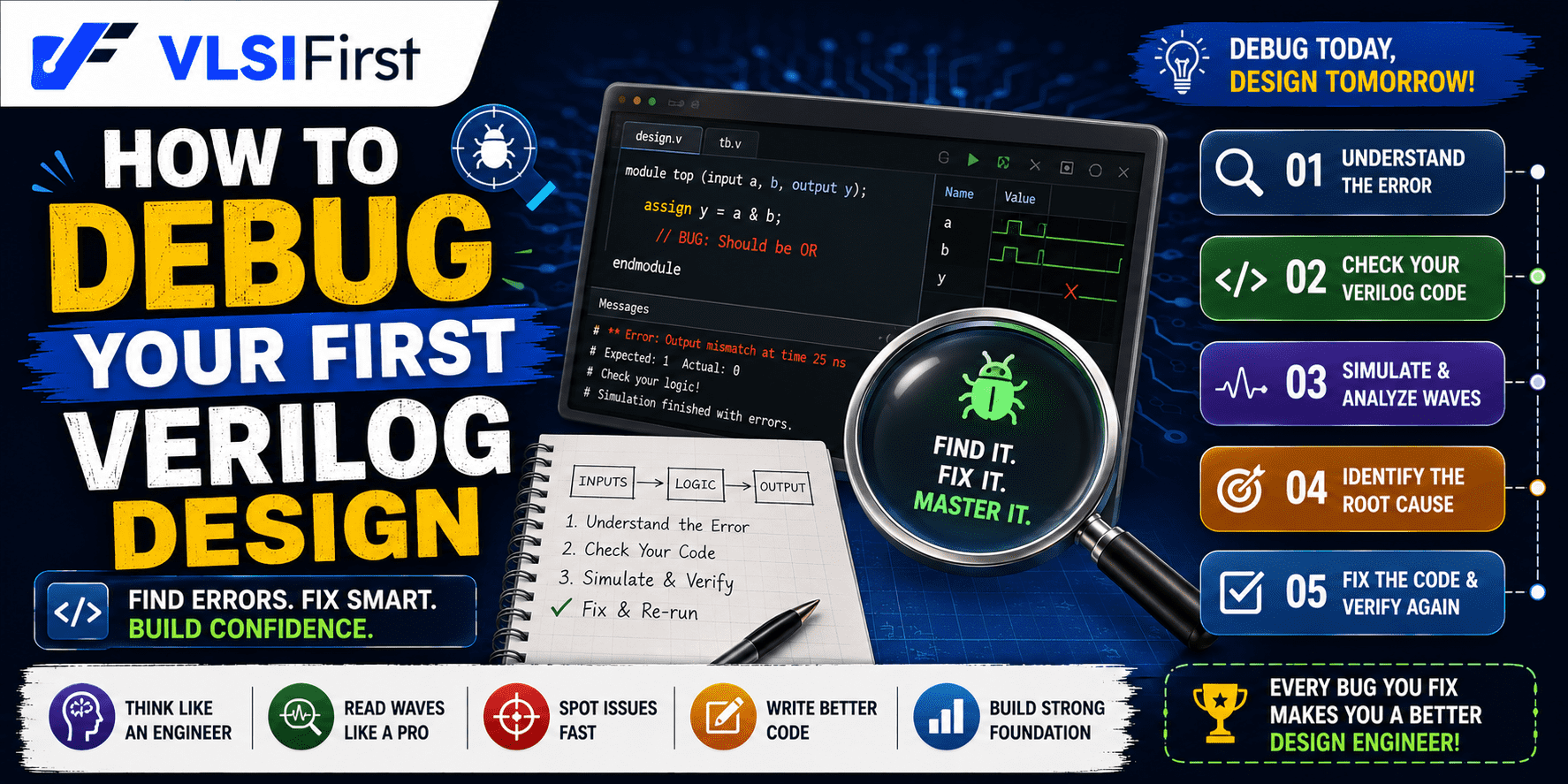
How to Debug Your First Verilog Design
Debugging your first Verilog design with practical RTL debug techniques, waveform analysis, testbench tips, FSM debugging, and common beginner mistakes. Read now!
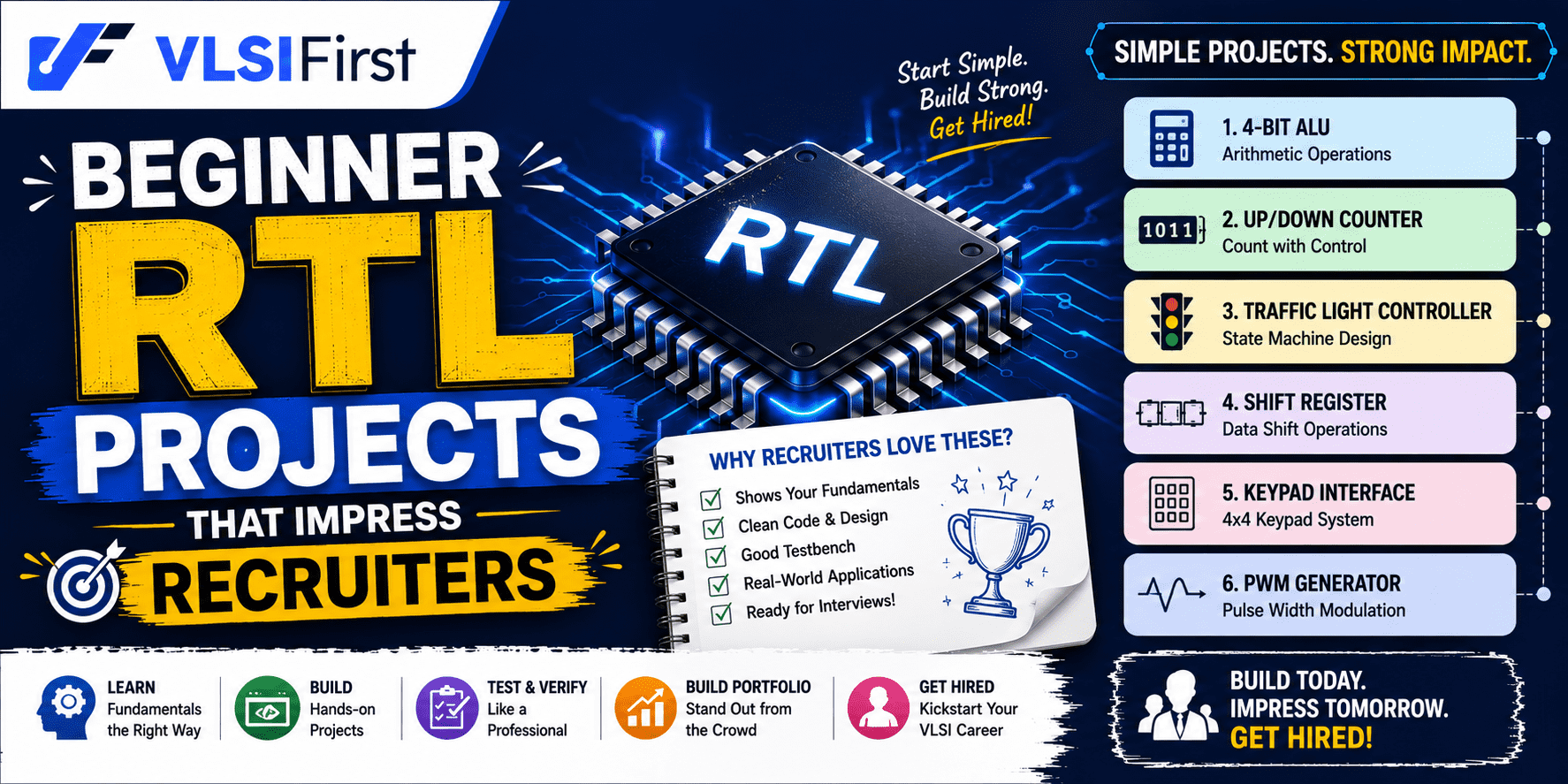
Beginner RTL Projects That Impress Recruiters
Discover beginner RTL projects that impress VLSI recruiters. Learn which Verilog projects build practical skills, strengthen your portfolio, and improve interview success.


Hours
2-98/1, Gurram Guda Road, Gurram Guda, Hyderabad, Rangareddy, Telangana, 501510
Copyright 2025 © VLSI Technologies Private Limited
Designed and developed by KandraDigitalCopyright 2025 © VLSI Technologies Private Limited
Designed, Developed & Marketing by KandraDigital