
For Electronics and Communication Engineering (ECE) students, one of the most common career dilemmas is choosing between VLSI (Very Large Scale Integration) and Embedded Systems.
Both domains are closely related, both are in demand, and both offer strong career opportunities. But when you look deeper, especially from a long-term career perspective, they differ significantly in terms of:
- career growth
- job roles
- skill requirements
- salary potential
- industry trends
So, which one should you choose?
VLSI or Embedded Systems?
This article provides a detailed, practical comparison to help ECE students make an informed decision based on long-term career outcomes rather than short-term trends.
Understanding the Domains
What is VLSI?
VLSI focuses on designing and developing integrated circuits (ICs) used in:
- processors
- memory chips
- AI accelerators
- communication devices
Engineers work on:
- RTL design
- functional verification
- physical design
- chip architecture
It is a design-heavy domain that combines electronics with programming and advanced tools.
What are Embedded Systems?
Embedded Systems involve designing hardware + software systems that control devices.
Examples include:
- automotive control systems
- consumer electronics
- IoT devices
- robotics systems
Engineers work on:
- microcontrollers
- firmware development
- device drivers
- real-time operating systems (RTOS)
It is a system-level domain combining coding, electronics, and real-world applications.
Key Differences Between VLSI and Embedded Systems
|
Factor |
VLSI |
Embedded Systems |
|
Focus |
Chip design |
Device/system development |
|
Work Type |
Mostly design + simulation |
Hardware + software integration |
|
Programming |
Verilog/SystemVerilog |
C, C++, Embedded C |
|
Tools |
EDA tools |
IDEs, debuggers, hardware kits |
|
Output |
Chips (ICs) |
Working devices/systems |
Industry Demand and Future Scope
VLSI Industry Growth
The semiconductor industry is booming due to:
- AI and machine learning
- high-performance computing
- automotive electronics
- 5G and IoT
India is also investing heavily in chip design and semiconductor manufacturing.
This has increased demand for roles such as:
- RTL design engineers
- verification engineers
- physical design engineers
Embedded Systems Growth
Embedded Systems is also growing due to:
- IoT expansion
- smart devices
- automotive electronics
- robotics
However, the growth is more distributed across industries, and competition is relatively higher due to a larger talent pool.
Salary Comparison (Long-Term View)
VLSI Salaries
- Freshers: ₹4 LPA – ₹10 LPA
- Mid-level: ₹10 LPA – ₹25 LPA
- Senior roles: ₹25+ LPA
VLSI offers strong salary growth due to:
- specialized skills
- limited talent pool
- high industry demand
Embedded Systems Salaries
- Freshers: ₹3 LPA – ₹7 LPA
- Mid-level: ₹7 LPA – ₹15 LPA
- Senior roles: ₹15–25 LPA
While Embedded Systems also offers growth, salary progression is generally slower compared to VLSI.
Skill Requirements
Skills Needed for VLSI
- digital electronics
- HDL programming (Verilog/SystemVerilog)
- debugging and simulation
- EDA tools
- design flow understanding
Students must be comfortable with logic design and structured coding.
Skills Needed for Embedded Systems
- C/C++ programming
- microcontroller programming
- RTOS concepts
- hardware interfacing
- debugging tools
Embedded Systems require strong programming + hardware interaction skills.
Learning Curve
VLSI Learning Curve
- requires structured training
- tool-based learning is essential
- projects and mentorship are critical
Embedded Systems Learning Curve
- can start with basic microcontrollers
- easier to begin but harder to master advanced concepts
- requires continuous hands-on practice
Job Roles and Career Path
VLSI Career Path
- RTL Design Engineer
- Verification Engineer
- Physical Design Engineer
- DFT Engineer
Career progression leads to:
- chip architect
- design lead
- technical specialist
Embedded Systems Career Path
- Embedded Software Engineer
- Firmware Engineer
- Systems Engineer
- IoT Developer
Career progression leads to:
- system architect
- product engineer
- embedded solutions expert
Work Environment
VLSI Work Environment
- office-based
- tool-driven
- mostly software environment
- stable working hours
Embedded Systems Work Environment
- mix of office and lab
- hardware debugging
- device testing
- sometimes field work
Long-Term Career Stability
VLSI
- fewer professionals → higher demand
- specialized skills → job security
- global opportunities
Embedded Systems
- larger talent pool
- competitive job market
- broader opportunities but less specialization
Which One Is Better in the Long Run?
Choose VLSI If You:
- want high salary growth
- prefer design and simulation
- enjoy problem-solving and debugging
- are willing to learn tools and HDL
Choose Embedded Systems If You:
- enjoy programming and hardware interaction
- want to work on real devices
- prefer system-level engineering
- are interested in IoT or robotics
Can You Combine Both?
Yes.
Some advanced roles involve:
- hardware-software co-design
- SoC (System-on-Chip) development
- embedded verification
Understanding both domains can create unique career opportunities.
Common Mistakes Students Make
Students often choose based on:
- peer pressure
- trending technologies
- salary expectations
Instead, evaluate your:
- interest
- strengths
- long-term goals
Conclusion
So, VLSI vs Embedded Systems, which is better for ECE students in the long term?
VLSI offers higher salary potential, specialization, and strong long-term growth.
Embedded Systems offers broader opportunities and flexibility across industries.
If your goal is:
- high-growth, specialized career, choose VLSI
- diverse, system-level roles, choose Embedded Systems
Both fields are valuable, but your success depends on skills, consistency, and the quality of training you choose.

How to Test Your RTL Before Simulation: A Practical Pre-Simulation Checklist for Beginners
Learn how to test your RTL before simulation with a practical pre-simulation checklist. Improve Verilog quality, reduce debugging time, and build industry-ready RTL skills.
From Logic Diagram to Verilog Code – Complete Workflow
Learn the complete workflow from logic diagram to Verilog code, including specifications, RTL architec ture, coding, simulation, debugging, verification, and documentation.
Common Mistakes While Writing Verilog Code
Learn the most common Verilog coding mistakes beginners make and how to avoid them. Improve RTL coding, simulation, debugging, verification, and interview readiness.
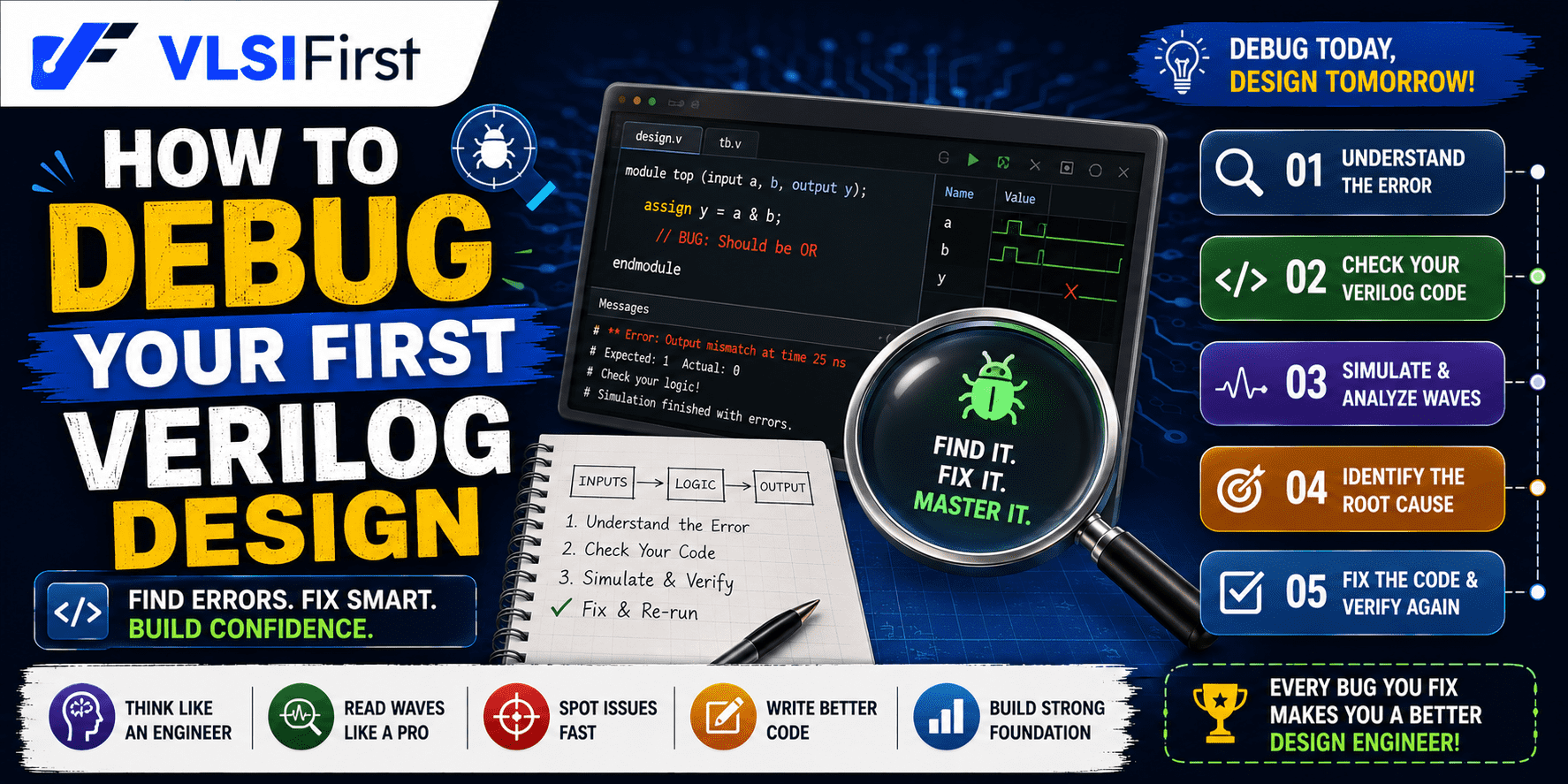
How to Debug Your First Verilog Design
Debugging your first Verilog design with practical RTL debug techniques, waveform analysis, testbench tips, FSM debugging, and common beginner mistakes. Read now!
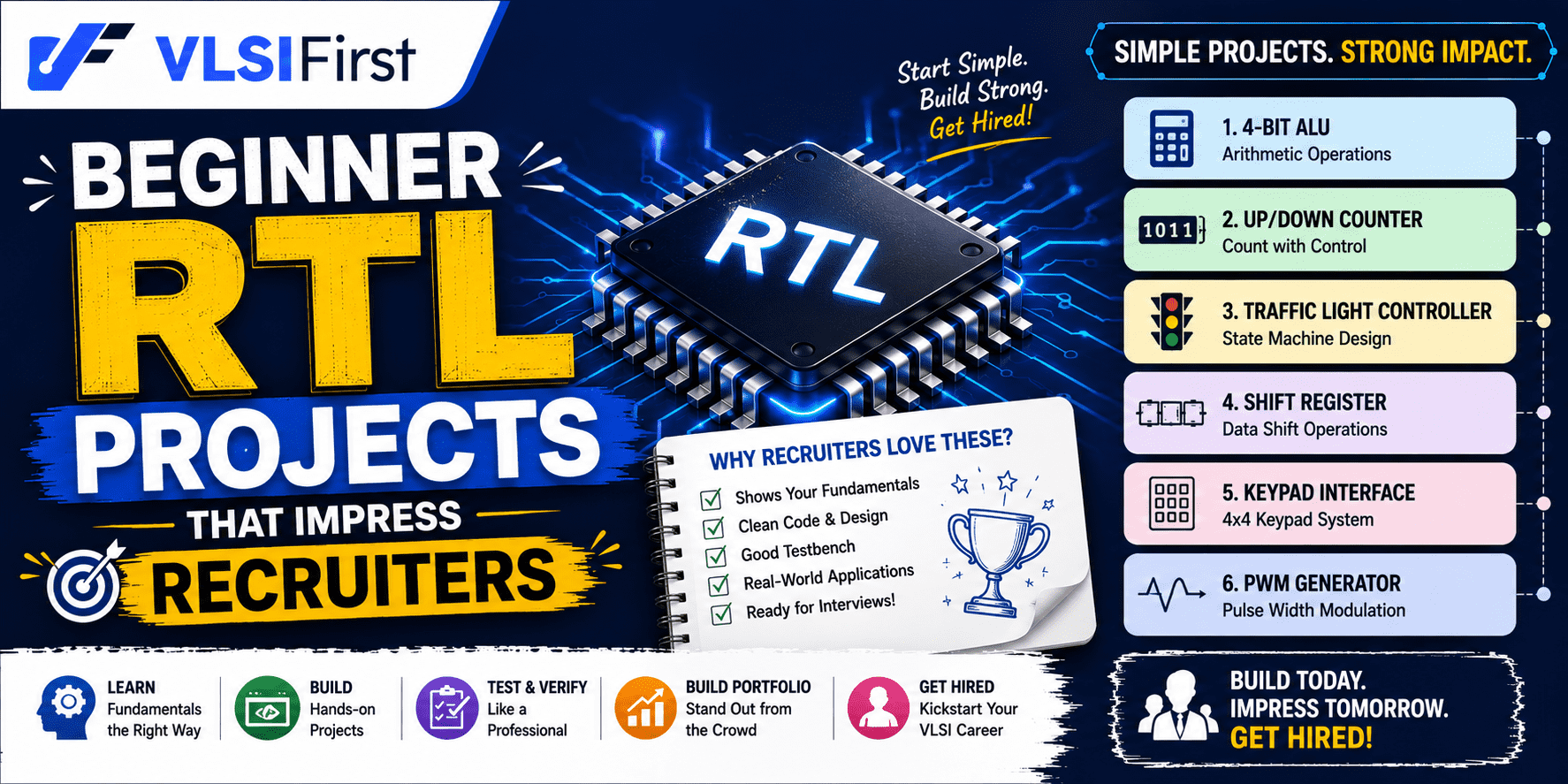
Beginner RTL Projects That Impress Recruiters
Discover beginner RTL projects that impress VLSI recruiters. Learn which Verilog projects build practical skills, strengthen your portfolio, and improve interview success.


Hours
2-98/1, Gurram Guda Road, Gurram Guda, Hyderabad, Rangareddy, Telangana, 501510
Copyright 2025 © VLSI Technologies Private Limited
Designed and developed by KandraDigitalCopyright 2025 © VLSI Technologies Private Limited
Designed, Developed & Marketing by KandraDigital