
The semiconductor industry has witnessed rapid growth over the last few decades, with VLSI (Very Large Scale Integration) playing a crucial role in shaping modern electronics. From smartphones to advanced computing systems, VLSI technology enables the integration of millions of transistors onto a single chip, making devices smaller, faster, and more efficient. If you are looking to build a career in electronics or semiconductor design, understanding VLSI design and verification is essential.
In this guide, we will explore the fundamentals of VLSI, the design process, verification techniques, and career opportunities in this exciting field.
What is VLSI?
VLSI stands for Very Large Scale Integration, a process that involves integrating thousands to millions of transistors on a single chip. It is an evolution of earlier technologies like SSI (Small Scale Integration), MSI (Medium Scale Integration), and LSI (Large Scale Integration). VLSI technology allows engineers to create highly complex digital systems with faster processing speeds, lower power consumption, and smaller form factors.
Key Applications of VLSI:
- Microprocessors and microcontrollers
- System-on-Chip (SoC) designs
- Memory chips (RAM, ROM, Flash)
- Consumer electronics (smartphones, tablets, wearable devices)
- Networking and communication devices
Understanding VLSI Design
VLSI design is the process of creating an integrated circuit (IC) from specifications. It involves several stages, from conceptualization to physical implementation, ensuring the chip functions efficiently and reliably.
1. RTL Design (Register Transfer Level)
RTL design is the first stage of VLSI design where designers describe the behavior of digital circuits using hardware description languages like Verilog or VHDL. At this stage, the focus is on functional correctness, logic synthesis, and optimization.
Key Activities in RTL Design:
- Writing RTL code for modules
- Performing functional simulation
- Optimizing for area, speed, and power
- Preparing for synthesis
2. Logic Synthesis
After RTL coding, the design is converted into a gate-level representation through logic synthesis. This step translates the abstract RTL description into a network of logic gates that can be physically realized on silicon. Tools like Synopsys Design Compiler or Cadence Genus are widely used in this stage.
3. Timing Analysis
Timing analysis ensures that the circuit operates at the desired clock speed without errors. Static Timing Analysis (STA) checks all possible paths in the design to ensure setup and hold time requirements are met. Proper timing ensures reliable and fast chip performance.
4. Physical Design
Physical design involves mapping the synthesized gate-level netlist onto the actual silicon layout. It includes:
- Floorplanning: Placing functional blocks
- Placement: Positioning standard cells
- Routing: Connecting cells with metal layers
- Clock tree synthesis: Distributing the clock signal efficiently
The goal is to optimize area, power, and performance while adhering to design rules.
VLSI Verification
Verification is a critical step in the VLSI design process. A chip might function correctly in theory, but verification ensures it works reliably under all conditions before fabrication. Errors in VLSI chips can be extremely costly, making verification indispensable.
1. Functional Verification
Functional verification checks if the design meets the original specifications. Engineers use simulation-based approaches, where testbenches are written to validate the RTL design. Techniques include:
- Directed testing: Testing specific scenarios
- Random testing: Generating random inputs to catch unexpected behaviors
- Coverage-driven verification: Ensuring all parts of the design are tested
2. Formal Verification
Formal verification uses mathematical methods to prove the correctness of a design without exhaustive simulation. It is particularly useful for complex systems where simulation alone cannot cover all scenarios.
3. Signoff Verification
Before sending the design for fabrication, signoff verification ensures the design is free from timing, electrical, and functional errors. Key processes include:
- Static Timing Analysis (STA)
- Design Rule Checking (DRC)
- Layout Versus Schematic (LVS) checks
- Power analysis
Tools Used in VLSI Design and Verification
VLSI design and verification involve various specialized tools to ensure accuracy and efficiency. Some popular tools include:
- Synopsys: For synthesis, STA, and verification
- Cadence: For design, verification, and physical layout
- Mentor Graphics: For simulation, layout, and verification
- ModelSim: For RTL simulation
- Xilinx Vivado: For FPGA design and verification
These tools help designers reduce errors, optimize performance, and speed up the design cycle.
VLSI Design Flow Summary
The VLSI design process can be summarized in the following flow:
- Specification
- RTL design
- Functional simulation
- Logic synthesis
- Timing analysis
- Physical design
- Verification and signoff
- Fabrication
This structured approach ensures that the final chip is reliable, efficient, and ready for mass production.
Career Opportunities in VLSI
A career in VLSI offers diverse opportunities across design, verification, and testing domains. Some popular career paths include:
- RTL Designer: Focuses on RTL coding and functional simulation
- Verification Engineer: Ensures design correctness through simulation and formal methods
- Physical Design Engineer: Handles floorplanning, placement, and routing
- SoC Designer: Designs complex System-on-Chip architectures
Skills Required for a Career in VLSI:
- Knowledge of Verilog, VHDL, and SystemVerilog
- Understanding of digital logic design and algorithms
- Experience with EDA tools
- Analytical and problem-solving skills
Salary Trends: Entry-level VLSI engineers in India can earn around INR 4–6 LPA, while experienced professionals in design and verification can earn INR 15–25 LPA or more depending on expertise and project complexity.
Tips to Learn VLSI Effectively
- Understand Digital Logic Basics: Before diving into VLSI, solid knowledge of digital logic is essential.
- Practice RTL Coding: Hands-on coding in Verilog or VHDL helps strengthen design skills.
- Use Simulation Tools: Simulate your designs to identify errors early.
- Learn EDA Tools: Get familiar with tools like Cadence, Synopsys, and ModelSim.
- Work on Projects: Implement small-scale projects to gain practical experience.
- Stay Updated: Follow industry trends, new technologies, and publications in semiconductor design.
Conclusion
VLSI design and verification are at the heart of modern electronics. With the increasing demand for smaller, faster, and energy-efficient chips, expertise in VLSI opens doors to a rewarding and dynamic career. By understanding the design flow, mastering verification techniques, and gaining hands-on experience with industry-standard tools, you can position yourself as a competent professional in the semiconductor industry.
Whether you aspire to become an RTL designer, verification engineer, or physical design expert, continuous learning and practical experience are the keys to success in this challenging yet fascinating field.
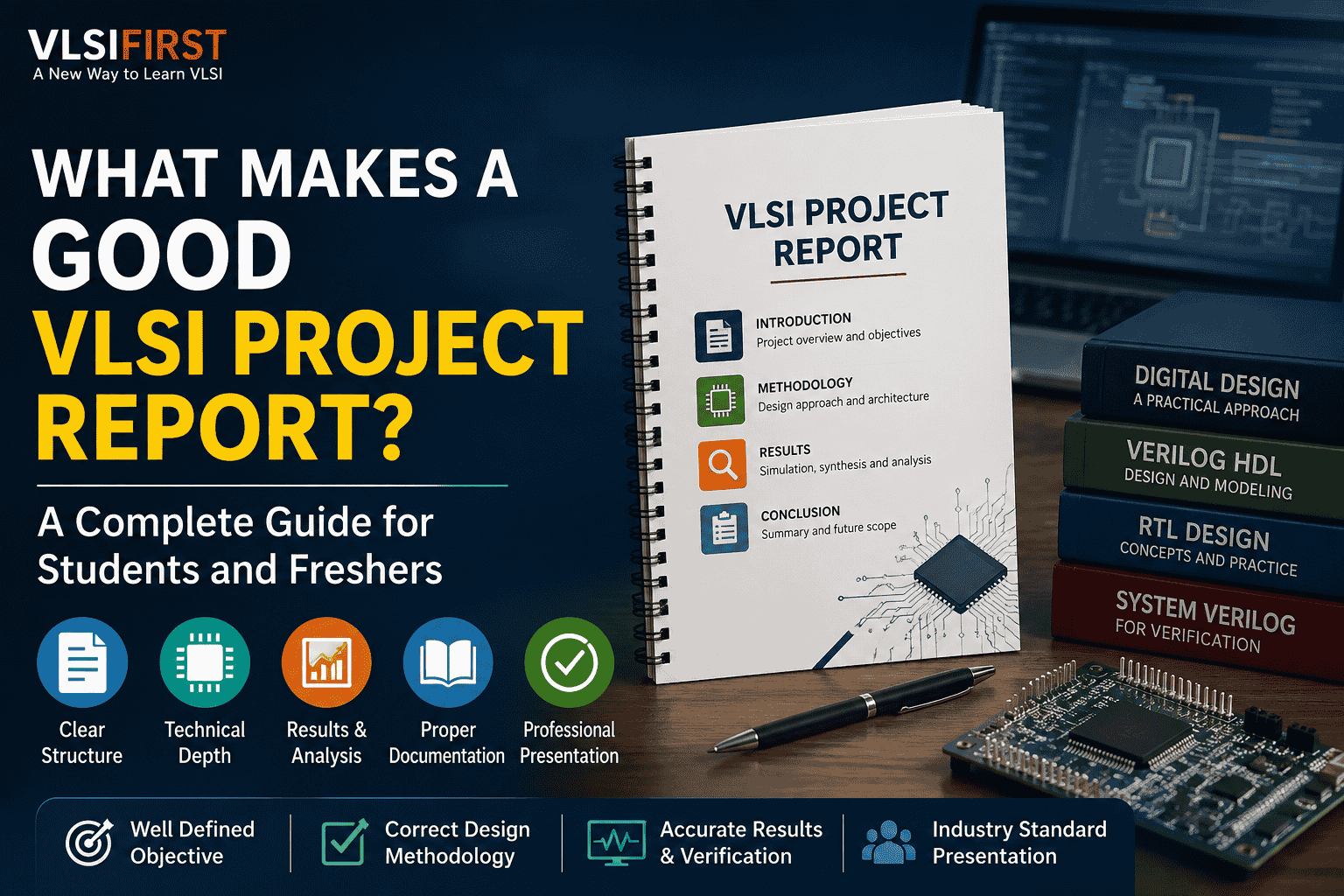
What Makes a Good VLSI Project Report? A Complete Guide for Students and Freshers
Learn how to write a professional VLSI project report with the right structure, RTL documentation, verification strategy, debugging details, and interview-ready presentation tips.
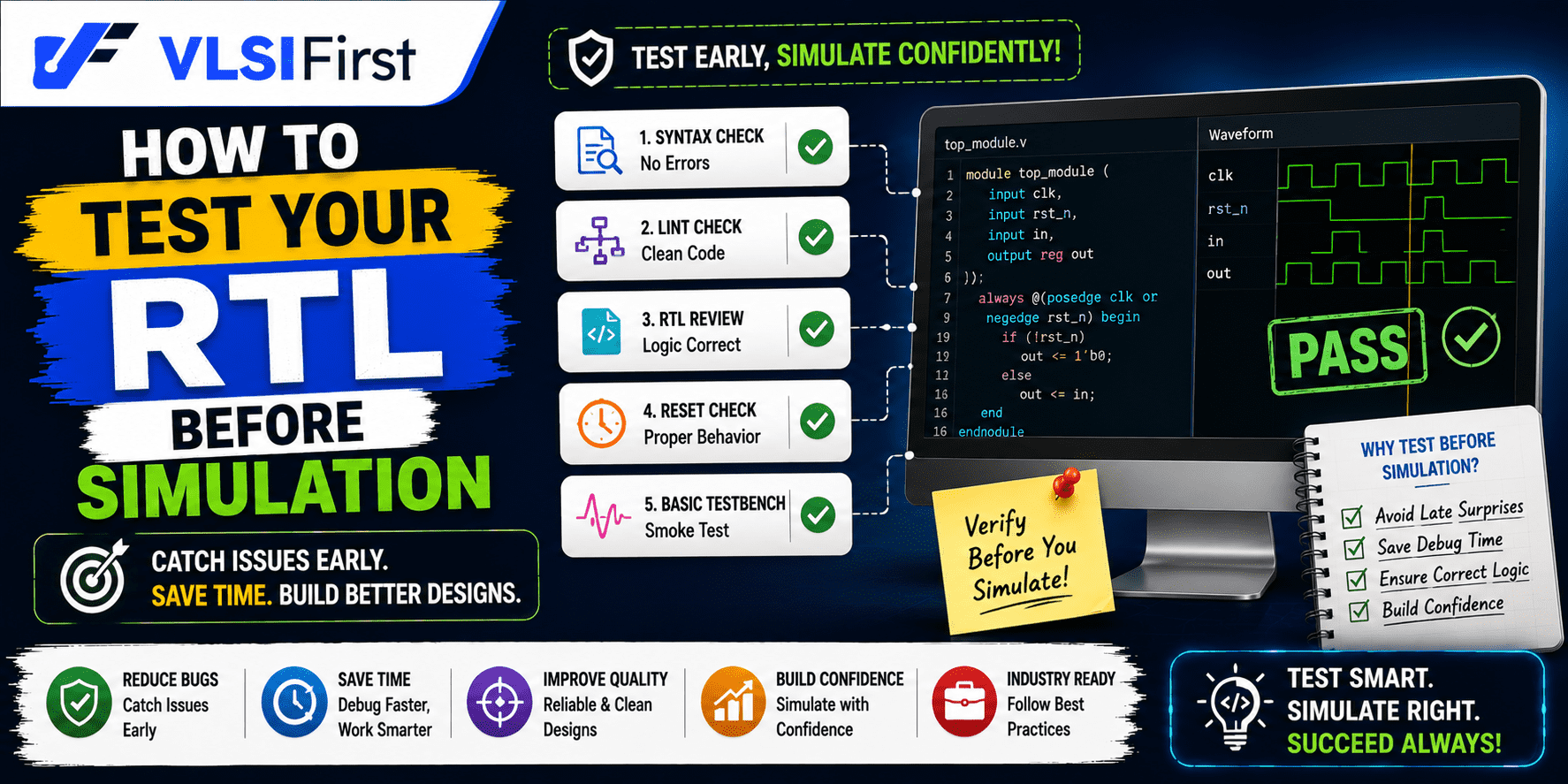
How to Test Your RTL Before Simulation: A Practical Pre-Simulation Checklist for Beginners
Learn how to test your RTL before simulation with a practical pre-simulation checklist. Improve Verilog quality, reduce debugging time, and build industry-ready RTL skills.

From Logic Diagram to Verilog Code – Complete Workflow
Learn the complete workflow from logic diagram to Verilog code, including specifications, RTL architec ture, coding, simulation, debugging, verification, and documentation.
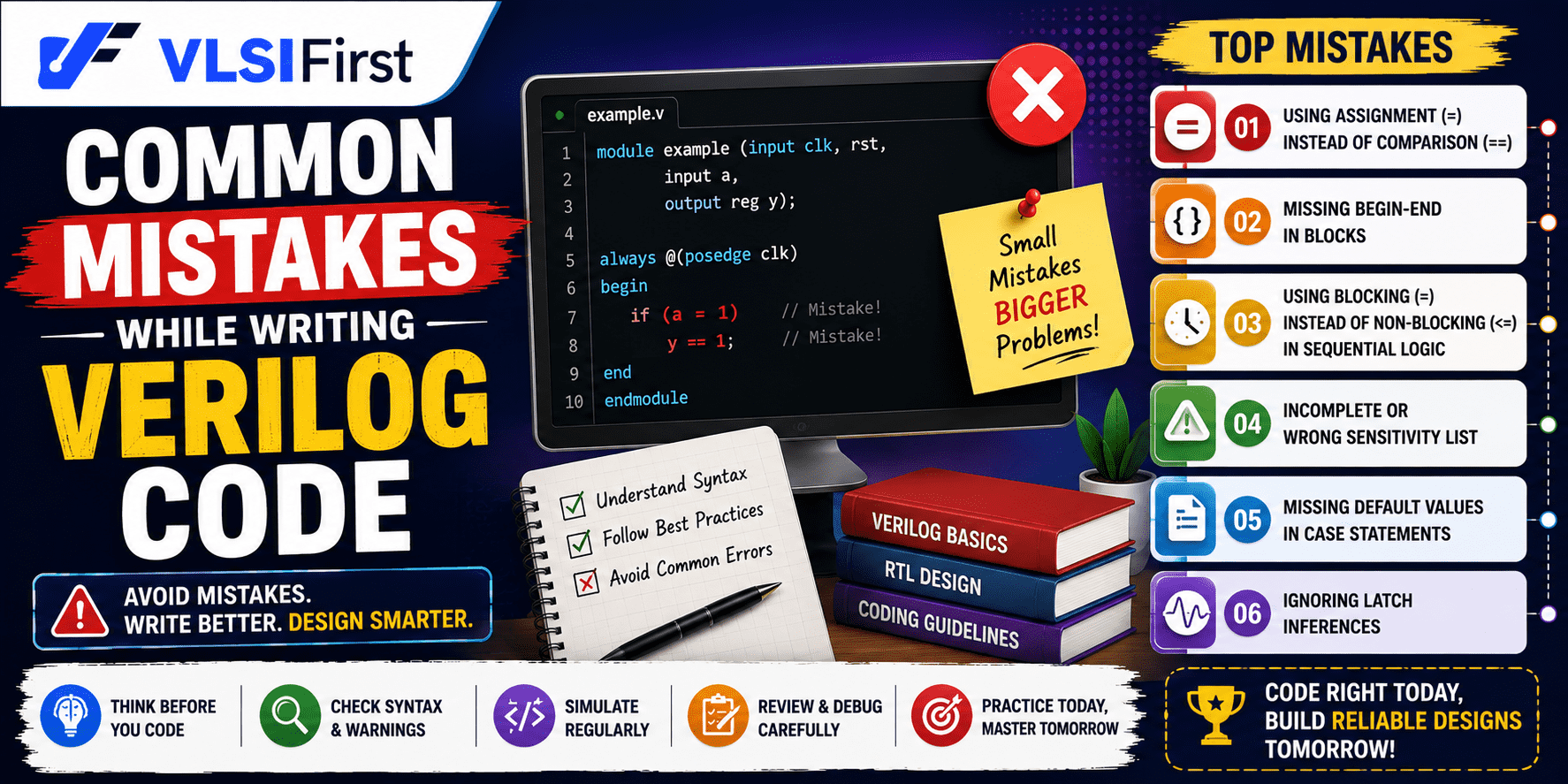
Common Mistakes While Writing Verilog Code
Learn the most common Verilog coding mistakes beginners make and how to avoid them. Improve RTL coding, simulation, debugging, verification, and interview readiness.
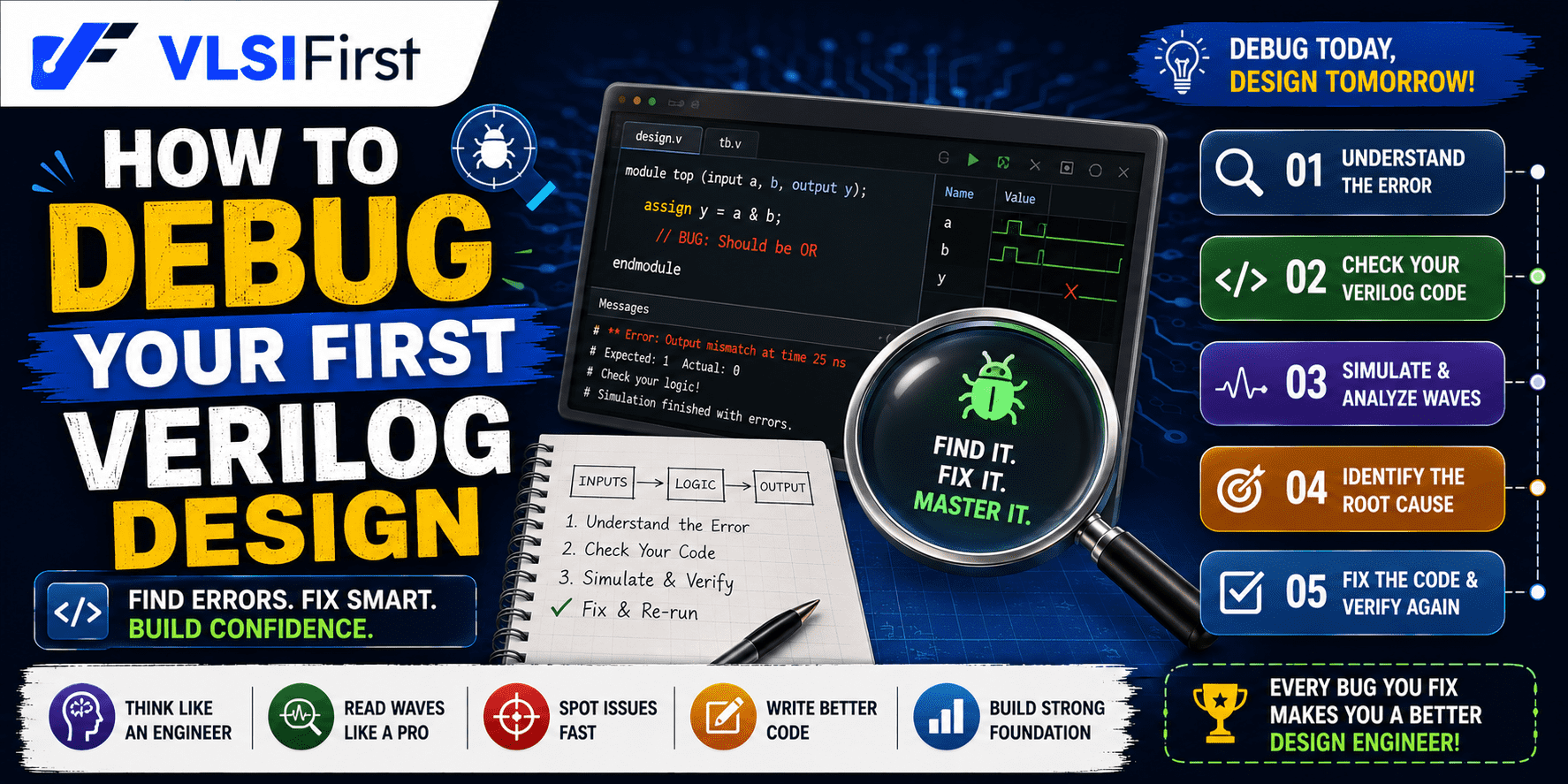
How to Debug Your First Verilog Design
Debugging your first Verilog design with practical RTL debug techniques, waveform analysis, testbench tips, FSM debugging, and common beginner mistakes. Read now!
.


Hours
2-98/1, Gurram Guda Road, Gurram Guda, Hyderabad, Rangareddy, Telangana, 501510
Copyright 2025 © VLSI Technologies Private Limited
Designed and developed by KandraDigitalCopyright 2025 © VLSI Technologies Private Limited
Designed, Developed & Marketing by KandraDigital