
The semiconductor industry is one of the most technically demanding fields in engineering. Companies designing modern chips for AI, smartphones, autonomous vehicles, and data centers require engineers who understand both theory and real-world design workflows.
Because of this demand, VLSI training programs have evolved significantly. Many institutes now advertise project-based learning, internships, or both as part of their training packages.
This raises an important question for students planning to enter the semiconductor industry:
Should a VLSI course focus more on projects or internships?
Both elements provide valuable learning experiences, but they serve slightly different purposes. Understanding the difference can help students choose the right training program and prepare effectively for VLSI careers.
This article explains the role of projects and internships in VLSI training, their benefits, limitations, and which one ultimately matters more for becoming job-ready.
Why Practical Experience Is Essential in VLSI
Unlike many theoretical engineering subjects, VLSI engineering is highly practical. Engineers spend most of their time designing, verifying, debugging, and optimizing digital circuits using industry tools.
Practical learning methods such as projects and internships help bridge the gap between classroom theory and real semiconductor workflows. Hands-on experience enables students to develop problem-solving abilities, debugging skills, and familiarity with design tools used in the industry.
Without practical exposure, even students with strong academic knowledge may struggle to perform well in technical interviews or real chip design environments.
What Are VLSI Projects?
Projects are structured assignments given during training programs where students design and implement digital circuits or systems.
These projects simulate real engineering tasks that VLSI professionals perform.
Typical VLSI projects include:
- UART controller design
- FIFO memory implementation
- ALU (Arithmetic Logic Unit) design
- processor modules or bus controllers
- FPGA-based digital systems
Hands-on projects reinforce theoretical concepts and help students build portfolios that demonstrate their technical skills.
Projects are usually completed individually or in small teams under instructor guidance.
Benefits of Project-Based Learning in VLSI
1. Strong Understanding of Design Concepts
Projects allow students to apply concepts learned in digital electronics, HDL coding, and verification.
For example, designing a UART controller requires understanding:
- finite state machines
- timing constraints
- RTL coding practices
- simulation debugging
This hands-on process helps students internalize concepts much more effectively than theoretical study alone.
2. Practical Debugging Experience
In real semiconductor projects, engineers spend a significant amount of time debugging design issues.
Projects expose students to common problems such as:
- logic errors
- timing violations
- simulation mismatches
Learning how to debug these issues builds critical engineering skills.
3. Building a Technical Portfolio
Projects allow students to showcase their skills to recruiters.
For example, candidates can present their project designs during interviews and explain:
- the design architecture
- coding approach
- verification strategy
- debugging challenges
Students can also publish their work in technical portfolios or repositories.
4. Learning the Complete Design Flow
Well-designed projects help students understand the entire chip design workflow.
This includes:
- specification analysis
- RTL coding
- simulation and verification
- synthesis and optimization
Understanding the full design process is critical for semiconductor roles.
What Are VLSI Internships?
Internships provide students with exposure to real industry environments where semiconductor engineers work.
During internships, students may participate in actual projects under the supervision of experienced engineers.
These programs often include:
- RTL coding and simulation tasks
- verification testbench development
- timing analysis and debugging
- collaboration with design teams
Internships provide hands-on exposure to industry design flows, tools, and real project challenges.
Benefits of Internships in VLSI Training
1. Exposure to Real Industry Workflows
Internships allow students to experience how semiconductor companies develop chips.
Students observe how engineers:
- plan design architectures
- manage large design modules
- collaborate across teams
- follow industry design standards
This exposure helps students understand how professional engineering teams operate.
2. Access to Industry Tools
Internships often provide access to professional EDA tools used in chip design.
These tools are essential for tasks such as:
- simulation
- synthesis
- physical design
- verification
Hands-on tool experience significantly improves job readiness.
Some internships also provide training with tools such as Verilog simulators and professional debugging environments used by semiconductor companies.
3. Mentorship from Industry Engineers
Interns typically work under experienced engineers who guide them through real design challenges.
Mentorship provides valuable insights into:
- debugging strategies
- coding best practices
- industry expectations
These insights are often difficult to learn from textbooks alone.
4. Improved Resume Value
Internships often strengthen a candidate’s resume because they demonstrate real-world experience.
Recruiters usually value candidates who have worked in industry environments or contributed to real design projects.
Projects vs Internships: Key Differences
|
Factor |
Projects |
Internships |
|
Learning Environment |
Training institute or course |
Industry environment |
|
Focus |
Skill development |
Real work experience |
|
Duration |
Part of training program |
Short-term industry exposure |
|
Mentor Type |
Trainer or instructor |
Industry engineers |
|
Portfolio Value |
High |
High |
|
Resume Value |
Good |
Often stronger |
Both projects and internships contribute significantly to learning, but they serve different roles in professional development.
Which Matters More for Freshers?
For most students entering the VLSI industry, projects are usually more important initially.
This is because:
- projects build fundamental design skills
- projects help students practice coding and debugging
- projects demonstrate technical capabilities
Without strong project experience, students may struggle during internship interviews.
Well-structured VLSI courses usually include multiple projects before offering internship opportunities.
Why the Best VLSI Courses Include Both
The most effective VLSI training programs combine project-based learning with internship opportunities.
This approach provides two major advantages:
- Projects build strong technical skills.
- Internships provide real industry exposure.
For example, some training programs combine structured learning with real RTL design projects and mentor feedback to help students become industry-ready.
By completing projects first, students become better prepared to contribute during internships.
How to Evaluate a VLSI Course Offering Projects or Internships
Before joining any VLSI training program, students should evaluate how projects and internships are structured.
Key questions include:
- Does the course include real design projects?
- Are projects aligned with industry workflows?
- Do interns work on actual design tasks?
- Are industry mentors involved?
- Are EDA tools used during projects?
These factors help determine whether the training truly prepares students for semiconductor careers.
The Ideal Learning Path for VLSI Students
For most aspiring engineers, the best learning path includes three stages.
Stage 1 – Fundamentals and HDL Coding
Students learn digital electronics, Verilog, and simulation concepts.
Stage 2 – Project-Based Learning
Students build multiple RTL and verification projects.
Stage 3 – Industry Internship
Students gain exposure to real semiconductor design environments.
This combination provides both technical depth and practical experience.
Final Thoughts
In the debate between projects and internships in VLSI training, the truth is that both play important roles in building semiconductor engineering skills.
Projects help students understand design concepts, develop coding expertise, and build strong technical portfolios. Internships provide exposure to real industry workflows, tools, and professional engineering environments.
However, for beginners entering the semiconductor field, strong project experience is usually the foundation. Once students develop these skills, internships become much more valuable.
The best VLSI training programs combine both elements, providing project-based learning first, followed by opportunities to gain industry exposure.
Students who choose training programs with this balanced approach will be better prepared for the challenges and opportunities of modern semiconductor engineering.

How to Test Your RTL Before Simulation: A Practical Pre-Simulation Checklist for Beginners
Learn how to test your RTL before simulation with a practical pre-simulation checklist. Improve Verilog quality, reduce debugging time, and build industry-ready RTL skills.
From Logic Diagram to Verilog Code – Complete Workflow
Learn the complete workflow from logic diagram to Verilog code, including specifications, RTL architec ture, coding, simulation, debugging, verification, and documentation.
Common Mistakes While Writing Verilog Code
Learn the most common Verilog coding mistakes beginners make and how to avoid them. Improve RTL coding, simulation, debugging, verification, and interview readiness.
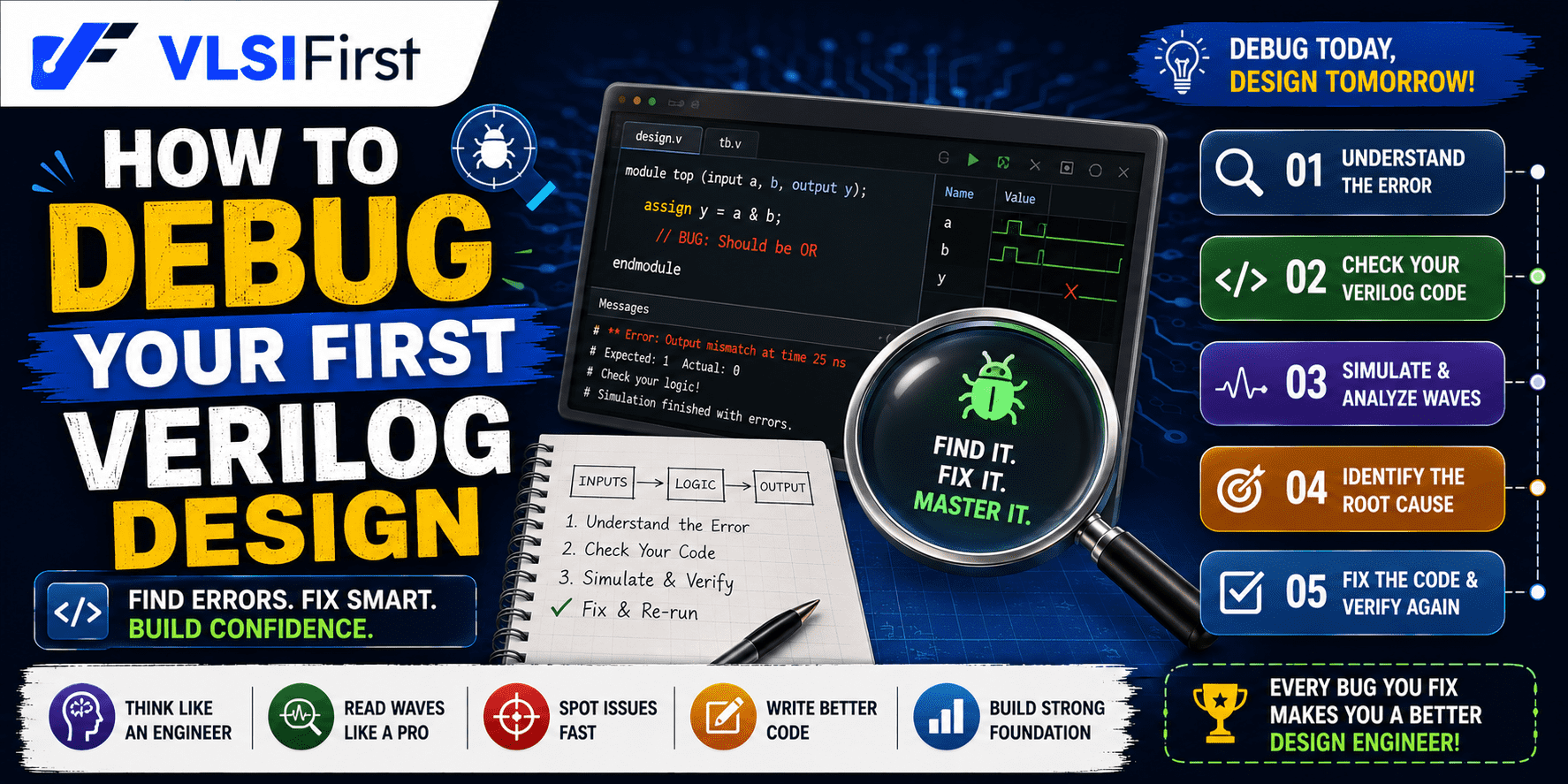
How to Debug Your First Verilog Design
Debugging your first Verilog design with practical RTL debug techniques, waveform analysis, testbench tips, FSM debugging, and common beginner mistakes. Read now!
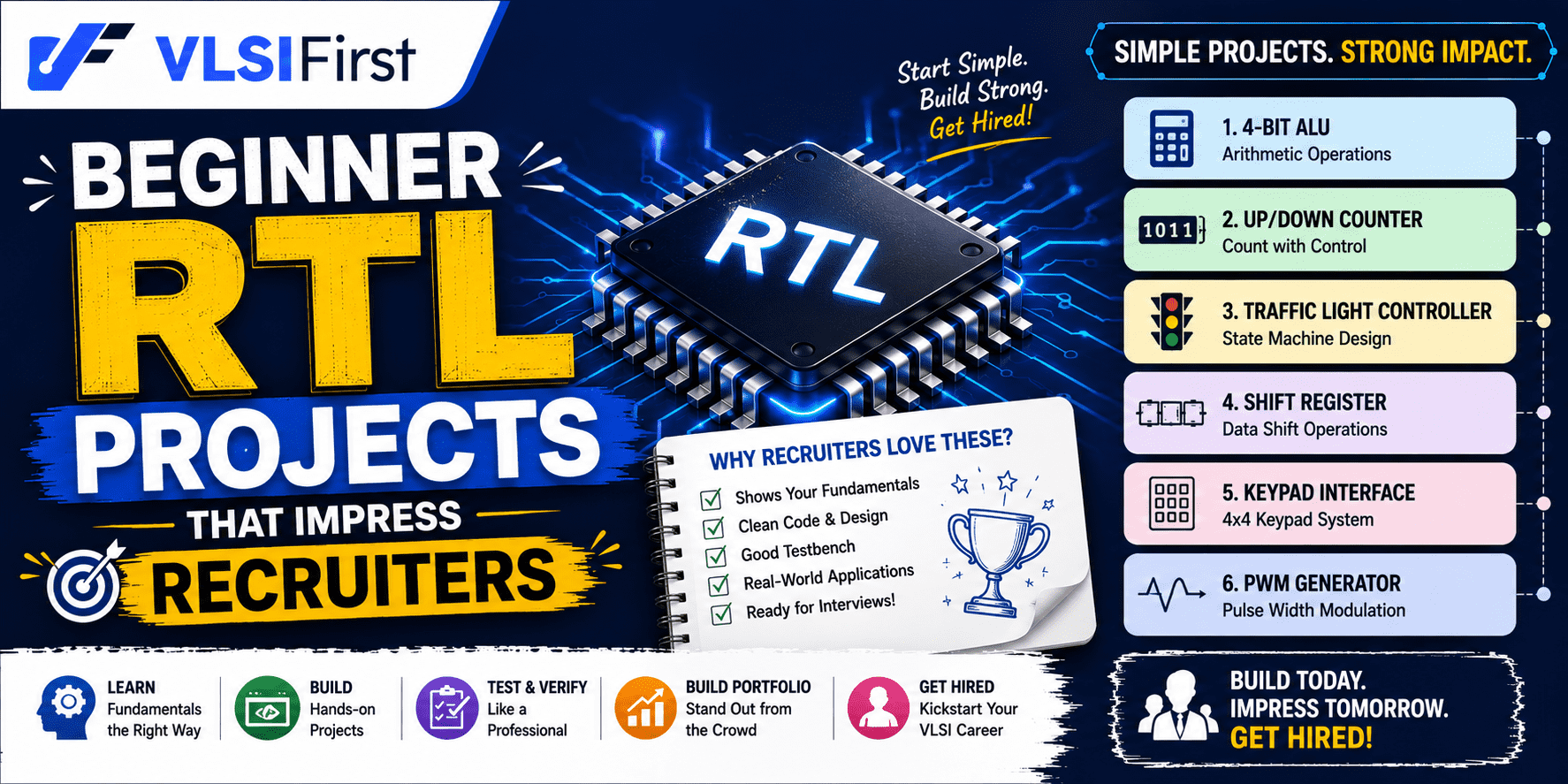
Beginner RTL Projects That Impress Recruiters
Discover beginner RTL projects that impress VLSI recruiters. Learn which Verilog projects build practical skills, strengthen your portfolio, and improve interview success.


Hours
2-98/1, Gurram Guda Road, Gurram Guda, Hyderabad, Rangareddy, Telangana, 501510
Copyright 2025 © VLSI Technologies Private Limited
Designed and developed by KandraDigitalCopyright 2025 © VLSI Technologies Private Limited
Designed, Developed & Marketing by KandraDigital