
VLSI (Very Large Scale Integration) is one of the most specialized and technically demanding fields in electronics engineering. It involves designing, verifying, and optimizing integrated circuits that power modern devices, from smartphones and AI processors to automotive systems and IoT devices.
Most engineering graduates learn VLSI concepts through textbooks and university lectures. They study digital electronics, CMOS circuits, and semiconductor physics. While this theoretical knowledge is important, it is not sufficient to succeed in the semiconductor industry.
In real-world chip design environments, engineers spend most of their time working with Electronic Design Automation (EDA) tools, running simulations, analyzing timing reports, debugging waveforms, and optimizing designs.
This is why tool exposure has become one of the most important aspects of modern VLSI training. Students who gain hands-on experience with industry tools become job-ready faster and perform better in technical interviews.
This article explores why practical tool exposure matters more than theory in VLSI training and how students can build industry-ready skills.
The Gap Between Academic Learning and Industry Expectations
Most engineering colleges teach VLSI as a theoretical subject. Students learn about logic gates, transistor behavior, and digital circuit design. However, they rarely see how these concepts are applied in real chip design workflows.
Modern chip development involves multiple stages such as:
- RTL design
- logic synthesis
- timing analysis
- physical design
- functional verification
Each stage uses specialized tools that help engineers translate circuit ideas into real silicon designs.
While textbooks explain the theory behind these processes, they cannot replicate the complex workflows, debugging challenges, and optimization tasks engineers face in real projects.
This creates a gap between academic learning and industry expectations.
Students who only study theory often struggle when they encounter practical design environments for the first time.
The Role of EDA Tools in Modern Chip Design
Every semiconductor chip today is designed using sophisticated software called Electronic Design Automation (EDA) tools.
These tools help engineers perform tasks such as:
- writing and simulating RTL code
- synthesizing logic circuits
- verifying functionality
- analyzing timing paths
- designing chip layouts
In fact, almost every stage of the chip design process depends on these tools. Without them, designing modern processors with billions of transistors would be impossible.
Some commonly used EDA tools include:
- Cadence Virtuoso
- Synopsys Design Compiler
- Synopsys PrimeTime
- Mentor Graphics tools
- FPGA tools such as Vivado and Quartus
Proficiency in these tools is often a key hiring requirement for VLSI engineers.
Why Theory Alone Is Not Enough
Many students assume that strong academic scores automatically lead to VLSI job opportunities. However, recruiters in semiconductor companies look for practical engineering ability, not just theoretical knowledge.
Here are some reasons why theory alone is insufficient.
1. Real VLSI Work Is Tool-Driven
In real chip design teams, engineers interact with tools throughout the design cycle.
For example:
- Verification engineers run simulations and debug waveform outputs.
- Physical design engineers analyze placement and routing results.
- Timing engineers fix setup and hold violations.
These activities require strong familiarity with design tools and workflows.
Industry professionals confirm that EDA tools dominate daily VLSI engineering work.
Students who only study theory may understand the concept of timing violations but struggle to identify and fix them in real design environments.
2. Practical Learning Builds Real Engineering Skills
Engineering is not just about understanding concepts, it is about applying those concepts to solve real problems.
Hands-on learning allows students to:
- write and simulate RTL designs
- debug waveform errors
- analyze timing reports
- fix synthesis issues
- optimize design performance
These practical activities develop problem-solving skills that textbooks cannot teach.
Hands-on training environments allow students to encounter real challenges such as logic bugs, timing violations, and design rule errors, which helps build confidence and engineering intuition.
3. Tool Experience Makes You Job-Ready
Companies prefer hiring engineers who can start contributing quickly.
Training a new engineer on complex design tools can take weeks or months. Therefore, recruiters prefer candidates who already have basic tool familiarity.
Students with tool exposure can:
- understand project workflows faster
- debug design problems efficiently
- collaborate better with experienced engineers
Tool proficiency directly improves employability and career opportunities in the semiconductor industry.
Examples of Tool-Based Learning in VLSI Training
To understand why tools are important, it helps to look at how different VLSI domains use them.
RTL Design
RTL engineers write hardware description code using languages like Verilog or SystemVerilog.
Tools are used to:
- simulate RTL behavior
- identify logic errors
- verify design functionality
Students who practice coding and simulation become comfortable debugging designs.
Functional Verification
Verification engineers ensure that chips behave exactly as intended.
They use tools to:
- build test environments
- generate test vectors
- analyze simulation waveforms
- track functional coverage
Verification often uses methodologies such as UVM, which require strong tool knowledge.
Physical Design
Physical design engineers convert RTL designs into actual chip layouts.
Tools are used for:
- floorplanning
- placement and routing
- clock tree synthesis
- timing closure
These processes involve analyzing complex reports and optimizing chip performance.
Understanding the workflow of these tools is essential for physical design careers.
How Tool Exposure Improves Interview Performance
One of the biggest advantages of tool experience is confidence during technical interviews.
Recruiters often ask questions such as:
- How did you debug a simulation failure?
- What happens when setup timing fails?
- How do you analyze synthesis reports?
- What steps would you take to fix timing violations?
Students with practical experience can answer these questions with real examples from projects.
Candidates who only studied theory often struggle to explain practical scenarios.
This difference can determine whether a candidate receives a job offer.
Tool Exposure Encourages Project-Based Learning
Another major benefit of tool training is the ability to build meaningful technical projects.
Projects help students demonstrate their capabilities to recruiters.
Examples of strong VLSI projects include:
- UART controller design and verification
- FIFO memory implementation
- cache controller design
- protocol verification environments
These projects show that the candidate understands the complete design process.
Students can also showcase their work in technical portfolios.
Balancing Theory and Practical Skills
Although tool exposure is extremely important, theory should not be ignored.
Strong theoretical understanding helps engineers:
- interpret tool results
- optimize designs
- debug complex issues
The best VLSI engineers combine conceptual knowledge with practical skills.
A balanced learning strategy should include:
- Strong fundamentals in digital electronics
- Hands-on RTL coding and simulation
- Tool-based debugging practice
- Project-based learning
- exposure to real design workflows
Students who follow this approach become much more competitive in the semiconductor job market.
How to Choose the Right VLSI Training Program
When selecting a VLSI training program, students should evaluate whether the course provides sufficient practical exposure.
Look for programs that include:
- access to industry EDA tools
- real project assignments
- debugging practice
- domain-specific training (RTL, verification, physical design)
- mentorship from industry engineers
Courses that emphasize tool-based learning and practical projects help students transition smoothly into semiconductor careers.
Final Thoughts
In the semiconductor industry, theory provides the foundation, but tools enable real engineering work.
Modern chip design is highly complex, and engineers rely on sophisticated EDA tools to transform ideas into silicon.
Students who gain hands-on experience with these tools develop practical skills, confidence, and problem-solving ability. They become better prepared for interviews and can contribute effectively in real chip design teams.
For aspiring engineers, focusing on tool exposure during VLSI training is one of the smartest decisions for building a successful semiconductor career.

How to Test Your RTL Before Simulation: A Practical Pre-Simulation Checklist for Beginners
Learn how to test your RTL before simulation with a practical pre-simulation checklist. Improve Verilog quality, reduce debugging time, and build industry-ready RTL skills.
From Logic Diagram to Verilog Code – Complete Workflow
Learn the complete workflow from logic diagram to Verilog code, including specifications, RTL architec ture, coding, simulation, debugging, verification, and documentation.
Common Mistakes While Writing Verilog Code
Learn the most common Verilog coding mistakes beginners make and how to avoid them. Improve RTL coding, simulation, debugging, verification, and interview readiness.
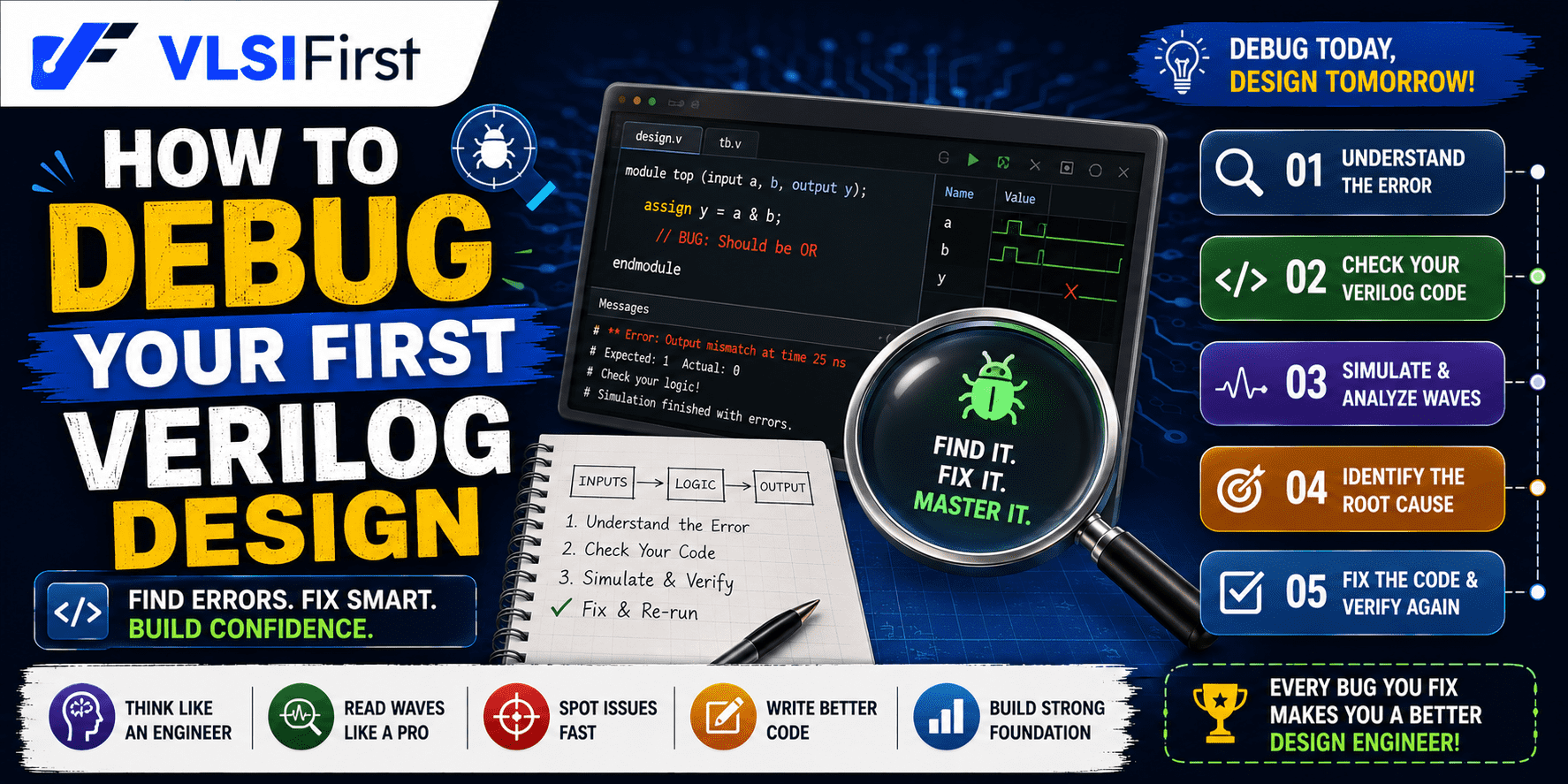
How to Debug Your First Verilog Design
Debugging your first Verilog design with practical RTL debug techniques, waveform analysis, testbench tips, FSM debugging, and common beginner mistakes. Read now!
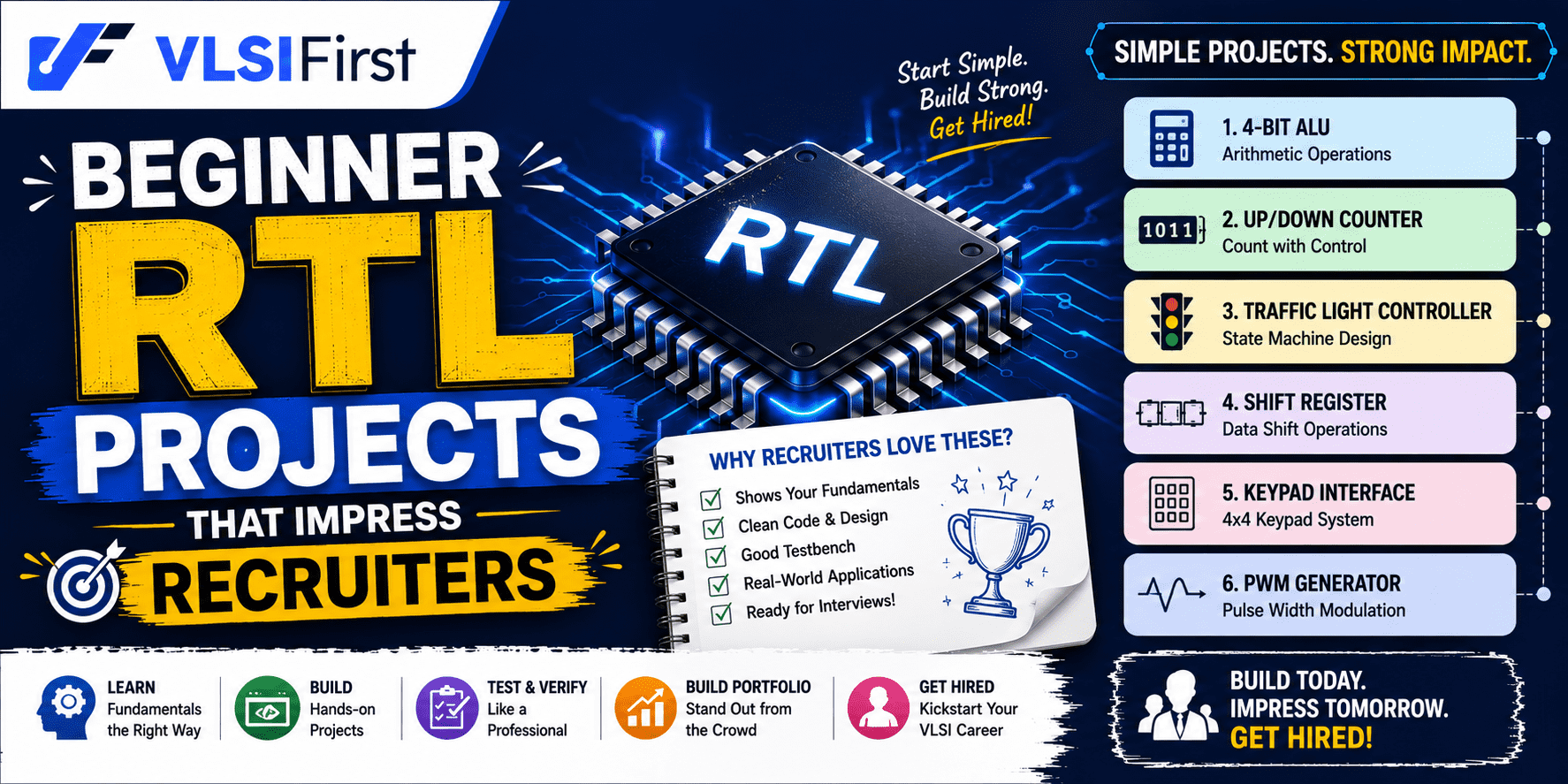
Beginner RTL Projects That Impress Recruiters
Discover beginner RTL projects that impress VLSI recruiters. Learn which Verilog projects build practical skills, strengthen your portfolio, and improve interview success.


Hours
2-98/1, Gurram Guda Road, Gurram Guda, Hyderabad, Rangareddy, Telangana, 501510
Copyright 2025 © VLSI Technologies Private Limited
Designed and developed by KandraDigitalCopyright 2025 © VLSI Technologies Private Limited
Designed, Developed & Marketing by KandraDigital