
Not every engineering student gets the advantage of strong campus placements.
In fact, a large number of ECE/EEE graduates, especially from Tier-2 and Tier-3 colleges, face this reality:
Limited or no core VLSI companies are visiting the campus. This often leads to confusion, frustration, and a big question:
“Can I still build a career in VLSI without campus placements?”
The answer is a strong YES.
The hiring landscape has evolved. Many VLSI engineers today enter the industry through off-campus routes, not college placements.
This blog provides a clear, practical roadmap to help you build a VLSI career even if your college doesn’t offer placement support.
Campus Placements Are Not the Only Path
Let’s be clear:
- Most colleges do not have semiconductor companies visiting campus
- Even when they do, hiring numbers are limited
- Many skilled students miss out due to competition or eligibility filters
But here’s the important shift:
Companies now hire based on skills, not just campus
This means:
- Off-campus hiring is increasing
- Project-based evaluation is common
- Referrals and networking matter more
The Biggest Mistake Students Make
Students often think:
- “No placement = no career”
- “My college didn’t support me”
- “It’s too late to start VLSI.”
This mindset delays action.
The truth is your career starts when you take ownership, not when campus placements begin.
Step-by-Step VLSI Career Path Without Placements
Let’s break down a practical and proven roadmap.
Step 1: Build Strong Fundamentals
Start with core concepts:
- digital electronics
- logic design
- timing basics
- finite state machines
Without fundamentals, advanced VLSI learning becomes difficult.
Step 2: Choose a VLSI Domain
VLSI has multiple career paths:
- RTL Design
- Verification
- Physical Design
Choosing a domain early helps you focus your learning.
Step 3: Learn Industry-Required Skills
Focus on skills that companies expect:
For Design/Verification:
- Verilog / SystemVerilog
- simulation concepts
- debugging
For Physical Design:
- basics of VLSI flow
- timing and layout concepts
Step 4: Gain Hands-On Tool Experience
This is the most important step.
You must learn:
- simulation tools
- synthesis tools
- debugging workflows
Tools are what differentiate skilled candidates from average ones.
Step 5: Build Real Projects
Projects are your replacement for campus placements.
They demonstrate:
- your practical knowledge
- your problem-solving ability
- your readiness for real work
Examples:
- ALU design
- FIFO implementation
- protocol verification
Step 6: Create a Strong Portfolio
Your portfolio should include:
- project descriptions
- design documentation
- simulation results
- GitHub links
Recruiters often shortlist candidates based on portfolio strength, not college name.
Step 7: Learn How to Apply Off-Campus
This is where most students struggle.
Use multiple channels:
1. LinkedIn Networking
- connect with VLSI engineers
- follow semiconductor companies
- engage with posts
2. Job Portals
- Naukri
- LinkedIn Jobs
- company career pages
3. Referrals
- reach out to professionals
- request referrals with proper introduction
Many students land interviews through referrals.
Step 8: Prepare for Interviews
Focus on:
- fundamentals
- project explanation
- debugging scenarios
Recruiters look beyond certificates.
Step 9: Avoid Fake Placement Promises
Some institutes promise:
- guaranteed placements
- unrealistic salaries
Be cautious.
Step 10: Stay Consistent
Consistency is the most important factor.
- practice daily
- improve projects
- keep applying
Most students fail not due to lack of ability, but due to lack of consistency.
Alternative Entry Paths (If Direct Entry Is Hard)
Sometimes, students may not get immediate VLSI roles.
In such cases, you can:
- start in embedded systems
- take electronics-related roles
- work in IT and transition later
Then gradually move into VLSI.
How Long Does It Take?
Typically:
- 3–6 months → learning basics + tools
- 6–12 months → job-ready with projects
Common Challenges and How to Overcome Them
1. No Guidance
Solution: Join structured training or mentorship
2. Lack of Confidence
Solution: Practice projects and mock interviews
3. Rejections
Solution: Improve skills and keep applying
4. Confusion
Solution: Follow a clear roadmap
Real Success Pattern
Most successful students without placements follow this pattern:
Learn skills → Build projects → Apply off-campus → Get first job → Grow
Do not: Wait for placement → Get disappointed → Quit
Final Verdict
So, can you build a VLSI career without strong college placements?
Absolutely yes.
But it requires:
- self-driven learning
- skill development
- project-based approach
- off-campus job strategy
VLSI hiring is increasingly based on skills but not on campus.
If your college doesn’t offer placements:
- Don’t wait, start building your skills today
- Focus on what you can control
- Treat your career as your responsibility
With the right approach, you can not only enter VLSI, but build a strong, high-growth career.
For more expert guidance on VLSI careers, training, and industry trends, explore detailed resources on VLSIFirst.com.

How to Test Your RTL Before Simulation: A Practical Pre-Simulation Checklist for Beginners
Learn how to test your RTL before simulation with a practical pre-simulation checklist. Improve Verilog quality, reduce debugging time, and build industry-ready RTL skills.
From Logic Diagram to Verilog Code – Complete Workflow
Learn the complete workflow from logic diagram to Verilog code, including specifications, RTL architec ture, coding, simulation, debugging, verification, and documentation.
Common Mistakes While Writing Verilog Code
Learn the most common Verilog coding mistakes beginners make and how to avoid them. Improve RTL coding, simulation, debugging, verification, and interview readiness.
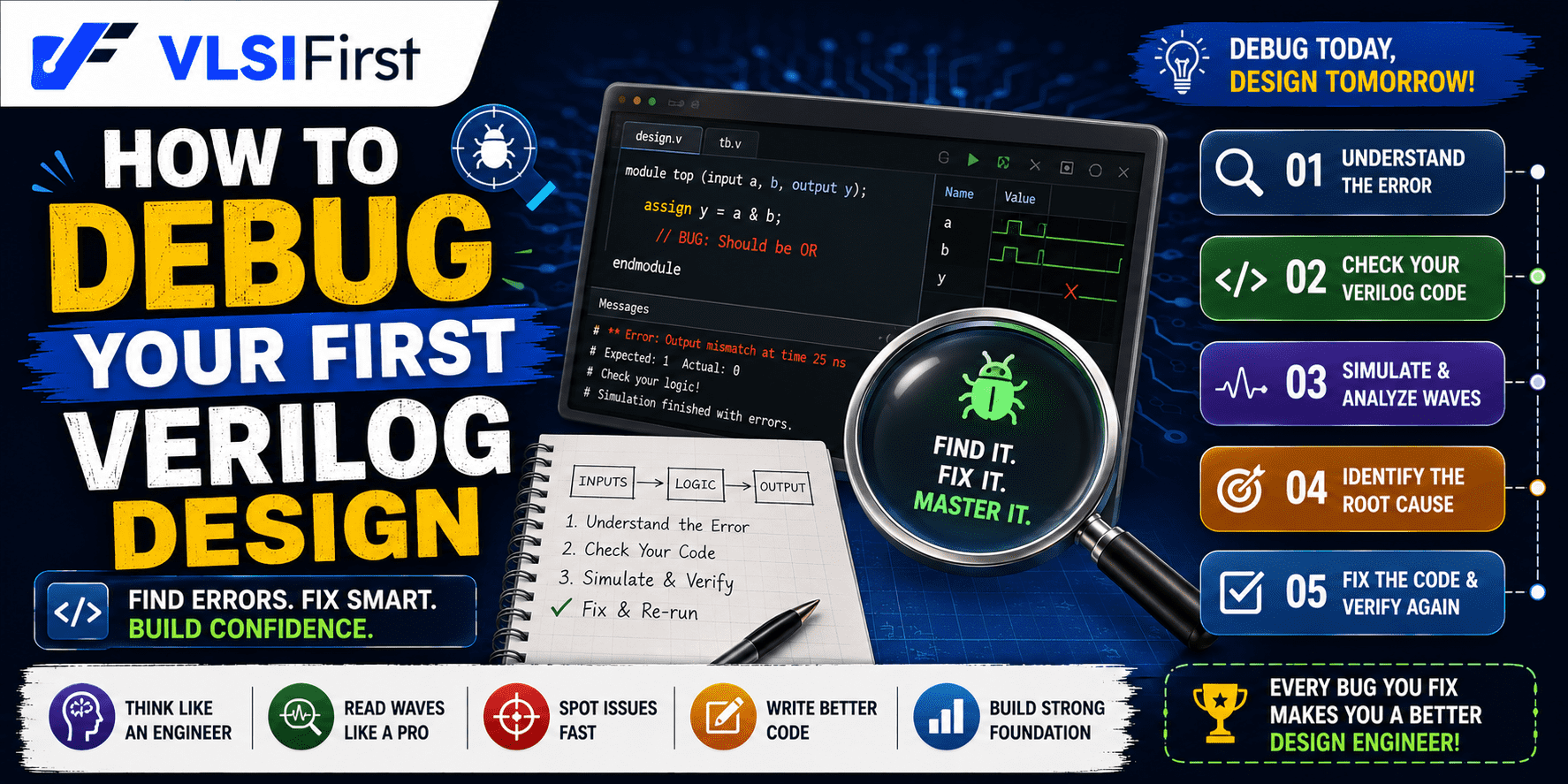
How to Debug Your First Verilog Design
Debugging your first Verilog design with practical RTL debug techniques, waveform analysis, testbench tips, FSM debugging, and common beginner mistakes. Read now!
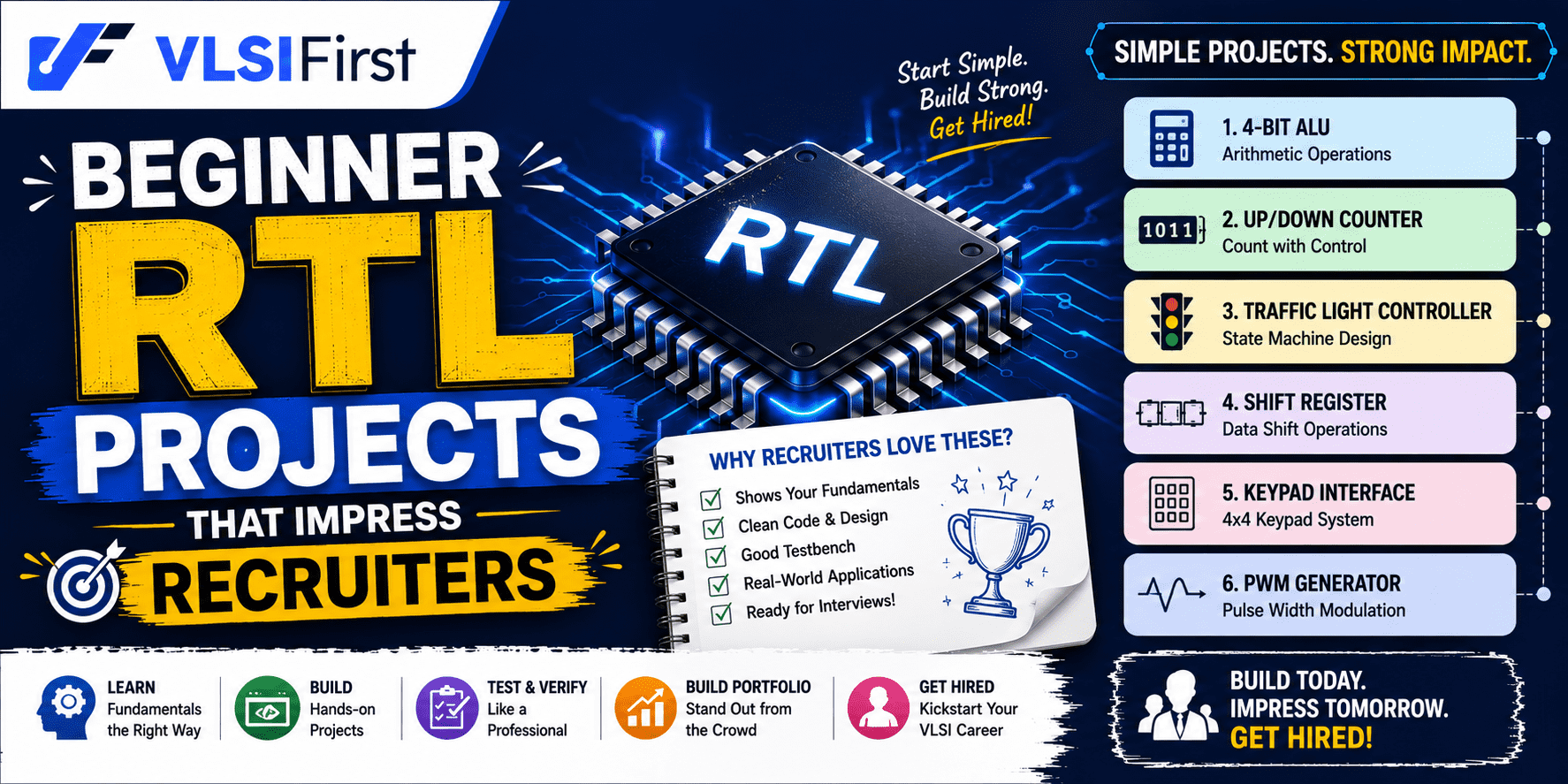
Beginner RTL Projects That Impress Recruiters
Discover beginner RTL projects that impress VLSI recruiters. Learn which Verilog projects build practical skills, strengthen your portfolio, and improve interview success.


Hours
2-98/1, Gurram Guda Road, Gurram Guda, Hyderabad, Rangareddy, Telangana, 501510
Copyright 2025 © VLSI Technologies Private Limited
Designed and developed by KandraDigitalCopyright 2025 © VLSI Technologies Private Limited
Designed, Developed & Marketing by KandraDigital