
For ECE and EEE graduates aiming to enter the semiconductor industry, one of the most critical decisions is choosing between:
- M.Tech in VLSI
- Industry-focused VLSI training programs
Both paths can lead to a successful VLSI career, but they differ significantly in time, approach, and outcomes.
The real question is:
Which option gives faster results in terms of getting a job?
This blog provides a clear, practical comparison based on real industry expectations, helping you decide the best path for your career goals.
Understanding the Two Paths
What is M.Tech in VLSI?
An M.Tech is a postgraduate degree (typically 2 years) offered by universities.
It focuses on:
- advanced electronics concepts
- semiconductor physics
- research and academic projects
- thesis or dissertation work
It provides strong academic depth and opens doors to research and higher studies.
What is Industry VLSI Training?
Industry training programs are:
- short-term (3–12 months)
- skill-focused
- project-driven
They emphasize:
- RTL design
- verification
- physical design
- EDA tool usage
These programs are designed to make students job-ready quickly.
Key Difference: Speed vs Depth
The biggest difference between the two paths lies here:
- M.Tech = Depth (slow but strong foundation)
- Industry Training = Speed (fast but focused)
Duration Comparison
- M.Tech: 2 years (minimum)
- Industry Training: 3–12 months
This alone explains why industry training is considered a faster route to employment.
Students can enter the job market much earlier through training programs.
Skill Development: Theory vs Practical
M.Tech Approach
M.Tech focuses on:
- theoretical understanding
- academic research
- conceptual depth
However, many programs provide limited exposure to real industry tools, unless pursued at top institutes.
Industry Training Approach
Training programs focus on:
- hands-on tool experience
- real-world workflows
- project-based learning
They are aligned with what companies actually expect from freshers.
You can understand why tools matter here:
https://vlsifirst.com/blog/why-tool-exposure-matters-more-than-theory-in-vlsi-training
Job Readiness: Who Gets Ready Faster?
M.Tech Students
- strong in fundamentals
- may lack tool exposure
- often require additional training after graduation
In fact, many M.Tech graduates still enroll in VLSI training programs to become industry-ready.
Industry Training Students
- trained on real tools
- experienced in projects
- prepared for interviews
They are usually job-ready immediately after course completion.
Placement Opportunities
M.Tech Placements
- depend heavily on the institute's reputation
- strong in IITs/NITs
- average in Tier-2/3 colleges
Placements are not guaranteed and vary widely.
Industry Training Placements
- many institutes provide placement assistance
- include mock interviews, referrals, and resume building
- focus on job-oriented outcomes
You can evaluate placement claims here:
https://vlsifirst.com/blog/how-to-identify-fake-vlsi-placement-claims
Salary Comparison
M.Tech Graduates
- ₹6–10 LPA (average, higher in top institutes)
- higher potential in R&D roles
Industry Training Graduates
- ₹5–8 LPA (entry-level average)
- faster growth with strong projects
Initial salaries may be similar, but entry timing differs significantly.
Cost Comparison
M.Tech
- ₹4–8 lakhs (India average)
- plus living expenses
- 2-year opportunity cost
Industry Training
- ₹80,000 – ₹2 lakhs
- shorter duration → faster ROI
Long-Term Career Impact
M.Tech Advantages
- eligible for research roles
- pathway to Ph.D.
- teaching and academic careers
- stronger theoretical base
Industry Training Advantages
- early industry entry
- faster experience accumulation
- strong practical expertise
In VLSI, experience plays a major role in long-term growth.
Real Insight from Learners
From real-world discussions:
“Even after MTech… struggling to get placements”
This highlights an important point:
A degree alone is not enough, skills and experience matter more.
When M.Tech Is the Right Choice
Choose M.Tech if you:
- aim for research or Ph.D.
- want to work in R&D or academia
- can invest 2+ years
- can get into top institutes (IITs/NITs)
When Industry Training Is the Better Choice
Choose VLSI training if you:
- want a job quickly
- prefer practical learning
- want to build projects and portfolio
- are targeting industry roles like design/verification
You can explore readiness here: https://vlsifirst.com/blog/how-to-know-if-youre-ready-for-industry-level-vlsi-training
Hybrid Approach: Best of Both Worlds
Many successful engineers follow this path:
M.Tech + Industry Training
Why?
- M.Tech gives theory
- training gives practical skills
This combination creates a strong competitive advantage.
Common Mistakes Students Make
- choosing M.Tech only for placements
- assuming training alone guarantees jobs
- ignoring practical skills
- focusing only on degree value
The industry prioritizes skills + projects over degrees alone.
Final Verdict: Which Gives Faster Results?
Industry Training wins in terms of speed.
Because:
- shorter duration
- job-oriented curriculum
- immediate skill application
- faster entry into workforce
M.Tech is better for long-term academic or research goals, but not the fastest route to a job.
Conclusion
If your goal is:
- Quick job entry → choose Industry Training
- Deep academic career → choose M.Tech
- Maximum advantage → combine both
Ultimately, your success in VLSI depends on:
- practical skills
- project experience
- consistency and effort
Not just the path you choose.

How to Test Your RTL Before Simulation: A Practical Pre-Simulation Checklist for Beginners
Learn how to test your RTL before simulation with a practical pre-simulation checklist. Improve Verilog quality, reduce debugging time, and build industry-ready RTL skills.
From Logic Diagram to Verilog Code – Complete Workflow
Learn the complete workflow from logic diagram to Verilog code, including specifications, RTL architec ture, coding, simulation, debugging, verification, and documentation.
Common Mistakes While Writing Verilog Code
Learn the most common Verilog coding mistakes beginners make and how to avoid them. Improve RTL coding, simulation, debugging, verification, and interview readiness.
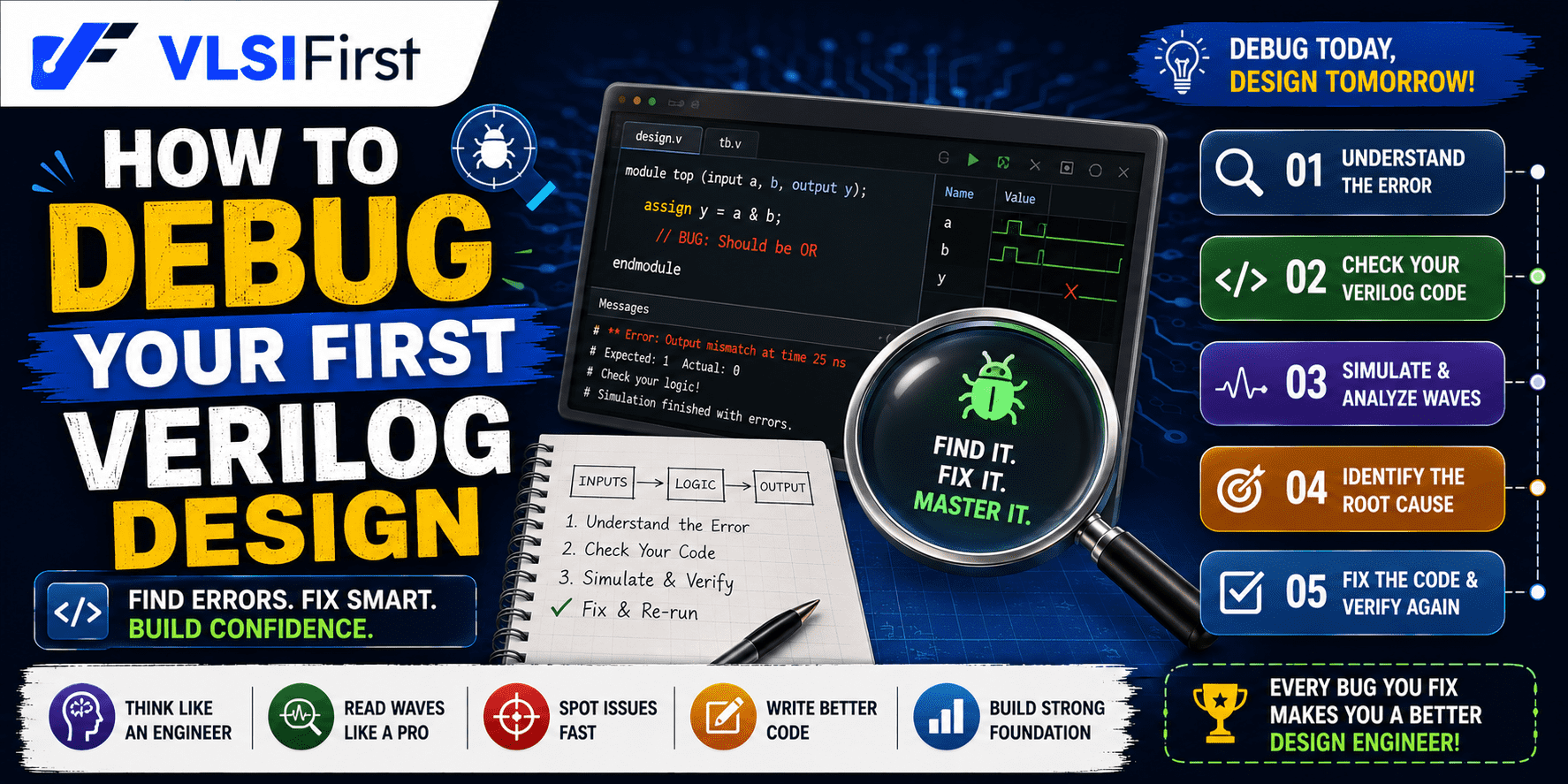
How to Debug Your First Verilog Design
Debugging your first Verilog design with practical RTL debug techniques, waveform analysis, testbench tips, FSM debugging, and common beginner mistakes. Read now!
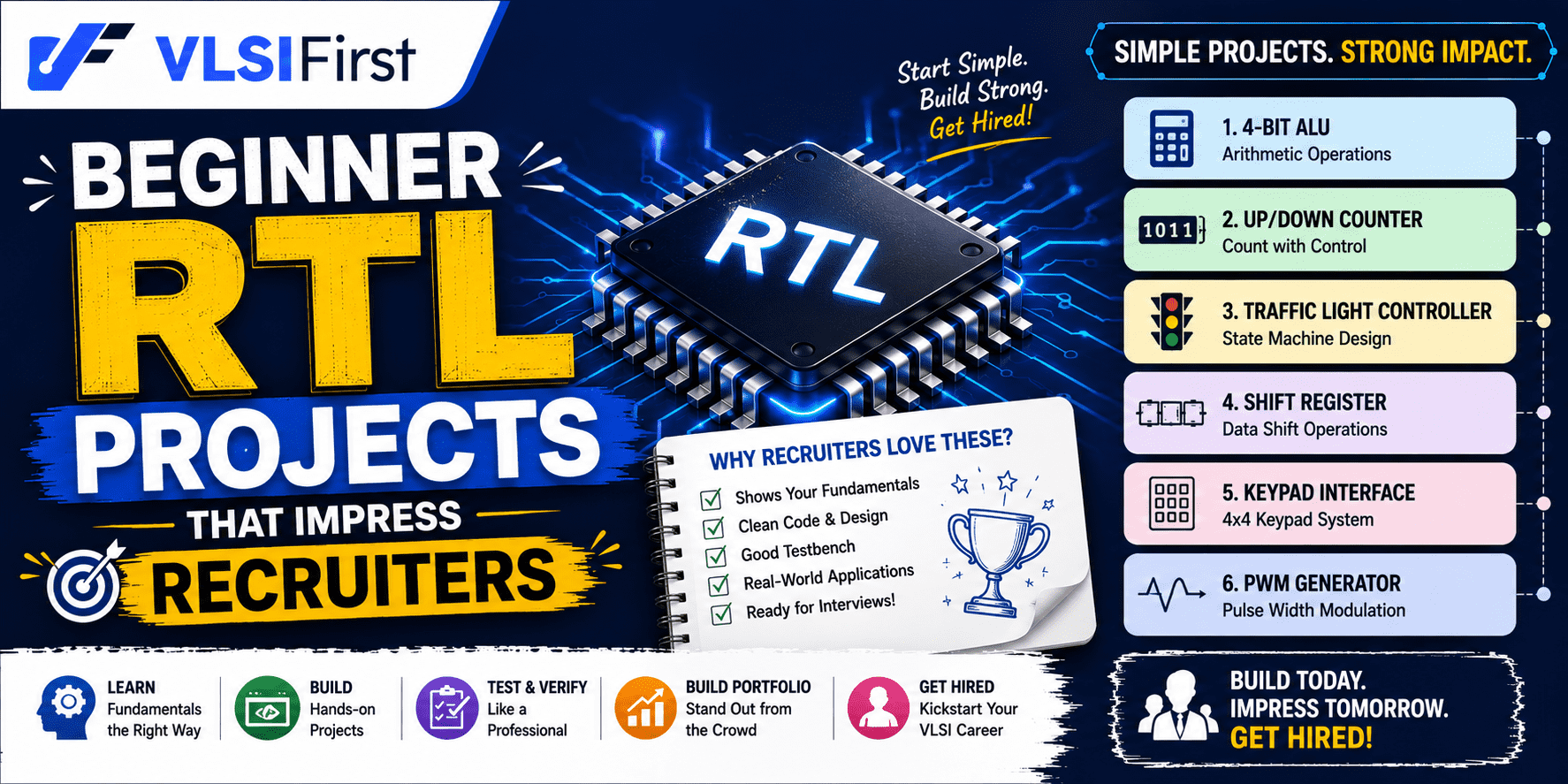
Beginner RTL Projects That Impress Recruiters
Discover beginner RTL projects that impress VLSI recruiters. Learn which Verilog projects build practical skills, strengthen your portfolio, and improve interview success.


Hours
2-98/1, Gurram Guda Road, Gurram Guda, Hyderabad, Rangareddy, Telangana, 501510
Copyright 2025 © VLSI Technologies Private Limited
Designed and developed by KandraDigitalCopyright 2025 © VLSI Technologies Private Limited
Designed, Developed & Marketing by KandraDigital