
Breaking into the VLSI (Very Large-Scale Integration) industry is both exciting and challenging. With the rising demand for chip designers, verification engineers, and physical design experts, companies are always on the lookout for candidates who can adapt, learn, and solve problems quickly.
But here’s the reality: many freshers and even working professionals don’t always have access to full-time training programs or industry exposure. Instead, they rely on self-learning through online courses, YouTube tutorials, open-source tools, or hands-on mini projects.
The good news is that interviewers highly value self-learners. What matters is how you communicate your self-learning journey in a VLSI interview. The way you present your efforts can demonstrate initiative, curiosity, discipline, and technical strength—all traits recruiters love.
This blog will guide you on how to impress interviewers with your self-learning journey in VLSI while positioning yourself as a serious candidate, even if you don’t have extensive work experience.
Why Self-Learning Matters in VLSI Interviews
Unlike other fields, VLSI requires both theoretical depth and practical exposure. University curriculums often cover basics, but they don’t always provide enough hands-on practice with tools like Cadence, Synopsys, Mentor Graphics, Vivado, or ModelSim.
Self-learners stand out because they:
- Take ownership of their learning path.
- Explore real-world tools and coding practices.
- Gain exposure to mini projects and simulations.
- Build confidence in tackling unstructured problems.
Interviewers see this as proof that you can adapt in a fast-moving industry where technologies evolve rapidly.
Step 1: Document Your Self-Learning Journey
Before you attend interviews, make sure you have a clear narrative about your learning path. Instead of saying “I learned Verilog online”, highlight specifics:
- Which platforms or courses did you use?
- Which tools did you practice on? (ModelSim, Xilinx Vivado, EDA Playground, Synopsys)
- What projects did you complete? (Traffic light controller, ALU design, UART module, memory design, etc.)
- How did you track progress? (Created notes, debug logs, GitHub uploads, LinkedIn posts)
This shows that you didn’t just consume information—you structured and applied it.
Step 2: Connect Self-Learning to VLSI Fundamentals
Interviewers want to see whether your self-learning translates into core VLSI knowledge. When explaining your journey:
- Relate your courses/projects to fundamentals:
- “Through Verilog coding, I understood FSM design better.”
- “Debugging synthesis issues helped me learn about setup and hold violations.”
- Show depth in Digital Electronics, CMOS basics, HDL coding, and verification.
- Emphasize how your self-learning filled gaps not covered in academics.
Example:
“While my university covered Digital Design concepts, I realized we didn’t practice much with industry tools. So, I enrolled in an online VLSI design course, implemented a UART module in Verilog, simulated it in ModelSim, and even pushed my code to GitHub. This gave me a deeper understanding of both RTL design and debugging.”
Step 3: Showcase Mini Projects as Proof
Nothing impresses interviewers more than evidence of your learning. Mini projects, even simple ones, act as a strong portfolio.
Examples of self-learning mini projects:
- ALU (Arithmetic Logic Unit) design in Verilog
- Traffic Light Controller using FSM
- FIFO memory design and verification
- UART Transmitter and Receiver implementation
- Low-power CMOS inverter simulation
When talking about them:
- Use the STAR method (Situation, Task, Action, Result).
- Mention tools, languages, and techniques used.
- Share the challenges faced and how you solved them.
Example:
“During self-learning, I built a FIFO memory design in Verilog. I simulated it in ModelSim and verified data integrity using testbenches. Initially, I faced mismatches in read/write synchronization, but I resolved the issue by adding proper reset conditions. This taught me both debugging skills and the importance of verification.”
Step 4: Highlight Soft Skills Gained from Self-Learning
Interviewers don’t just evaluate technical skills. They look for qualities like:
- Consistency – Did you commit time daily/weekly?
- Problem-solving – Did you debug and fix errors on your own?
- Curiosity – Did you go beyond basics and explore advanced topics?
- Self-motivation – Did you finish what you started?
Frame it like this:
“Self-learning taught me discipline because I had to set weekly goals and stick to them without external pressure. Debugging errors built my patience and analytical skills. These are traits I’ll bring into my role as a VLSI engineer.”
Step 5: Anticipate Interviewer Questions on Self-Learning
Recruiters will likely probe your self-learning claims. Be prepared for:
- Tool-specific questions:
- Which simulator did you use? Why?
- How do you debug synthesis warnings?
- Project questions:
- Can you explain your project block diagram?
- How would you scale your design for real-world use?
- Conceptual questions:
- Difference between blocking and non-blocking assignments in Verilog
- Setup vs hold violations and how to fix them
Answering with confidence shows that your self-learning wasn’t superficial—it built real technical depth.
Step 6: Showcase Your Online Presence
If you’ve documented your journey online, it can give you a huge edge:
- GitHub repo with your HDL codes and testbenches
- LinkedIn posts sharing your progress and mini projects
- Blog or notes explaining concepts you mastered
This not only validates your learning but also portrays you as a self-driven learner who contributes back to the community.
Step 7: Communicate With Confidence
Finally, the way you talk about your journey matters. Avoid:
- Saying “I just did some online courses.”
- Being vague about tools or outcomes.
- Overloading with jargon without clarity.
Instead, be clear, confident, and structured. Show enthusiasm about how self-learning shaped your growth.
Example closing line:
“My self-learning journey helped me bridge academic gaps and gain practical confidence. I believe this habit of learning independently will help me adapt quickly to any VLSI role.”
Final Thoughts
Self-learning is not just a substitute for formal training—it’s a superpower if communicated well. In a VLSI interview, your ability to present your journey with clarity, evidence, and confidence can make a lasting impression.
- Document your learning path
- Connect it to fundamentals
- Showcase mini projects
- Highlight soft skills gained
- Anticipate questions and practice answers
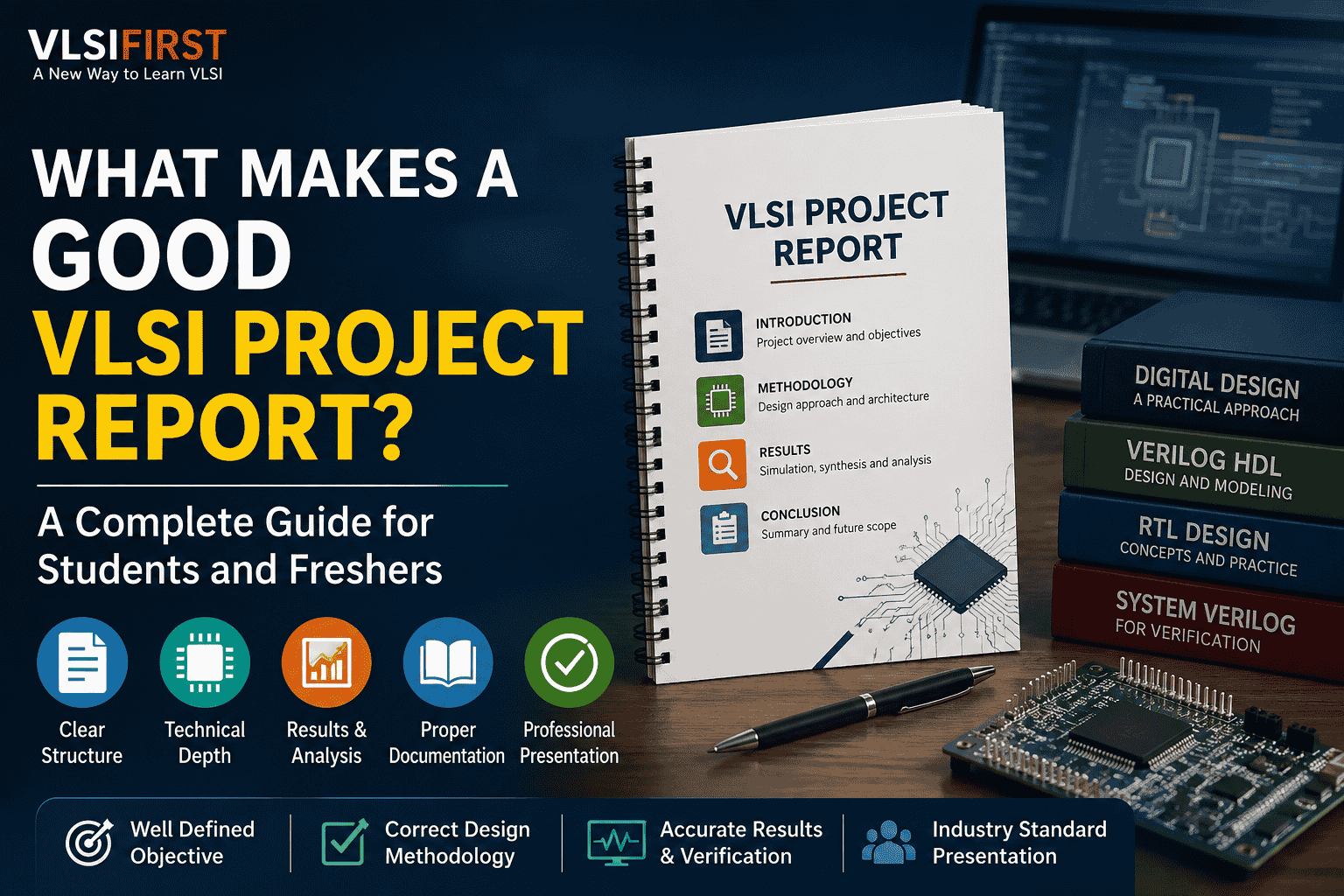
What Makes a Good VLSI Project Report? A Complete Guide for Students and Freshers
Learn how to write a professional VLSI project report with the right structure, RTL documentation, verification strategy, debugging details, and interview-ready presentation tips.
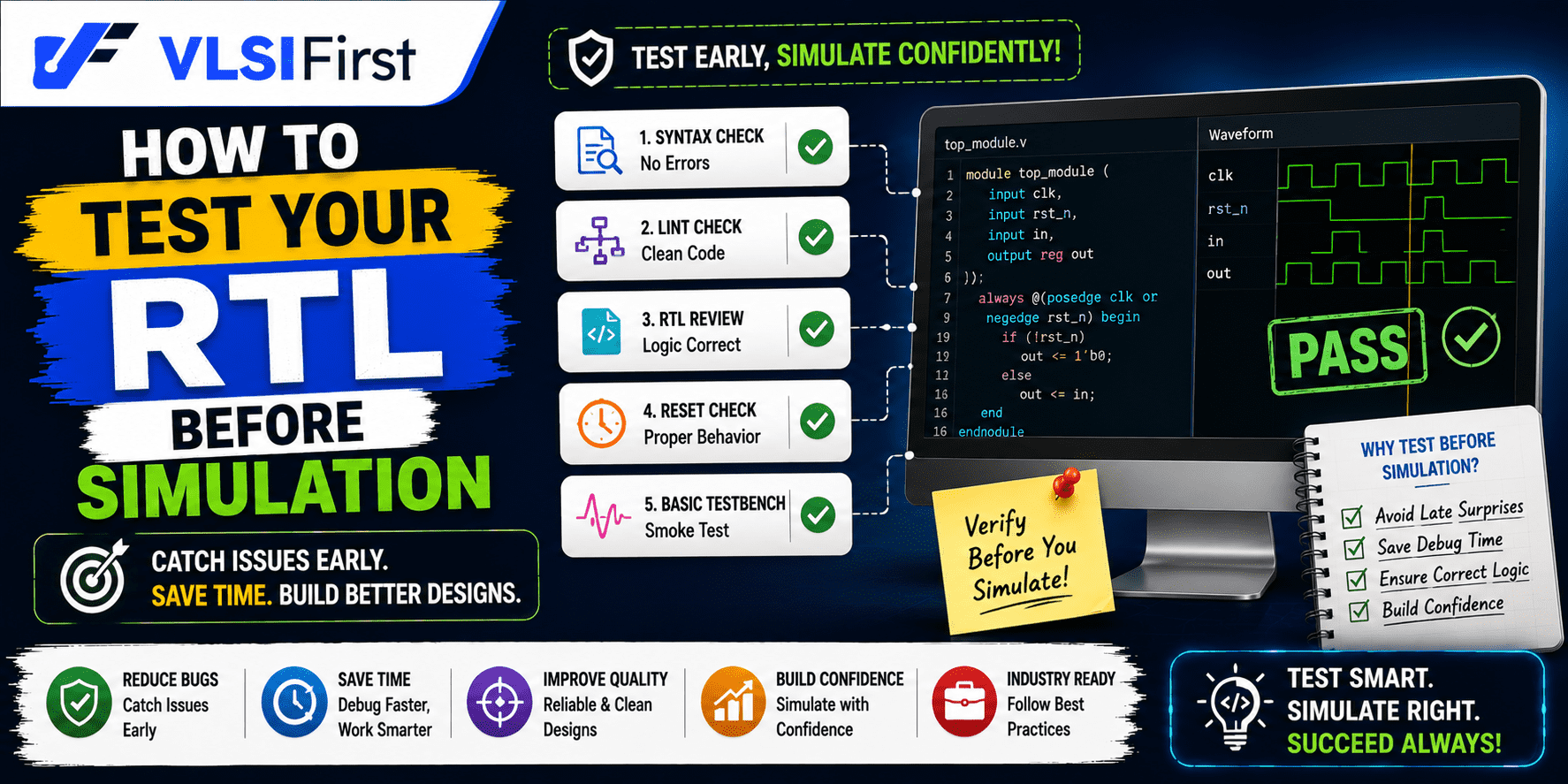
How to Test Your RTL Before Simulation: A Practical Pre-Simulation Checklist for Beginners
Learn how to test your RTL before simulation with a practical pre-simulation checklist. Improve Verilog quality, reduce debugging time, and build industry-ready RTL skills.

From Logic Diagram to Verilog Code – Complete Workflow
Learn the complete workflow from logic diagram to Verilog code, including specifications, RTL architec ture, coding, simulation, debugging, verification, and documentation.
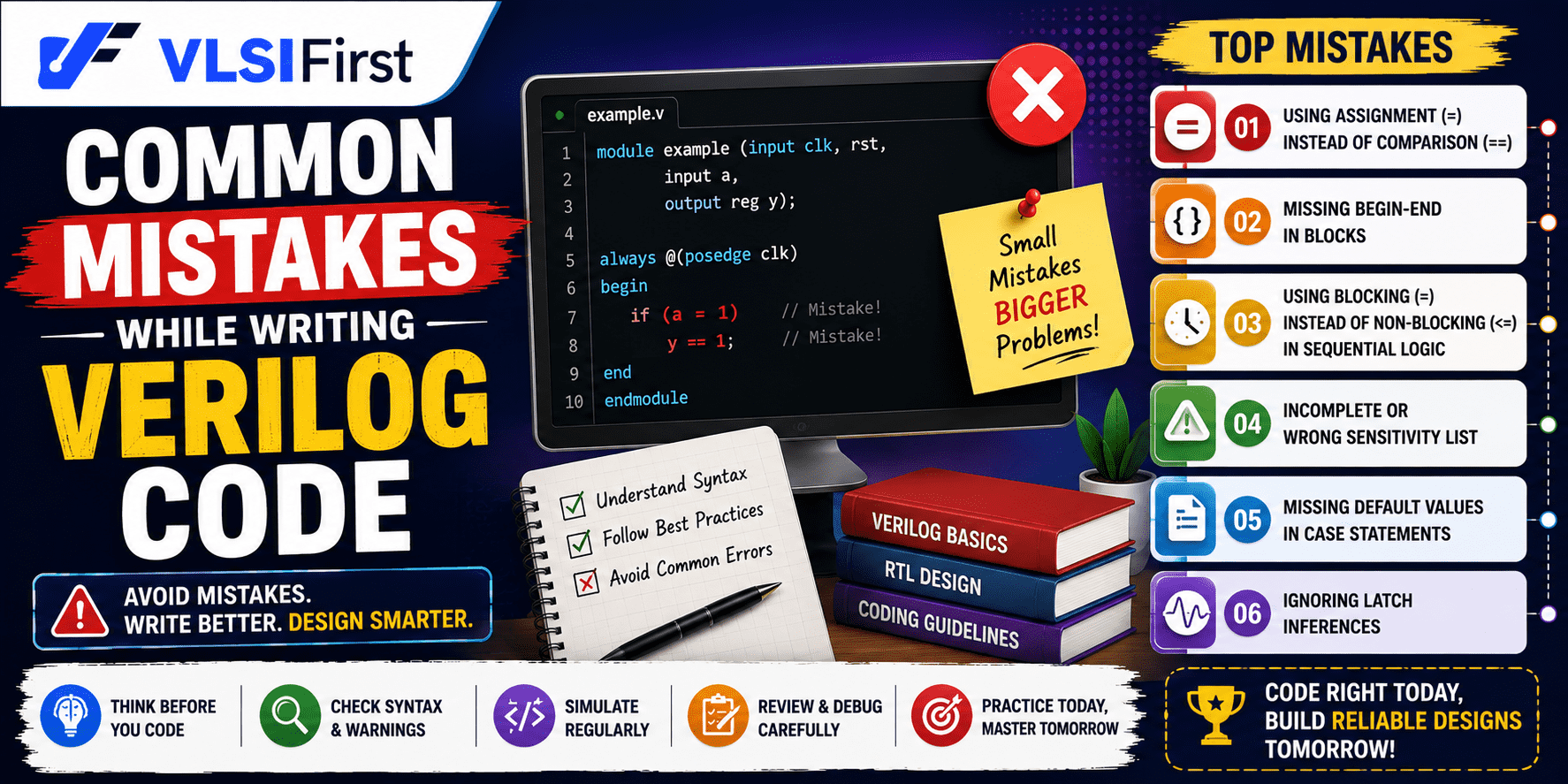
Common Mistakes While Writing Verilog Code
Learn the most common Verilog coding mistakes beginners make and how to avoid them. Improve RTL coding, simulation, debugging, verification, and interview readiness.
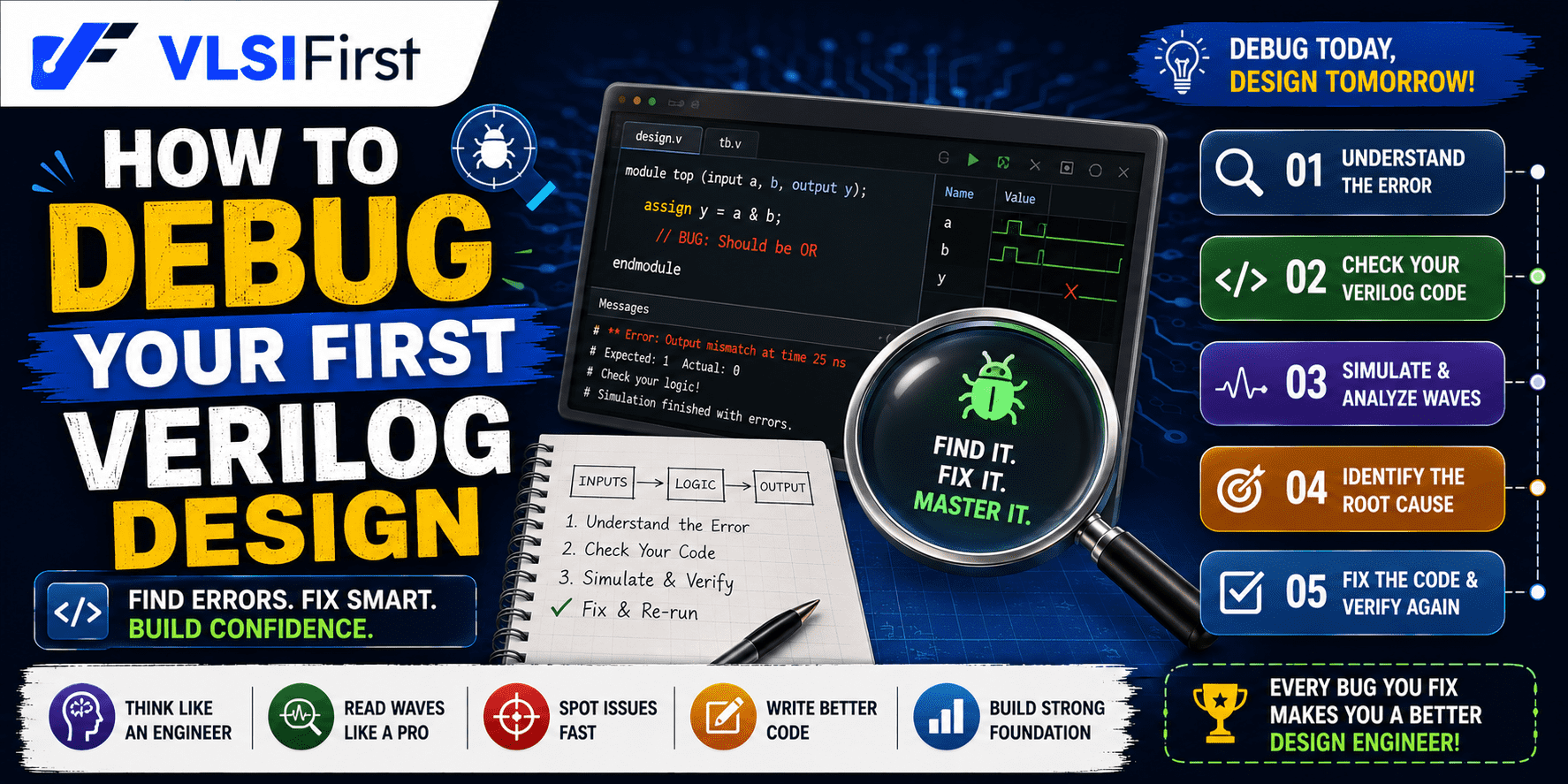
How to Debug Your First Verilog Design
Debugging your first Verilog design with practical RTL debug techniques, waveform analysis, testbench tips, FSM debugging, and common beginner mistakes. Read now!
.


Hours
2-98/1, Gurram Guda Road, Gurram Guda, Hyderabad, Rangareddy, Telangana, 501510
Copyright 2025 © VLSI Technologies Private Limited
Designed and developed by KandraDigitalCopyright 2025 © VLSI Technologies Private Limited
Designed, Developed & Marketing by KandraDigital